Tag - Western

Region

two seniors lifting small dumbbells

Healthy aging

Healthy aging is essential for maintaining independence, well-being and quality of life as people grow older, and it benefits not only individuals but also their families and communities. Cooperative Extension programs play a vital role in supporting this process by offering research-based education, practical skills and community-centered resources. These resources help adults stay active, socially connected and informed about [...]


Read more...
a young person wearing exercise clothing eating a healthy meal

Food is medicine

The “food is medicine” approach emphasizes the role diet has in preventing disease, supporting overall health and improving quality of life. Land-grant universities connect research-based nutrition and community education to the people who need it most. By supporting access to fresh, locally grown foods, teaching evidence-based nutrition practices and partnering with communities to reduce health disparities, land‑grant programs help [...]

Read more...
UME Agent, Shauna Henley, preparing mason jars for sterilization

Extension trainings keep Americans safe from foodborne illness

Foodborne illness is a widespread, costly public health concern in the United States. Each year, one in six Americans becomes sick from contaminated food, leading to hospitalizations, long-term health complications and even death. Pregnant women, the elderly, young children and people with weakened immune systems or chronic diseases are most at risk. Because food safety risks can occur at [...]

Read more...
an Extension agent shows youths plants from a community garden

Encouraging health and wellness in U.S. youth through hands-on activities, education

One in five school-aged children nationally suffer from obesity, and regular physical activity and balanced diets can lead to improved focus, behavior, self-esteem and academic performance. Encouraging healthy behaviors at an early age fosters a value for physical activity, healthy eating and preventive habits. These healthy behaviors can lead to fewer chronic diseases, resulting in lower health care costs and a [...]

Read more...
closeup of two seniors holding hands

Emergency planning empowers rural caregivers and dementia care partners

Rural caregivers supporting individuals with Alzheimer’s disease and related dementias face intensified challenges during natural disasters, medical crises and unexpected disruptions. In Colorado’s rural counties — where the population of older adults is growing most rapidly — limited access to specialized support can leave families unprepared and vulnerable. Without clear plans for emergencies, caregivers often experience avoidable stress, financial [...]

Read more...
holding hands for support

Building networks to aid mental health strengthens communities

Mental health challenges affect individuals and families across the country, yet stigma and lack of knowledge often prevent people from seeking or offering help, especially in rural communities with fewer mental health resources. At land-grant universities across the U.S., Extension programming works to equip individuals to recognize, respond to and support those experiencing mental health or substance use issues through [...]

Read more...
a group of seniors painting

Art program for seniors improves emotional well-being

Seniors in Big Horn County, nestled in northwestern Wyoming, have the highest depression rate among their age group in the state, at 16%. They face disproportionate mental health challenges including financial insecurity, social isolation and a life expectancy nearly two years shorter than the state average. Recent needs assessments identified access to mental health services as a top concern, [...]

Read more...
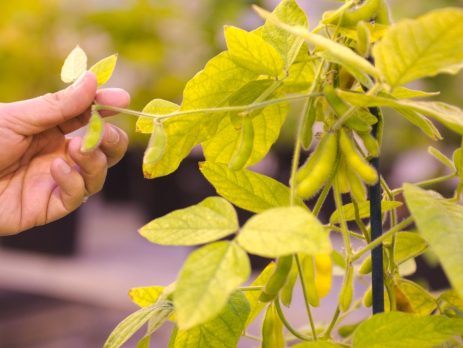
soybeans

Using genetics for crop disease resistance

Pests of major crops, including wheat, soybean, potatoes, tomatoes and wine grapes, cost American producers billions in yield losses each year and raise prices for consumers. Pathogens are steadily overcoming current genetic sources of resistance, making continuing efforts to identify and incorporate new genetics critical to reduce losses to farmers and protect markets and food security. Here are a few [...]

Read more...
screwworm fly

The U.S. prepares for a potential screwworm outbreak

As a New World Screwworm (NWS) outbreak spreads from Central America to Mexico, states in the Southwest are ramping up efforts to raise awareness among livestock producers of the current status, management methods and the impacts this devastating pest may have on livestock in the event of a U.S. outbreak.  Numerous presentations have been offered in-person and online in Oklahoma [...]

Read more...
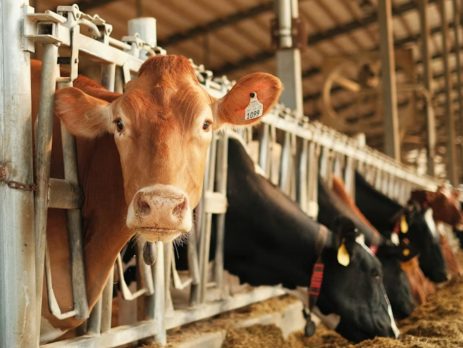
dairy cows in a barn

Supporting meat and dairy industries

Meat and dairy provide critical protein and a wide variety of other products for consumers and represent economically important industries across the country, not just for producers, but also for processors, groceries and restaurants. Research and Extension professionals at land-grant institutions support livestock and related industries in many ways through education on economically efficient production practices and research on [...]

Read more...
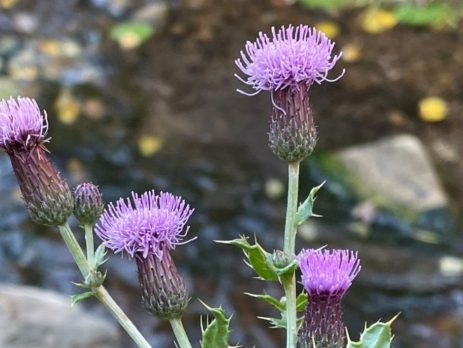
Canada thistle

Researchers show rust fungus helps control invasive Canada thistle

The noxious weed Canada thistle (Cirsium arvense L.), which originated from the eastern Mediterranean region, crowds out crops, forage and native plant species in the Intermountain West, creating challenges for producers and land management agencies. Some herbicides are effective against Canada thistle, but they can be costly, time-consuming and risky to apply.    In its native range, one factor that helps [...]

Read more...
sorghum varieties

Research and development of water-resilient sorghum expands rural economic opportunities in the West

In water-limited agricultural landscapes of the West, sustaining food crops for beef and dairy has become increasingly challenging. Traditional feed crops such as maize and alfalfa require large amounts of water, threatening herds and pushing researchers to explore more resilient alternatives.  As a result, scientists with the Nevada Agricultural Experiment Station are combining genetic improvements and precision agriculture to improve [...]

Read more...

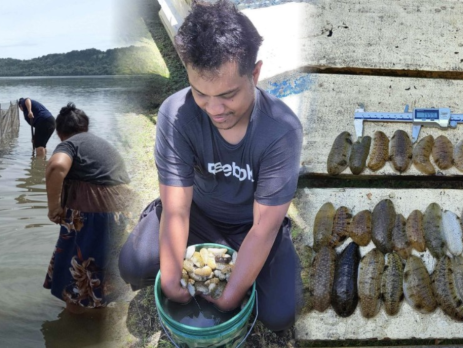
Making aquaculture more productive, safe and economical

The seafood industry is economically vital and provides an important source of protein for the world. Challenges to aquaculture include inefficient production methods, expensive feed inputs and food safety. Land-grant efforts are protecting and promoting this booming industry. Here are a few examples of that work: As feed is the most expensive cost of aquaculture, researchers in Alabama are developing feeds [...]

Read more...
A researcher injects a tick embryo under the microscope.

International collaboration to attack the cattle fever tick

Building on previous success developing genetic tools to combat deer ticks, researchers in Nevada are partnering with those in Uruguay to genetically modify cattle tick genes.  Cattle fever ticks were largely eradicated in the United States but sporadically show up in outbreaks tied to cross-border movement. Current control methods rely heavily on chemical pesticides, which can harm humans, pass into [...]

Read more...
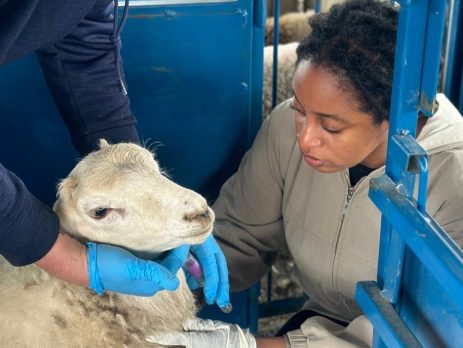
a vet giving a sheep a vaccine

Enhancing food safety with research and training

The United States food supply is among the safest in the world, but every day news stories report food recalls for a variety of safety reasons. Food safety must be maintained through every step of the production process, and land-grant institutions are the key to research and training that helps the food industry provide safe, healthy food. Here are a [...]

Read more...
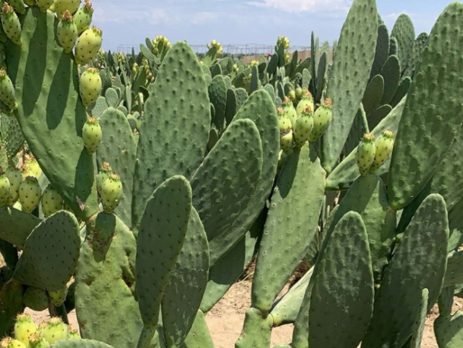
cacti

Developing sustainable domestic biofuels

Land‑grant universities are developing sustainable bioproduct solutions that transform renewable biomass, including food and agricultural wastes, into valuable materials. These bioproducts strengthen national energy and food security, lower greenhouse gas emissions and support rural economies. They also create new markets, provide farmers with additional income opportunities and help to reduce dependence on fossil fuels. Here are a few examples of [...]

Read more...
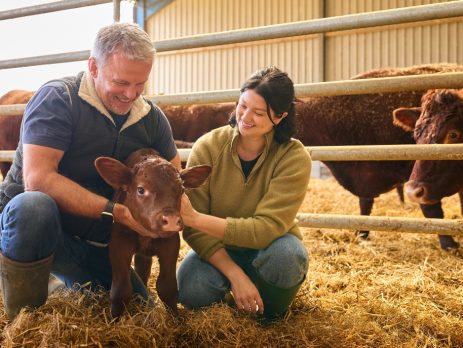
a farmer couple smile at a calf

Supporting producer safety, health and well-being

The U.S. Centers for Disease Control suggests that agriculture is one of the most dangerous businesses in the United States. An estimated 160 agricultural workers are injured every day, resulting in more than 58,000 injuries a year. According to a 2019 USDA report, approximately 19% of farmers have a disability. Land-grant universities are providing training to reduce injuries, support behavioral health and enable [...]

Read more...
A smiling woman in a green shirt and maroon cap crouches in a sunny field, harvesting a head of deep red leaf lettuce. She is working in a well-tended garden plot with irrigation lines, representing local agricultural impact and food production

Strengthening the agricultural workforce for the future

The workforce is changing. Across industries and states, trained workers are in demand to support local food systems, meet community needs, ensure safety and increase productivity. Land-grant universities are rising to the challenge of meeting these needs through partnerships, trainings, certifications and hands-on learning opportunities that strengthen the agricultural workforce. Here are a few examples of that work: Health and safety [...]

Read more...
A pair of hands in yellow gloves gently hold a strawberry plant, showing a flower and immature green strawberry, in a strawberry field.

Research helps increase specialty crop profitability

Specialty crop growers provide popular products to consumers. There are many challenges to growing the products commercially. Land-grant universities support growers with research and resources that help increase profitability and informed decision-making. Here are a few examples of that work: Apples are a popular product among consumers, but there are many challenges to growing them commercially in the Midwest and making [...]

Read more...
single leaflet showing tip necrosis on a young New Mexico pecan tree

Plant disease testing saves New Mexico growers money

Plant diseases threaten crop yields, farm profitability and export markets. Most New Mexico farms are small or family-owned and lack access to private diagnostic services, increasing vulnerability to disease outbreaks and unnecessary pesticide use.  The New Mexico State University Plant Diagnostic Clinic provides New Mexico farmers with free diagnostic services using culture-based and molecular testing to identify plant diseases and [...]

Read more...
berries on the vine

New fruit, vegetable cultivars offer new opportunities for growers

Developing or restoring different fruit and vegetable cultivars allow farmers to plant crops based on disease resistance, fertilizer requirements, adaptations to site-specific soil and weather conditions or greater yields. Some cultivars can be a pathway to new market opportunities and new bio-based products. Here are a few examples of that work: Hemp is re-emerging as the basis of a viable industry [...]

Read more...
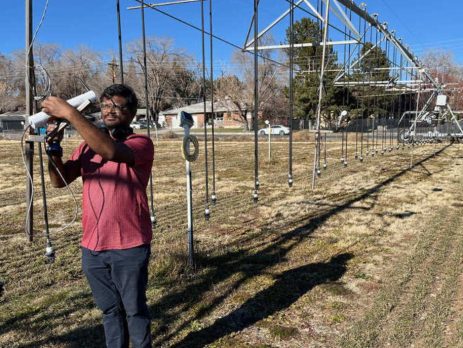
a researcher examines equipment for irrigation measurement

Informed decisions to optimize water use and irrigation investments

Harsh weather conditions and limited water access are driving research and technology innovation that will help farmers and producers make informed decisions about irrigation investments and how to optimize water use efficiency.   In Nevada, water is so limited that inefficient use of irrigation water can reduce crop yields and threaten a farm’s financial viability. Traditional irrigation systems assume uniform field [...]

Read more...
a diseased plant

Improving crop profitability through disease management

Land-grant university research and Extension programs help producers manage costly plant diseases through early detection, risk assessment and science-based tools. By integrating applied research, diagnostics and education, growers protect yields, reduce unnecessary pesticide use, improve return on investment and strengthen long-term agricultural resilience across variable production systems. Here are a few examples of that work: South Dakota State Extension plant pathology [...]

Read more...
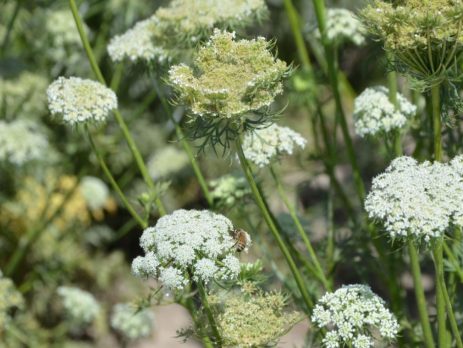
Flowering carrot plants

Identifying carrot seed disease pathogen to prevent yield loss

Central Oregon produces some of the world’s most valuable hybrid carrot seed, supporting a high-value specialty crop sector. Bacterial blight threatens seed quality yields and long-term industry viability, putting farm profitability and export competitiveness at risk.   Researchers at the Oregon State University Extension Service led a year-long field study in two commercial carrot seed fields to determine when bacterial blight [...]

Read more...
farmers watch a demonstration at a field day

Hands-on learning through trials and demonstrations

Lack of awareness and understanding of the latest research and technologies can impact profitability on small farms. Land-grant universities provide hands-on learning opportunities where producers can learn from one another, see real-time demonstrations and learn about the latest research trials to support decision-making. Here are a few examples of that work: Turmeric, a tropical plant that thrives in Guam, has been [...]

Read more...