Tag - Artificial Intelligence and Emerging Technologies

Topic

Healthy foods and exercise equipment.

Land-grant university research and Extension strengthen nutrition, health and well-being

Chronic diseases are the leading cause of illness, disability and death in America. Research and Extension are fighting back. Over half of adults who participated in a Texas diabetes education program now choose healthier foods, monitor glucose levels during exercise, and control their diabetes to avoid interference with daily life. These changes could help participants save up to $94,021 in [...]

Read more...
Vegetables for sale at a farmers market stand.

Research and Extension ensure everyone has ample access to affordable, safe, nutritious food

Invasive pests damage crops, costing U.S. agriculture an estimated $30 billion every year. Pest management research and Extension stabilize the food supply chain. Researchers and Extension specialists in Oregon, developed cost-effective alternatives to glyphosate for herbicide-resistant Russian thistle control, protecting more than 30,000 acres of wheat and preventing over $1 million in yield losses so far.Oregon State University Extension Service. [...]

Read more...
A river bisects a field and forested riparian area

Research and Extension support resilient ecosystems

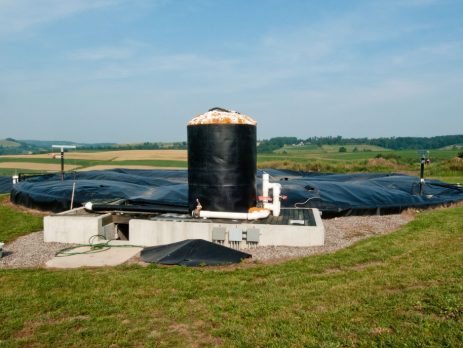
Recent studies and programs are conserving and protecting water used for drinking, fishing, irrigation and recreation.  Washington research helped establish 25 anaerobic digesters across the Pacific Northwest, turning dairy manure from more than 143,000 cows into biogas that provides more than 126 million kilowatt-hours of renewable energy per year. Digesters decrease water quality risks associated with nutrient runoff from manure [...]

Read more...

Land-grant university research and Extension drive new biofuels, bioplastics, biochar and other bio-based products, strengthening rural economies, environmental health and energy security

Here are a few examples of that work:  Partnering with a private company, scientists in Pennsylvania roduced and tested biomaterials to replace single-use, petroleum-based plastics. New composites made from cellulose and starch have improved stability and barrier properties and have been developed into compostable food packaging and handling products; adhesives and foams for packaging, wood composites and construction materials; and [...]

Read more...
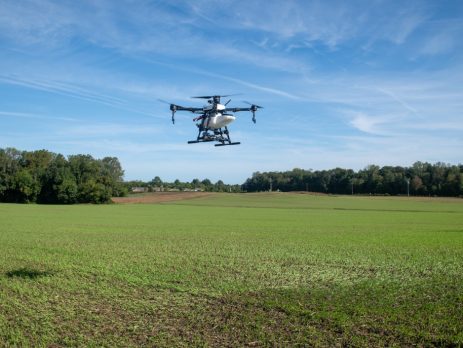
A drone flies over a field.

Research and Extension make agricultural systems more efficient, profitable, competitive and resilient

Strategies and tools for managing crop pests and diseases have increased productivity and profitability. For example: Extension units across the nation offer plant and pest diagnostic clinics. In New Mexico, free diagnoses saved producers an estimated $36,000 in testing fees in 2025, while also supporting biosecurity and export compliance. In Indiana, lab results and recommendations saved clients $890,000 in reduced [...]

Read more...
An underwater remotely operated vehicle, or ROV, runs though one of its underwater challenges at the SeaPerch regional competition hosted by Louisiana 4-H.

Louisiana 4-H SeaPerch builds workforce-ready STEM skills through experiential robotics learning

Preparing youth for tomorrow’s workforce is critical as STEM occupations are projected to grow 10.8% nationwide between 2022 and 2032. In Louisiana, demand for skilled engineers and technicians continues to rise in energy, coastal restoration and advanced manufacturing sectors. To address this need, Louisiana 4-H implemented the SeaPerch underwater robotics program to expand access to hands-on STEM learning and [...]

Read more...
Wellness on Wheels truck

Empowering community resilience

Community resilience support is a critical function of the land-grant system because it equips individuals, families and local organizations with the knowledge, tools and partnerships needed to adapt to economic, environmental and public health challenges. Through research-based education and Extension outreach, land-grant universities strengthen local capacity, promote equity and help communities not only recover from disruption but build long-term [...]

Read more...
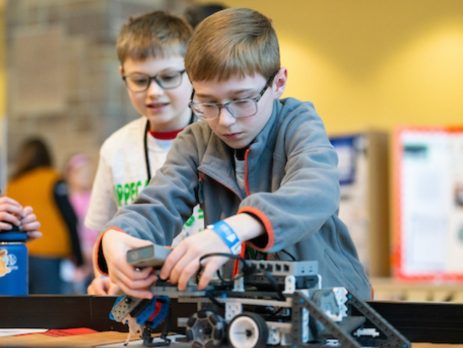
a 4-H student operates a robot

Engaging students in STEM, robotics

Exposing youth to innovative technology builds digital literacy, problem-solving skills and career readiness, preparing the next generation to compete in a rapidly evolving, technology-driven workforce. Together, youth-focused technology education and land-grant leadership create a pipeline of skilled leaders who can drive economic growth and address complex local and global challenges. Here are a few examples of that work: South Dakota middle [...]

Read more...
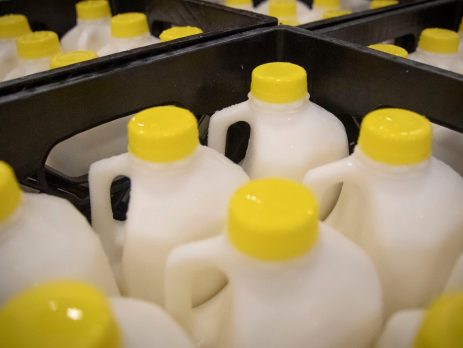
gallons of milk

Artificial intelligence decodes microbes’ message in milk safety testing approach

Ensuring the safety and integrity of the food supply is critical to public health, consumer confidence and the economic stability of the agricultural sector. In a groundbreaking collaboration, researchers from the Pennsylvania State University, Cornell University in New York, and IBM Research have demonstrated how artificial intelligence can strengthen dairy safety by detecting subtle microbial signals that indicate potential [...]

Read more...
Braham Dhillon, a molecular plant pathologist at UF/IFAS Fort Lauderdale Research and Education Center, demonstrates Robigus from his desktop.

New Robigus app allows viewers to track invasives, crop diseases worldwide

Plant diseases pose a global threat to food security, yet critical data on outbreaks are scattered across thousands of journals and reports. This fragmentation makes it difficult to access timely information about the disease, delaying the search for treatments and potential best management control practices.  The new app Robigus, developed by a researcher at the University of Florida Institute of [...]

Read more...

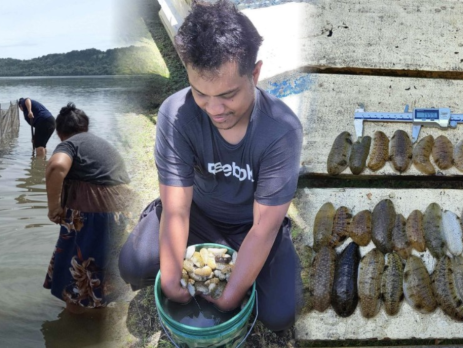
Making aquaculture more productive, safe and economical

The seafood industry is economically vital and provides an important source of protein for the world. Challenges to aquaculture include inefficient production methods, expensive feed inputs and food safety. Land-grant efforts are protecting and promoting this booming industry. Here are a few examples of that work: As feed is the most expensive cost of aquaculture, researchers in Alabama are developing feeds [...]

Read more...
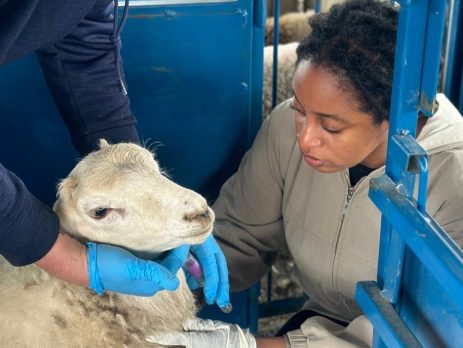
a vet giving a sheep a vaccine

Enhancing food safety with research and training

The United States food supply is among the safest in the world, but every day news stories report food recalls for a variety of safety reasons. Food safety must be maintained through every step of the production process, and land-grant institutions are the key to research and training that helps the food industry provide safe, healthy food. Here are a [...]

Read more...
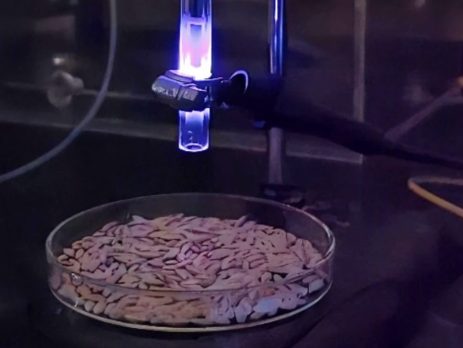
A glass tube with a glowing blue ejects plasma downward to a dish of rice seeds.

Cold plasma-treated rice seeds inhibit fall armyworm, improve early crop vigor

Fall armyworm, a major crop pest particularly damaging in rice, often requires repeated insecticide applications for control. Plasma — the same electrically charged matter responsible for the northern lights — may offer a new way to support crop growth and reduce damage from this major pest, according to Arkansas Agricultural Experiment Station researchers.   Scientists exposed rice seeds to atmospheric cold [...]

Read more...
kebabs

Bots for kebabs

Consumer demand is strong for grilled kebabs — meat and vegetable cubes on skewers — that require highly labor-intensive tasks and complex hand-eye coordination. This repetitive, low-skilled job of producing kebabs is getting harder to fill, and even the existing semi-autonomous skewering systems require human handling and oversight. Food processing companies are increasingly recognizing the need to fully automate [...]

Read more...
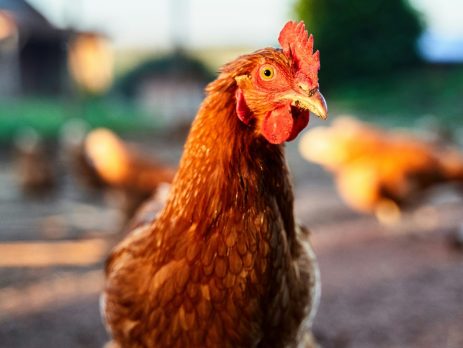
chicken

Artificial intelligence helps protect from Avian influenza

In the fight against the costly impacts of avian influenza, protecting poultry flocks from contact with wild birds is an important deterrent. However, the methods for effectively controlling wild birds are limited. In Georgia, researchers developed a novel method for detecting wild birds on farms, using night vision technology and artificial intelligence.  To aid in monitoring wild bird activities near [...]

Read more...
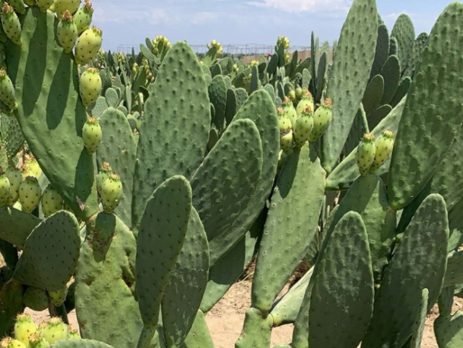
cacti

Developing sustainable domestic biofuels

Land‑grant universities are developing sustainable bioproduct solutions that transform renewable biomass, including food and agricultural wastes, into valuable materials. These bioproducts strengthen national energy and food security, lower greenhouse gas emissions and support rural economies. They also create new markets, provide farmers with additional income opportunities and help to reduce dependence on fossil fuels. Here are a few examples of [...]

Read more...
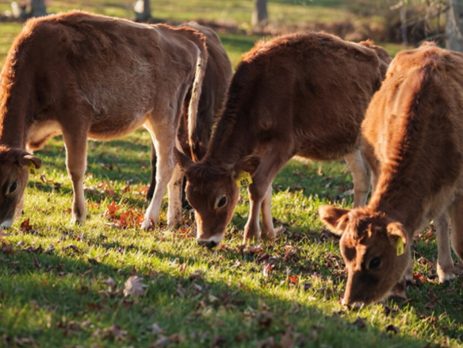
cattle in a field

Tech solutions for livestock management

Livestock producers face challenges such a shrinking labor force, limited veterinary access and rising costs. Artificial intelligence, precision agriculture technologies and genome sequencing have shown promise in improving livestock management, but up-front costs have generally restricted adoption to large-scale dairies. Small farms need economically feasible, effective tools tailored to their specific operations. Here are a few examples of that work: Researchers [...]

Read more...
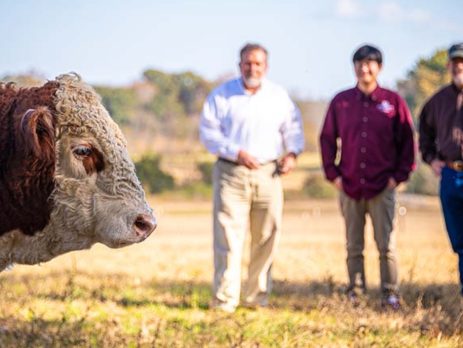
Scientists stand in a pasture with a bull in the foreground

Fine-tuning livestock production systems to overcome challenges

Livestock researchers are exploring new ways to achieve higher profitability through reproductive research, technology and traditional education outreach to help offset rising production costs. Here are a few examples of that work: In Louisiana, the Geaux Beef Heifer Development Program was created to support producers with expert-guided, forage-based heifer development. The program utilized artificial insemination or natural breeding combined with expert [...]

Read more...
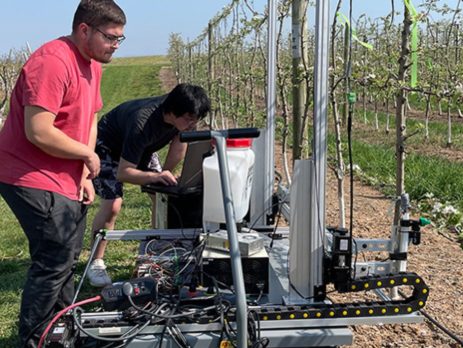
two scientists operate a robotic apple blossom sprayer

Emerging technology offers new tools for growers

Emerging technology is giving farmers tools to reduce the impacts of labor shortages, rising costs, changing weather patterns and regulatory demands, while improving production and profitability. These tools, using drones, robots, artificial intelligence and machine learning, offer a path to sustain productivity, worker safety and environmental performance in the agricultural economy. Projects demonstrate how these technical tools and artificial [...]

Read more...
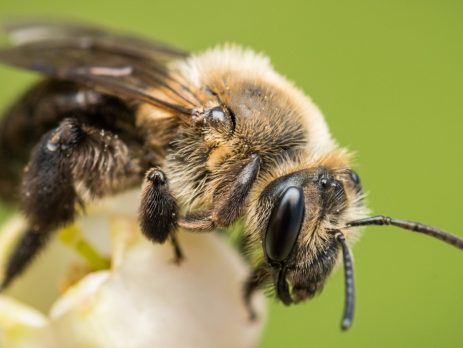
bee

Leveraging a highly trained volunteer network to document bee biodiversity

Many high-value crops such as flowering fruit trees, berries and vegetables rely on native bee populations, but these critically important pollinators are declining nationwide. Scientists can monitor the diversity and abundance of species using data collected across broad geographic ranges through public natural history social platforms such as iNaturalist. The challenge, however, is that photography-based monitoring can introduce unintended [...]

Read more...
Tahirah Johnson examines testing samples under a magnifying glass in a research lab on the University of Maryland Campus in 2024.

Innovative methods for safer, healthier food production practices

Regional food production is critical to local economies and supporting American food systems. Rising reports of foodborne illnesses, increased antibiotic resistance and newer production systems like soilless agriculture necessitate a better understanding of the risks and options to improve the safety and health value of food products from produce to shellfish and tree nuts. 1890 land-grant universities are examining [...]

Read more...
a group of children smile around a science experiment

Land-grant universities support youths, build stronger communities

The Land-grant University System plays a crucial role in equipping young people with the skills, knowledge and leadership abilities they need to thrive in their personal and professional lives. Here are a few examples of that work: In North Carolina, the Bertie DigiCon provided residents with tools and resources to overcome digital barriers. The event raised funds for youth development and [...]

Read more...
a purple flowering plant

Research provides more sustainable pest management options

Agricultural land and natural ecosystems face growing threats from invasive and noxious grasses and weeds, feral animals, pests and diseases that impair ecosystem services and agricultural productivity. Chemical pesticides can pose human and environmental health risks. Land-grant university research had led to findings, tools and strategies for managing pests more sustainably. Here are a few examples of that work: Research and [...]

Read more...
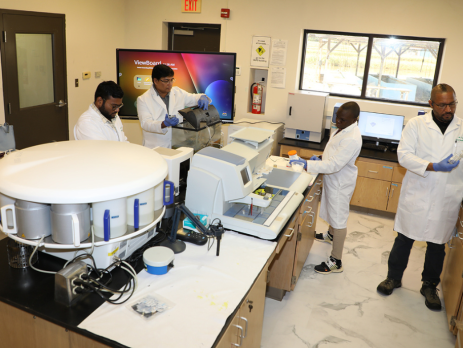
scientists in a lab

Harnessing artificial intelligence for agricultural innovation

Land-grant universities are leveraging artificial intelligence (AI) to improve agricultural efficiency, productivity and sustainability. Here are a few examples of that work: In Georgia, researchers are developing an AI-powered app to help farmers accurately identify Sericea lespedeza, a valuable forage crop with natural anthelmintic properties, reducing time ad labor costs.Fort Valley State University; USDA Capacity-Research. See full statement.   In Arkansas, researchers are [...]

Read more...
a creek through the woods

Precision monitoring aids decision makers and stakeholders in protecting key watersheds

Nutrient pollution, biodiversity losses and weather variability pose extraordinary challenges for the sustainability of natural ecosystems and the species that inhabit them. Land-grant universities are developing and applying emerging technologies that can help to more efficiently, accurately and safely monitor, measure and precisely manage these systems with minimal environmental impact. Here are a few examples of that work: To better understand [...]

Read more...