Tag - Workforce Development and Readiness

Topic

young child walking in strawberry patch

Land-grant university research and Extension support resilience for youths, families and communities nationwide

Here are a few examples of that work:  The effectiveness of the Department of Defense’s Military Family Readiness System depends on well-trained Extension professionals with research-based tools and resources. Extension specialists in Kentucky contributed by providing personal finance training to military service providers so they can pass on knowledge, tools and resources that help military families prevent and navigate financial [...]

Read more...
Healthy foods and exercise equipment.

Land-grant university research and Extension strengthen nutrition, health and well-being

Chronic diseases are the leading cause of illness, disability and death in America. Research and Extension are fighting back. Over half of adults who participated in a Texas diabetes education program now choose healthier foods, monitor glucose levels during exercise, and control their diabetes to avoid interference with daily life. These changes could help participants save up to $94,021 in [...]

Read more...
A river bisects a field and forested riparian area

Research and Extension support resilient ecosystems

Recent studies and programs are conserving and protecting water used for drinking, fishing, irrigation and recreation.  Washington research helped establish 25 anaerobic digesters across the Pacific Northwest, turning dairy manure from more than 143,000 cows into biogas that provides more than 126 million kilowatt-hours of renewable energy per year. Digesters decrease water quality risks associated with nutrient runoff from manure [...]

Read more...
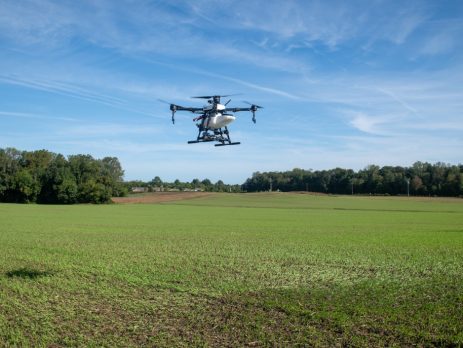
A drone flies over a field.

Research and Extension make agricultural systems more efficient, profitable, competitive and resilient

Strategies and tools for managing crop pests and diseases have increased productivity and profitability. For example: Extension units across the nation offer plant and pest diagnostic clinics. In New Mexico, free diagnoses saved producers an estimated $36,000 in testing fees in 2025, while also supporting biosecurity and export compliance. In Indiana, lab results and recommendations saved clients $890,000 in reduced [...]

Read more...
two people in business attire look at a document

Train-the-Trainer model enhances financial professionals’ ability to increase financial literacy in clients

Finance professionals play a key role in helping American families increase financial literacy and stability. While technology has made it easier for people to learn about finance, limited financial literacy and distrust in finance professionals among low-to-moderate income earners illustrates the need for finance professionals to better reach this audience.  The University of Maryland Extension uses a train-the-trainer approach to [...]

Read more...

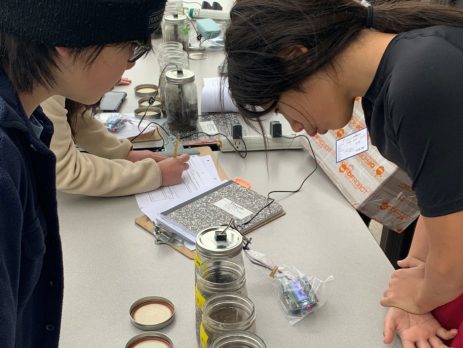
Technology provides hands-on experiences for students to explore soil science and career opportunities

Healthy soils are critical to sustain U.S. food production needs. Currently, the agricultural industry is experiencing a shortage of professionals who are skilled and knowledgeable in soil health and resiliency, and high-tech data analysis. Many students in grade school through college lack adequate exposure to careers in agriculture, including the cutting-edge science of deep soils, which play a significant [...]

Read more...

Strengthening and building cooperative businesses to support employees, consumers and local producers

Cooperative businesses, or co-ops, are jointly owned by members, including consumers, employees and producers. Because Co-ops have different business and profit-sharing models than investor-owned, for-profit corporations, they are unique in their ability to drive local wealth creation and support social and economic community stability by strengthening local food systems and providing nutritious local farm products. Co-ops are important sources [...]

Read more...
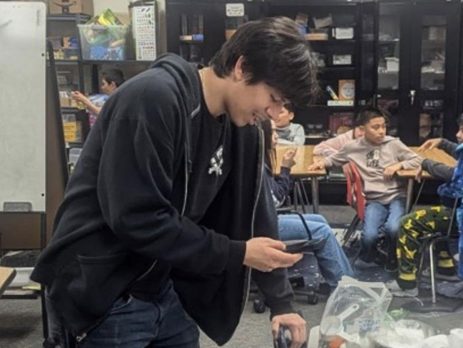
One of the participants in the Training for Teens program prepares a science experiment for his after-school class.

Preparing Oregon’s youths for leadership, lifelong success

Oregon employers report that many youths enter the workforce without essential employability skills, including communication, teamwork and time management. To address this gap, Oregon State University Extension Service 4‑H Youth Development partnered with the Umatilla School District after‑school program to create the Teens as Leaders curriculum.  In 2024, 12 youths completed a 10‑hour, weeklong training focused on leadership, communication, teamwork, [...]

Read more...
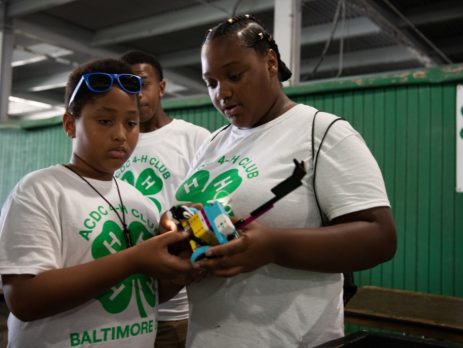
4-Hers look at their robot

Near-peer mentors expand 4-H program reach in Tennessee

While Tennessee 4-H serves over 140,500 youths across the state, many rural communities and communities with limited resources do not have the same programs that give youths high-quality experiential learning opportunities in STEM, agriculture and leadership. Summer 4-H camps help bridge this programming gap but staffing and capacity constraints limit potential impact.   In 2025, six Tennessee State University (TSU) NEXTGen [...]

Read more...
An underwater remotely operated vehicle, or ROV, runs though one of its underwater challenges at the SeaPerch regional competition hosted by Louisiana 4-H.

Louisiana 4-H SeaPerch builds workforce-ready STEM skills through experiential robotics learning

Preparing youth for tomorrow’s workforce is critical as STEM occupations are projected to grow 10.8% nationwide between 2022 and 2032. In Louisiana, demand for skilled engineers and technicians continues to rise in energy, coastal restoration and advanced manufacturing sectors. To address this need, Louisiana 4-H implemented the SeaPerch underwater robotics program to expand access to hands-on STEM learning and [...]

Read more...
a woman paying bills

Improving financial literacy and well-being in adults

Adults in the U.S. often struggle with financial well-being. They face challenges including insufficient savings, debt struggles and confusion around changing tax codes. The Land-grant University System helps adults improve their financial literacy and stability. Here are a few examples of that work: In-person and virtual finance education programs in South Dakota taught fiscal management practices and consumer economics that helped [...]

Read more...
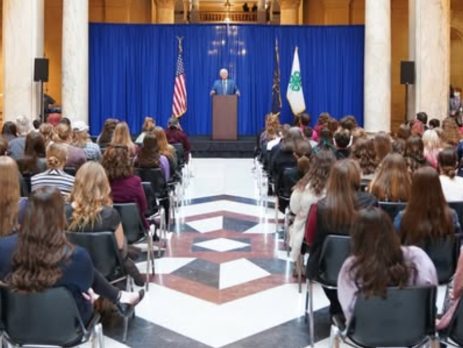
4-H students in a capital building

Growing tomorrow’s citizens: Land-grant universities empower youth voices

Civic engagement is essential to youth development because it builds leadership, responsibility, critical thinking and a sense of belonging. Land-grant universities play a vital role by delivering research-based Extension and 4-H programs that provide hands-on civic education, leadership training and service-learning opportunities. These institutions connect youth with local leaders, real-world challenges and pathways to lifelong active citizenship. Here are a [...]

Read more...
Youths wearing life vests stand on a dock as they fill out forms while an adult explains the process

Extension introduces youths to career opportunities in agriculture and STEM

The United States is facing a dearth of skilled and educated workers across the agricultural industry. With many young people being several generations removed from agriculture within their families, and removed from where their food comes from, introducing youths to the variety of careers in agriculture and food systems and teaching related skills can build a new generation of [...]

Read more...
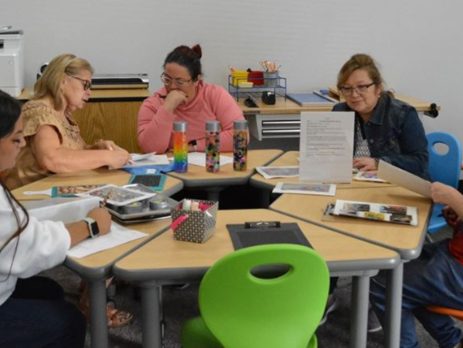
Individuals sitting around a table in a room.

Extension strengthens Nevada’s early childhood workforce

Nevada’s early childhood workforce faces ongoing challenges, including high turnover, limited affordable professional development and the need for consistent, evidence‑based practices. High‑quality early learning relies on well‑prepared educators and leaders who feel supported and confident.  University of Nevada, Reno Extension early childhood programming addresses these challenges by providing accessible training pathways, leadership development and nationally recognized credentials. By supporting educators [...]

Read more...
Soldier working with laptop at wooden table indoors

Equipping military service providers to strengthen family financial security

Kentucky ranks 11th nationally for active-duty military personnel, with approximately 44,000 service members across the Commonwealth and more than 295,000 veterans calling Kentucky home. While military families benefit from the Department of Defense’s Military Family Readiness System, the effectiveness of this network depends on well-trained professionals equipped with current, research-based tools and resources.  To strengthen this workforce, the OneOp Personal [...]

Read more...
a group of smiling participants

Empowering volunteer leaders to facilitate supportive networks and personal development

According to the Puerto Rico Department of Health, one in four people in Puerto Rico live with a mental health condition. With research-backed approaches and deep community ties, Extension is particularly equipped to address issues of individual and community health and well-being. To extend its reach, the University of Puerto Rico Agricultural Extension Service consolidated offices in Camuy, Hatillo [...]

Read more...
a person uses a desktop computer at a library

Connecting rural communities through digital opportunities and education

Limited availability of reliable broadband and digital tools continues to restrict educational attainment, workforce participation and access to essential services in rural Georgia. Communities surrounding Fort Valley State University face persistent digital inequities that disproportionately affect seniors, youth and low-income households. Addressing these gaps is critical to strengthening rural economies and improving service access.  Fort Valley State University Cooperative Extension [...]

Read more...
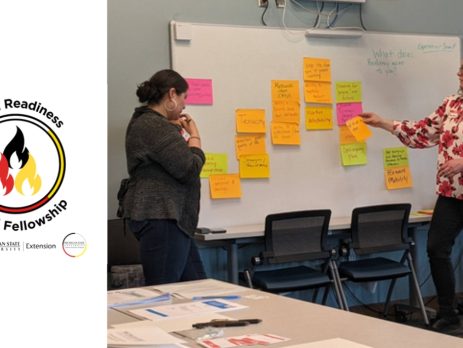
the tribal fellowship logo and a photo of facilitators at a board

Collaborative planning strengthens tribal economic resiliency and leadership capacity

Tribal Nations continue advancing economic resiliency efforts for their communities grounded in sovereignty, cultural values and priorities. Strategic planning that reflects Tribal governance structures, supports internal capacity and strengthens leadership skills is essential for addressing complex challenges related to housing, food sovereignty, financial literacy and long-term community well-being. Creating space for Tribal leaders to collaboratively reflect, refine plans and [...]

Read more...
a group of youth at a training

Building West Virginia’s future fire service workforce through youth engagement

Volunteer fire departments across West Virginia face ongoing recruitment and retention challenges threatening emergency response capacity, particularly in rural and economically distressed communities. Aging volunteer memberships, increased training requirements and limited early exposure to fire service careers have weakened the traditional pipeline of new volunteers.  To address this workforce gap, the West Virginia University Extension State Fire Training Academy operated [...]

Read more...
a stressed farmer looking at a phone

Building healthier communities through land-grant mental health programs

Communities across the United States are affected by mental health challenges. The Land-grant University System is addressing those challenges through programs that provide practical skills training, supportive environments and pathways to healthier, more resilient lives. Here are a few examples of that work: In Oregon, Extension professionals launched the AgriStress Helpline in 2023, providing 24/7 call and text support from suicide-preventionists [...]

Read more...
Wellness on Wheels truck

Empowering community resilience

Community resilience support is a critical function of the land-grant system because it equips individuals, families and local organizations with the knowledge, tools and partnerships needed to adapt to economic, environmental and public health challenges. Through research-based education and Extension outreach, land-grant universities strengthen local capacity, promote equity and help communities not only recover from disruption but build long-term [...]

Read more...
two girls sitting at a table with information

Preparing youth for adulthood with financial literacy programs

Youths often enter adulthood unprepared to effectively manage finances. Studies reveal concerning trends, such as that only 24% of students and 20% of their parents believe they are adequately prepared for adult financial challenges, or that 27% of Gen Z individuals have no savings. Without meaningful opportunities to learn budgeting concepts and gain practice with budgeting, managing income and [...]

Read more...
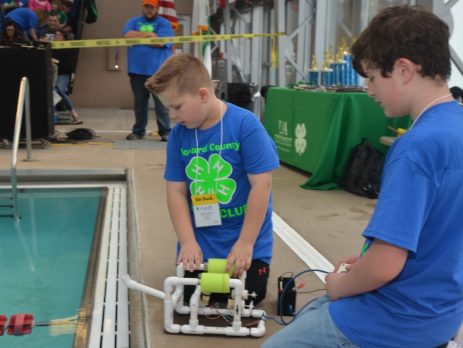
two 4-Hers with their machine at the side of a pool

Building Arkansas’ future workforce through 4-H SeaPerch robotics

Arkansas employers increasingly seek workers with engineering aptitude, mechanical skills, critical thinking ability, teamwork, communication and digital literacy. To help prepare youth for these workforce demands, Arkansas 4-H implemented the SeaPerch underwater robotics program, an experiential STEM initiative that engages students ages nine and older in hands-on engineering, design and problem-solving activities.  Through SeaPerch, youth teams design, build and test [...]

Read more...
child playing with building blocks

Building a solid foundation for children

Early childhood is a decisive period in shaping academic achievement, social development and lifelong success. Parents, caregivers and early childhood educators play a central role in fostering the communication, cooperation, decision-making and problem-solving skills that research consistently links to later educational and workforce readiness. Ensuring that the adults in a child’s life have the knowledge and tools to nurture [...]

Read more...
a teacher and students look at classwork

Advancing student workforce development in West Virginia

In West Virginia, fewer students are going to college after high school. To meet the state’s workforce demand, 60% of West Virginians need to have some form of degree or certificate. As of 2022, only 45% of the adult population had achieved this level of education.  West Virginia University Extension conducted a statewide needs assessment in 2021 and discovered that [...]

Read more...