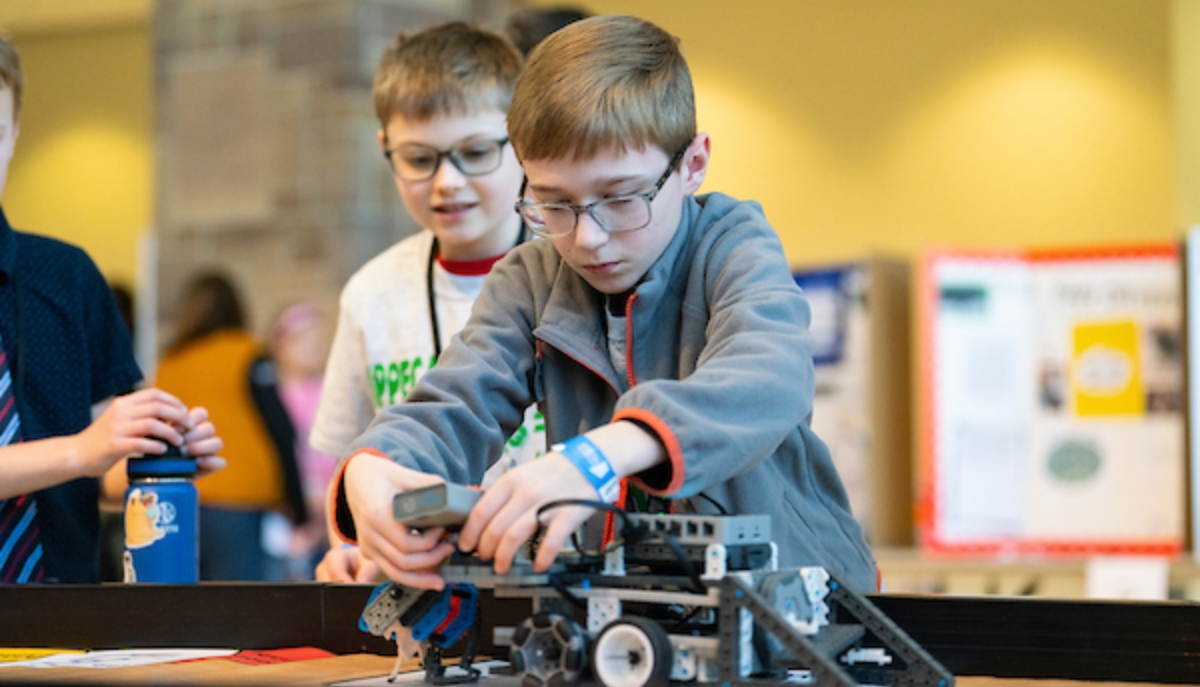
Engaging students in STEM, robotics
Exposing youth to innovative technology builds digital literacy, problem-solving skills and career readiness, preparing the next generation to compete in a rapidly evolving, technology-driven workforce. Together, youth-focused technology education and land-grant leadership create a pipeline of skilled leaders who can drive economic growth and address complex local and global challenges.
Here are a few examples of that work:
- South Dakota middle school students engaged in a six-lesson, hands-on robotics program using the Ozobot™ platform to build foundational skills in programming, computational thinking and problem-solving. Through experiential learning and Scratch-style coding challenges, students increased their average self-reported knowledge of robotics and programming by 30%. This early STEM exposure strengthened student confidence and workforce readiness while helping build a pipeline of technologically skilled youth to support future innovation and economic growth.
SDSU Extension. Supported by Smith-Lever (3b&c) capacity funds. See full statement.
- The Agriculture Microbiome Program engaged Oklahoma students and STEM teachers in hands-on research, resulting in an average one-letter-grade increase in microbiome knowledge and stronger laboratory skills such as DNA extraction, PCR and microscopy. By sharing their learning through community presentations, participants helped build local awareness of science-based solutions that support sustainable agriculture and future food security.
Oklahoma Cooperative Extension Service. Supported by state appropriations. See full statement.
- Louisiana 4-H expanded SeaPerch robotics statewide by training 49 educators and engaging 115 youth from 10 parishes in hands-on underwater engineering competitions. Rapid program growth and strong university and industry partnerships are building a sustainable STEM pipeline that strengthens workforce readiness and economic competitiveness across the state.
LSU Ag Center. Supported by state appropriations; non-profit grants and contracts. See full statement.
- To prepare youth and farmers for a rapidly evolving agricultural landscape, Georgia 4-H launched an innovative Ag Tech program that builds youth knowledge in precision agriculture while strengthening communication and leadership skills through real-world, community-based learning.
University of Georgia Cooperative Extension. See full statement.
Photo courtesy of Purdue Extension.