Cold plasma-treated rice seeds inhibit fall armyworm, improve early crop vigor
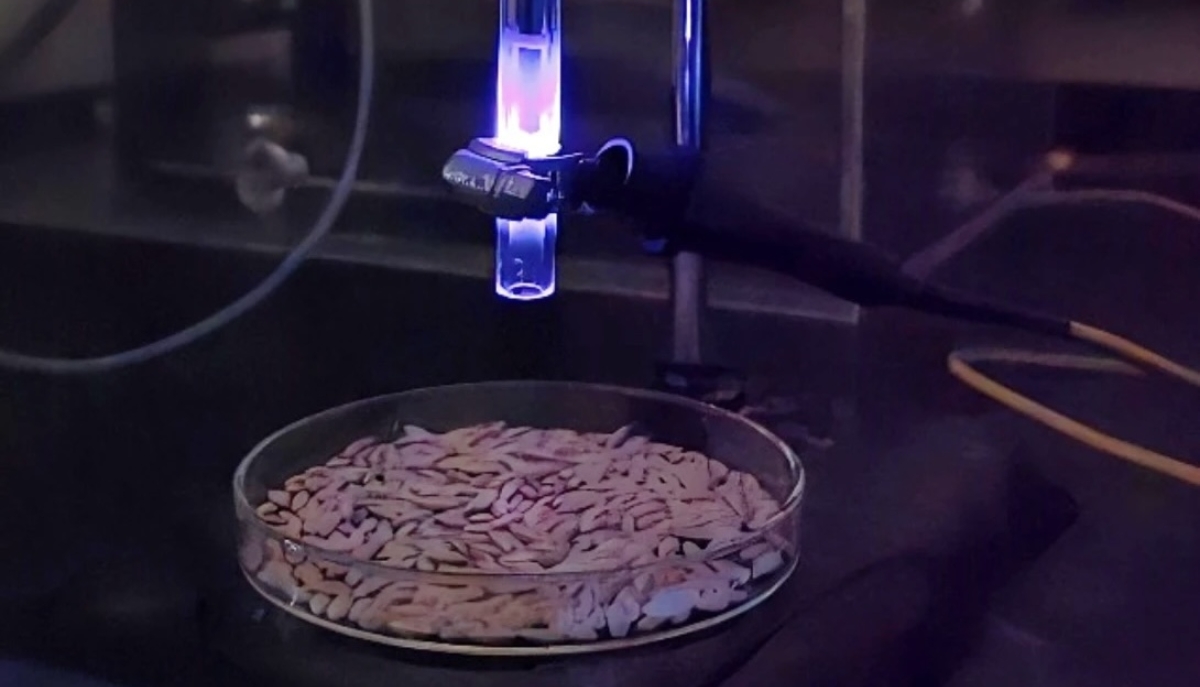
Fall armyworm, a major crop pest particularly damaging in rice, often requires repeated insecticide applications for control. Plasma — the same electrically charged matter responsible for the northern lights — may offer a new way to support crop growth and reduce damage from this major pest, according to Arkansas Agricultural Experiment Station researchers.
Scientists exposed rice seeds to atmospheric cold plasma and plasma-activated water to evaluate the effects on plant growth and insect defense. Results demonstrated that plasma-treated rice plants had improved early growth traits, and that treatments reduced growth and development of fall armyworm. While benefits were strongest in early plant stages, the findings suggest cold plasma could be a new tool to complement existing seed treatments, enhancing early plant vigor and natural insect resistance, potentially reducing the need for chemical insecticides.
Arkansas Agricultural Experiment Station | Project supported by state appropriations; Hatch capacity funds. Photo courtesy of University of Arkansas Division of Agriculture.