
Extension, Food Bank partner to satisfy food demand, while opening economic opportunities to local farmers
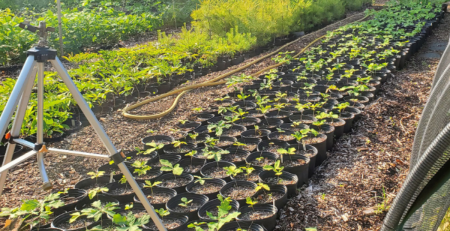
A Maryland Food Bank needs assessment showed a growing desire for more non-native vegetables. An alternative crop specialist with the University of Maryland Eastern Shore Extension noted the economic opportunity for farmers. Alternative crops are high value, creating a niche market that sets small-scale farmers apart from commercial growers and increases their income potential.
In 2023, the alternative crop specialist began working with five farmers to grow niche crops. In 2024, the program expanded, recruiting 15 farmers — most of whom were new to the profession — to grow non-native crops, including jute, callaloo, amaranth, scotch bonnet and African eggplant. Extension professionals worked closely with the farmers throughout the growing season.
Even though 2024 was an extremely dry year, some of the alternative crops, such as callaloo and amaranth, grew well with little water. In addition, local wildlife didn’t tend to eat the crops, as they didn’t recognize them. The farmers who participated in the program in 2024 collectively sold more than 10,000 pounds of produce, and one farmer established relationships with restaurants in Washington, D.C. to further market his vegetables.
View the full statement on the NIDB.
Project supported by USDA Competitive funds and Non-Profit Grants & Contracts. Photo courtesy of University of Maryland – Eastern Shore.