BIPOC farmers lead by example
Black, Indigenous and other people of color in farming often lack opportunities and face barriers to institutional resources typically available to White farmers. Approximately 96% of U.S. farmers are White. Farmers of color may be unaware of assistance available from government agencies and other organizations.
To connect farmers of color with state and federal expertise and funding to help conserve natural resources, University of Connecticut Extension provided workshops through the Leaders of Color in Conservation training program. Participants then serve as leaders in their communities to encourage conservation.
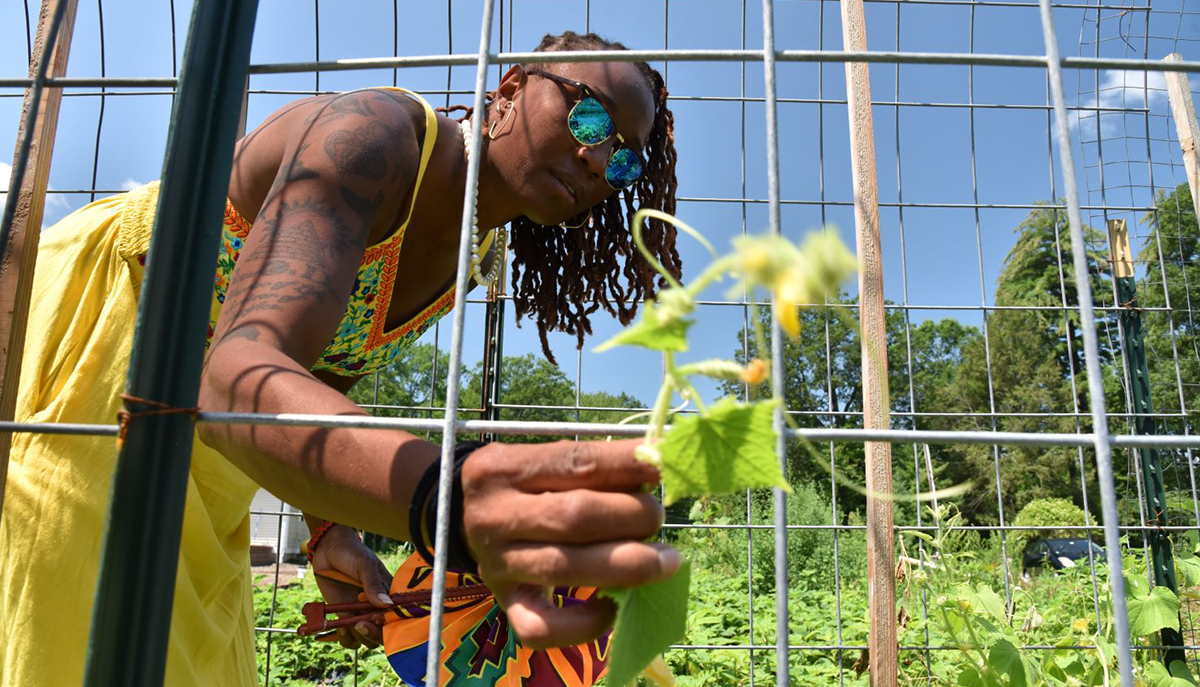
One farmer who participated in the workshops said she values what she learned about accessing Natural Resources Conservation Services resources when purchasing land and starting a new farm business. Understanding what to consider — including soil content and protected land status — helps new farmers ensure land they purchase will be usable agricultural space.
“It can save so many people so much time, so much heartache,” said a farmer/beekeeper. “Some of us quit because it gets too overwhelming. Imagine you bought this land, and you did all this work to find out it’s in a swampy area and everything you have is going to die. That’s what happens to a lot of us that are new.”
A vegetable grower said, “The program brought people together from all over the state and created a network of BIPOC farmers. Just to build that community and be around likeminded people is such a wonderful experience.”
Project supported by Smith-Lever (3b&c) funds. Photo courtesy Connecticut Cooperative Extension System.