How wind energy affects land mammals’ habitat selection
Renewable energy is an important source of electricity around the world. Wind energy facilities are among the fastest-growing forms of renewable energy, and they’re usually built in areas with the highest wind speeds. However, installing these turbines and maintaining these facilities can affect wildlife in the area. Birds and bats have died at wind energy facilities, but not much is known about how terrestrial species respond.
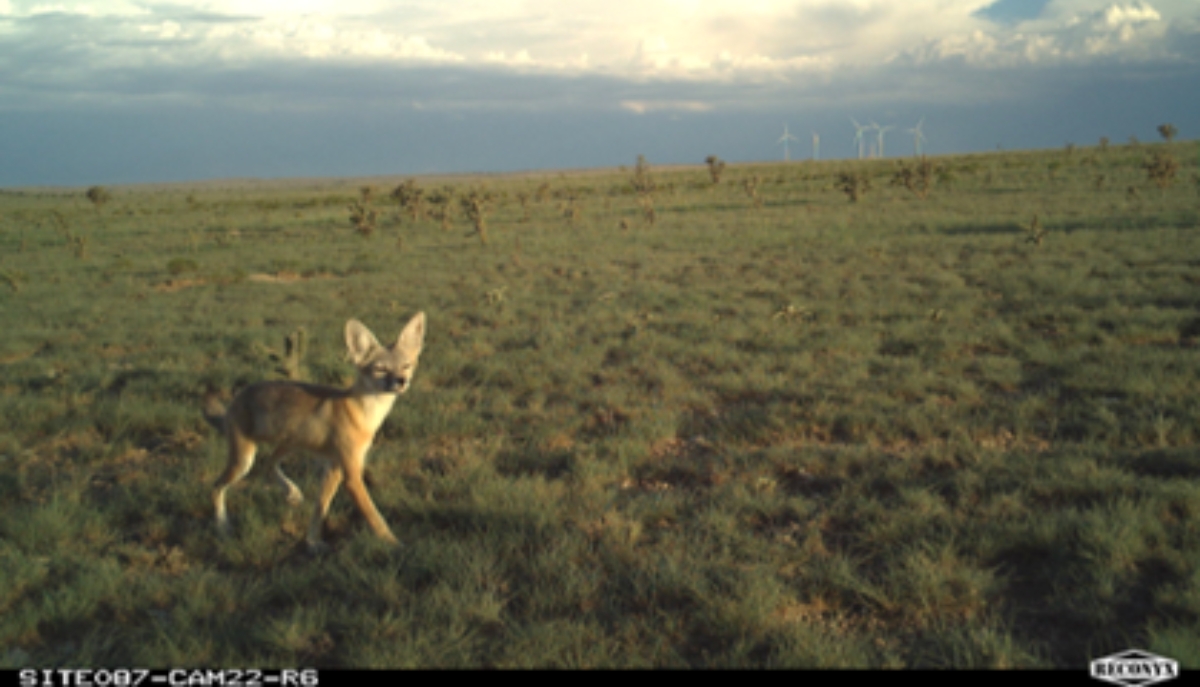
New Mexico State University researchers studied how wind turbines and their access roads affect mammal habitat in central New Mexico rangeland. They used motion-activated trail cameras to survey 102 sites from May to September 2024. They used models to analyze habitat use and shared management recommendations with the Bureau of Land Management and the New Mexico Department of Game and Fish.
Researchers found wind energy facilities affected how likely five of the nine species they modeled were to use their habitat. They found wind turbine visibility was the most consistent variable leading a species to reduce its habitat use. The researchers recommended that land managers planning future wind facilities should use vegetative cover to try to hide turbines from an animal’s view.
As future wind energy facilities are built, these observations of changes in wildlife habitat use inform conservation efforts such as habitat management. It also informs future wind energy development decisions to reduce impacts on wildlife.
New Mexico Agricultural Experiment Station | Photo courtesy of New Mexico Agricultural Experiment Station.