
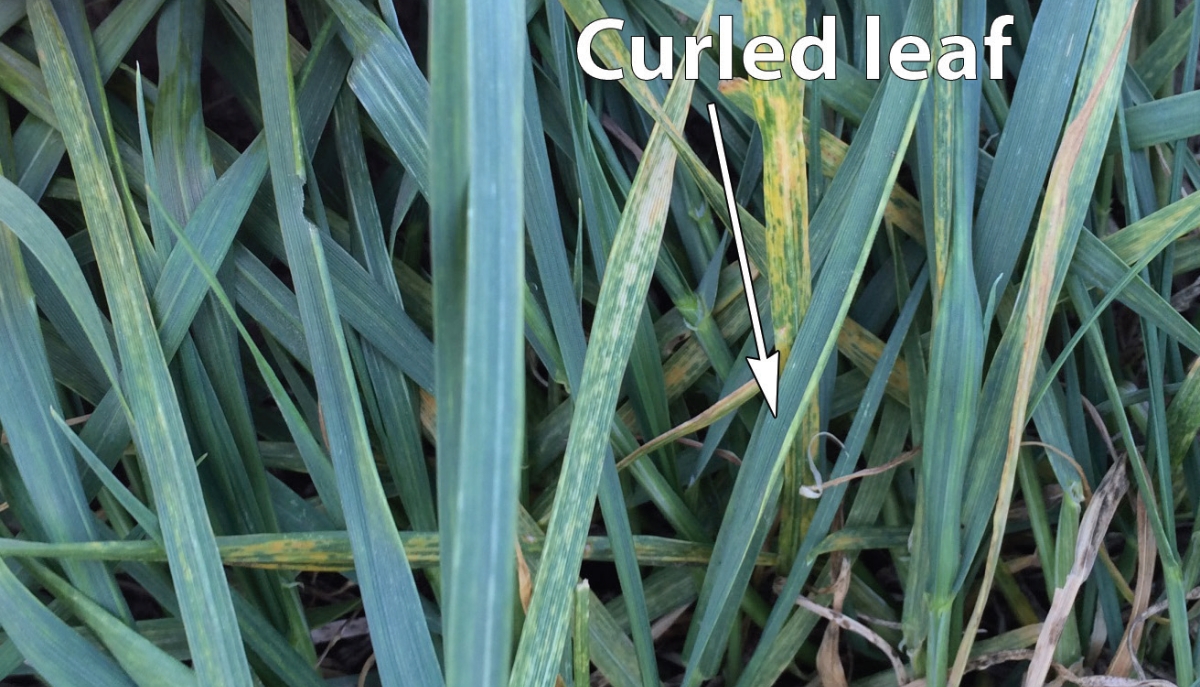
Tackling wheat mosaic virus in Central, Western Kansas
A devastating outbreak of wheat mosaic virus hit Kansas in 2025, threatening the state’s multi-billion-dollar industry that produces 24% of the nation’s wheat crop. With potential yield losses exceeding 80% in infected fields, Kansas farmers and rural communities were faced with millions of dollars in losses. The disease is carried by a wind-born microscopic mite and cannot be controlled with current chemical options.
Kansas State University Extension responded with producer meetings and field days, producer field visits, educational publications, webinars, social media and traditional media outreach. These efforts increased producer knowledge and general awareness of the issue.
Many Kansas farmers were frustrated when wheat varieties labeled as “resistant” still showed signs of mosaic disease. With guidance from Extension professionals and testing at the Kansas State Plant Diagnostic Laboratory, producers discovered that their fields were affected by various viruses simultaneously. These co-infections—caused by wheat streak mosaic, Triticum mosaic, and High Plains mosaic viruses—explained why single-virus resistance was not enough to prevent damage.
As a result of education outreach efforts, farmers armed with this new understanding adjusted their management and variety selection strategies to focus on broader, multi-virus resistance. This shift is helping them make more informed decisions, improve disease management and protect yields in future growing seasons.
K-State Research and Extension | Project supported by Smith-Lever (3b&c) capacity funds; USDA Capacity – Research. Photo courtesy of K-State Department of Plant Pathology.