Tag - Water Resilience/Management

Topic

young child walking in strawberry patch

Land-grant university research and Extension support resilience for youths, families and communities nationwide

Here are a few examples of that work:  The effectiveness of the Department of Defense’s Military Family Readiness System depends on well-trained Extension professionals with research-based tools and resources. Extension specialists in Kentucky contributed by providing personal finance training to military service providers so they can pass on knowledge, tools and resources that help military families prevent and navigate financial [...]

Read more...
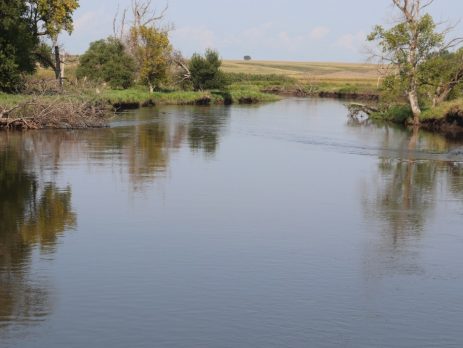
A river bisects a field and forested riparian area

Research and Extension support resilient ecosystems

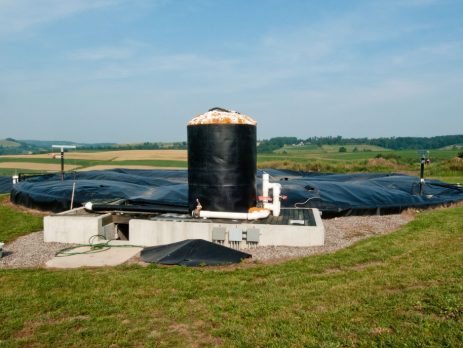
Recent studies and programs are conserving and protecting water used for drinking, fishing, irrigation and recreation.  Washington research helped establish 25 anaerobic digesters across the Pacific Northwest, turning dairy manure from more than 143,000 cows into biogas that provides more than 126 million kilowatt-hours of renewable energy per year. Digesters decrease water quality risks associated with nutrient runoff from manure [...]

Read more...

Land-grant university research and Extension drive new biofuels, bioplastics, biochar and other bio-based products, strengthening rural economies, environmental health and energy security

Here are a few examples of that work:  Partnering with a private company, scientists in Pennsylvania roduced and tested biomaterials to replace single-use, petroleum-based plastics. New composites made from cellulose and starch have improved stability and barrier properties and have been developed into compostable food packaging and handling products; adhesives and foams for packaging, wood composites and construction materials; and [...]

Read more...
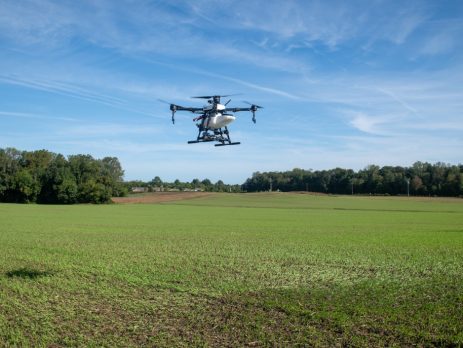
A drone flies over a field.

Research and Extension make agricultural systems more efficient, profitable, competitive and resilient

Strategies and tools for managing crop pests and diseases have increased productivity and profitability. For example: Extension units across the nation offer plant and pest diagnostic clinics. In New Mexico, free diagnoses saved producers an estimated $36,000 in testing fees in 2025, while also supporting biosecurity and export compliance. In Indiana, lab results and recommendations saved clients $890,000 in reduced [...]

Read more...
UConn Extension experts at a well water testing booth

Well water testing improves public health 

Clean and safe water is essential to public health, agricultural productivity and environmental sustainability. Those with private wells are responsible for their own water safety. Without accessible testing, education and coordinated planning, contaminants can threaten drinking water, food safety and ecosystem health, particularly in rural communities.  Here are a few examples of that work: In Connecticut, 65% of participating households took [...]

Read more...
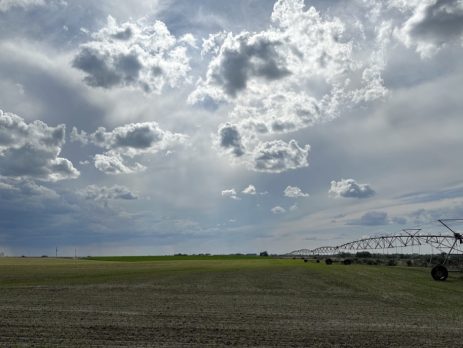
irrigation of a field

The relationship between irrigation and child nutrition

There is an assumption that irrigation automatically leads to better food security. But irrigation doesn’t consistently improve nutrition because regions with sufficient water often use irrigation for export-oriented cash crops, which are less likely to enter the local food system.   A major study had Vermont researchers partnering with other institutions to show that irrigation expansion in the Global South is linked [...]

Read more...
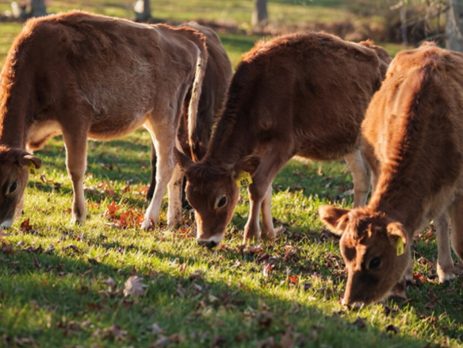
cattle in a field

Tech solutions for livestock management

Livestock producers face challenges such a shrinking labor force, limited veterinary access and rising costs. Artificial intelligence, precision agriculture technologies and genome sequencing have shown promise in improving livestock management, but up-front costs have generally restricted adoption to large-scale dairies. Small farms need economically feasible, effective tools tailored to their specific operations. Here are a few examples of that work: Researchers [...]

Read more...
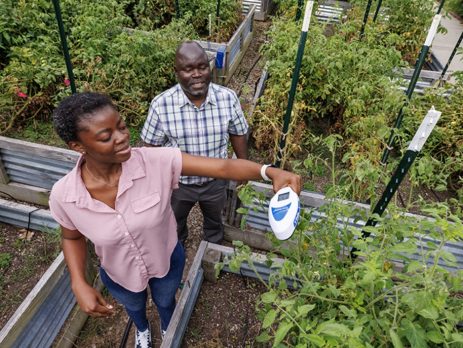
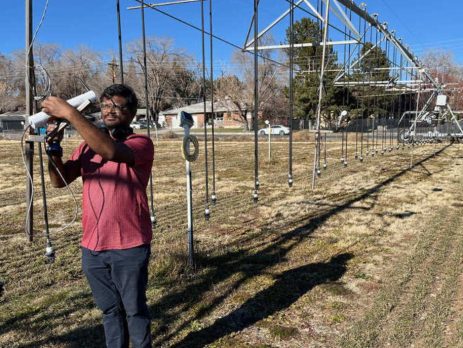
Blessing Masasi, Ph.D., N.C. A&T State University Department of Natural Resources and Environmental Design, right, and graduate student Anuoluwapo Adelabu check hydration levels in tomato plants, using a handheld device.

Smart irrigation helps farmers save water

Many farmers rely on traditional methods to decide when to irrigate their fields, using visual cues like wilting leaves or the feel of dry soil. But these methods lack the precision necessary to preserve water resources and may not meet the needs of crops.   North Carolina A&T Cooperative Extension researchers are using sensor technology and soil data to help farmers [...]

Read more...
a researcher examines equipment for irrigation measurement

Informed decisions to optimize water use and irrigation investments

Harsh weather conditions and limited water access are driving research and technology innovation that will help farmers and producers make informed decisions about irrigation investments and how to optimize water use efficiency.   In Nevada, water is so limited that inefficient use of irrigation water can reduce crop yields and threaten a farm’s financial viability. Traditional irrigation systems assume uniform field [...]

Read more...
farmers watch a demonstration at a field day

Hands-on learning through trials and demonstrations

Lack of awareness and understanding of the latest research and technologies can impact profitability on small farms. Land-grant universities provide hands-on learning opportunities where producers can learn from one another, see real-time demonstrations and learn about the latest research trials to support decision-making. Here are a few examples of that work: Turmeric, a tropical plant that thrives in Guam, has been [...]

Read more...
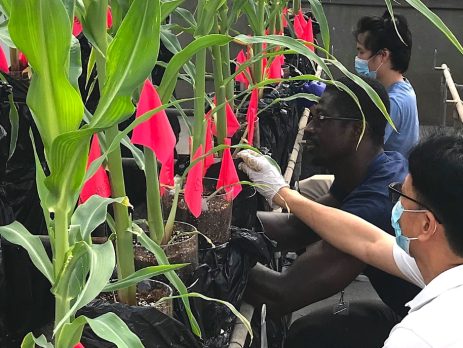
scientists examine plants grown with biochar

From field to fork: biochar strengthens the entire food system

Corn production is central to U.S. agriculture and food systems, yet its reliance on nitrogen fertilizer creates both economic and environmental challenges. While nitrogen is essential for high yields, corn typically uses less than half of the applied fertilizer. Unused nitrogen increases production costs and contributes to nutrient runoff, groundwater contamination, harmful algal blooms and ecosystem degradation. Producers and communities are [...]

Read more...
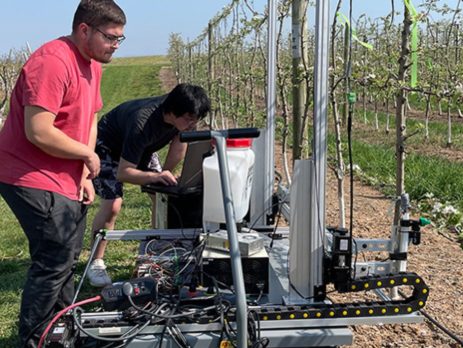
two scientists operate a robotic apple blossom sprayer

Emerging technology offers new tools for growers

Emerging technology is giving farmers tools to reduce the impacts of labor shortages, rising costs, changing weather patterns and regulatory demands, while improving production and profitability. These tools, using drones, robots, artificial intelligence and machine learning, offer a path to sustain productivity, worker safety and environmental performance in the agricultural economy. Projects demonstrate how these technical tools and artificial [...]

Read more...
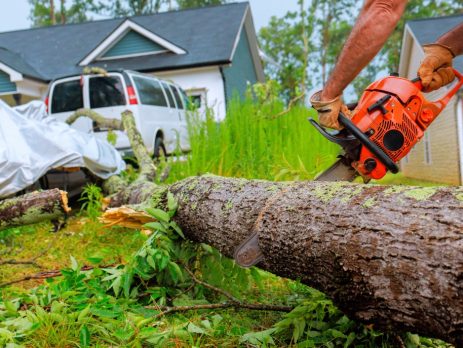
Worker cuts down fallen tree with chainsaw in suburban neighborhood after storm

Disaster response and recovery: partnering in times of local community need

As threats from wildfire and extreme weather increase, producers and communities need information to help prepare and resources to support recovery once impacted. Land-grant universities are responding with tools, resources, communications and staffing support that will strengthen resilience and long-term recovery. Here are a few examples of that work: In response to impacts from Hurricane Helene, Extension in Georgia mobilized to [...]

Read more...
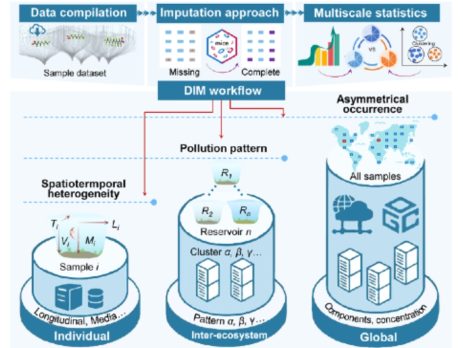
figure of reservoir containers

Researchers investigate contamination in global reservoirs

Reservoirs are an important drinking water source. As populations grow, large amounts of plastic, pharmaceuticals and other chemicals are released into the environment, polluting drinking water.   Researchers from the New Mexico Agricultural Experiment Station are part of an international collaboration that applied a data-driven framework to investigate contaminants in reservoirs around the world. They looked at microplastics, antibiotics, PFAS (Per- [...]

Read more...
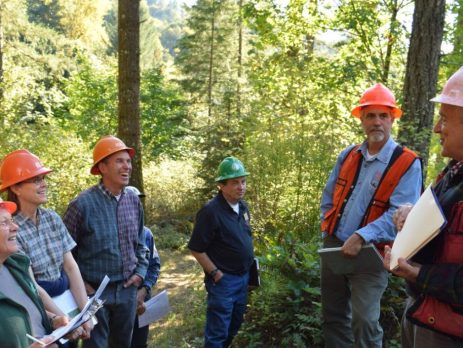
OSU Extension Master Woodland Managers attend a workshop.

Protecting private forests by growing good stewardship

More than half of forest land in the United States is privately owned. This land produces nearly all of the harvested timber that is used for building houses or made into forest products. Practicing good stewardship of private lands is important for ecosystem and community health. Because the more than 10 million private owners of these lands are often [...]

Read more...
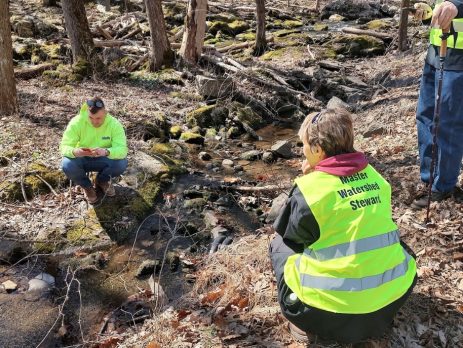
Master Watershed Stewards examine a creek

Land-grant universities help communities tackle stormwater challenges

Across the country, communities face challenges in managing runoff after rainfall. When not properly managed, stormwater can cause flooding, erode land and transport contaminants and debris into waterbodies. Land-grant universities are helping residents, businesses and local governments find solutions — from installing rain gardens to changing the way ditches are drained — while raising public awareness of stormwater issues [...]

Read more...
Prairie strip in soybean field

Iowa researchers study how prairie strips can boost soil health

Prairie strips are narrow bands of perennial, herbaceous vegetation strategically planted within crop fields. Studies have demonstrated their benefits for erosion control, water quality and wildlife habitat.   However, their impacts on soil health were not well documented until Iowa State University scientists conducted a comprehensive study. They examined 15 sites encompassing a range of Iowa landforms, each consisting of a [...]

Read more...
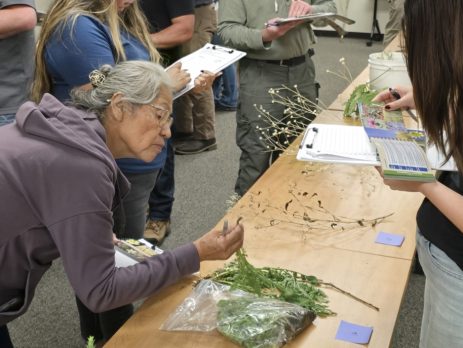
Weed Warriors participants practice their weed identification skills.

Integrated Pest Management practices protect Nevada waterways

Encouraging people to adopt Integrated Pest Management (IPM) strategies can lower the risk of pesticide residues that harm water quality.  The University of Nevada, Reno Extension hosted educational activities in 2025 focused on Integrated Pest Management to address the need for cleaner and safer Nevada waterways. These Community IPM Trainings reached Weed Warriors, Master Gardeners and others. Extension partnered with [...]

Read more...
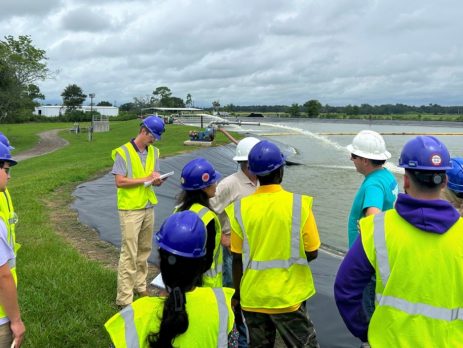
Water quality training

In Louisiana, Extension helps industrial facilities, farms save water, cut costs

Water plays an essential role in many industrial settings. To help manufacturers, processors and agricultural operations adopt sustainable practices, the Louisiana State University AgCenter launched the Water Quality Extension Lab in 2023.  The lab helps small- to medium-sized industries by providing resources, facilitating workforce networking and promoting sustainability. Faculty and students with the lab make site visits to rural industrial [...]

Read more...
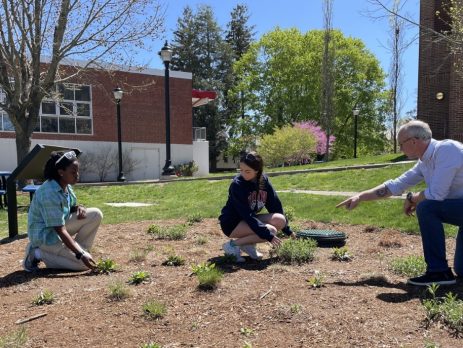
three people working in a rain garden between two buildings

In Connecticut, rain gardens show promise for stormwater management

Stormwater management is a challenge that many communities face. Roads, parking lots and similar surfaces make up much of the urban landscape, but rainwater can’t soak into the ground where pavement is present. That increases localized flooding risks and the possibility of untreated pollutants flowing into streams and rivers.  In Connecticut, Extension experts are encouraging residents, businesses and municipalities to [...]

Read more...
A wildfire at Prime Hook National Wildlife Refuge in Delaware.

Utah researchers investigate connection between wildfires, floods

Many people might assume that streams and reservoirs aren’t affected by wildfires. But uncontrolled blazes can threaten these water sources, which are essential for agriculture, wildlife and families.  When vegetation is lost during a fire, exposed soil becomes highly vulnerable to erosion. Subsequent storms can then wash sediment, woody debris and excess runoff into nearby waterways, altering water flow and [...]

Read more...
a lake

Strengthening water quality across landscapes

Access to clean, reliable water for communities, ecosystems and agriculture is increasingly threatened by issues such as nutrient pollution and emerging contaminants. Land‑grant universities are addressing these challenges through innovative research and hands‑on Extension programming that empowers volunteers, land managers and future water‑quality stewards. Here are a few examples of that work: Researchers in Montana found evidence that wetland conservation can [...]

Read more...
aerial view of an agent planting seagrass

Fighting coastal erosion with nature-based shoreline solutions

More than half of Florida’s waterfront property owners have constructed seawalls and bulkheads to protect against erosion and flooding. These armored shorelines provide some protection but are known to fail during extreme weather events and can disrupt waterflow as well as interfere with marine life.  Extension agents with the University of Florida and the Florida Sea Grant developed two multi-day [...]

Read more...
a raingarden

Building resilient communities through low-impact development practices

Traditional infrastructure in Oklahoma communities does not fully address the challenges flooding, erosion and declining water quality bring, especially in rural and residential areas where design and maintenance resources are limited. Landscape design plays a critical role in establishing water-resilient communities.   The Designing with Water initiative, led by Oklahoma State University Extension’s Landscape Architecture program, promotes sustainable landscape practices through education, [...]

Read more...
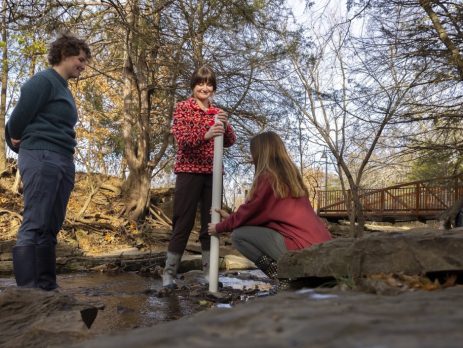
Three women stand in a shallow creekbed. One watches as the other two use a large plastic pipe to collect water samples.

Arkansas researchers study environmental effects of de-icers

Winter road safety depends heavily on salt-based deicers, but there are concerns about how their use is contributing to increased salinity in streams and affecting aquatic ecosystems. Beet brine, which is made from a mixture of salt and beet molasses, has emerged as a potential alternative because it reduces overall salt application. But unlike traditional road salt, beet brine [...]

Read more...