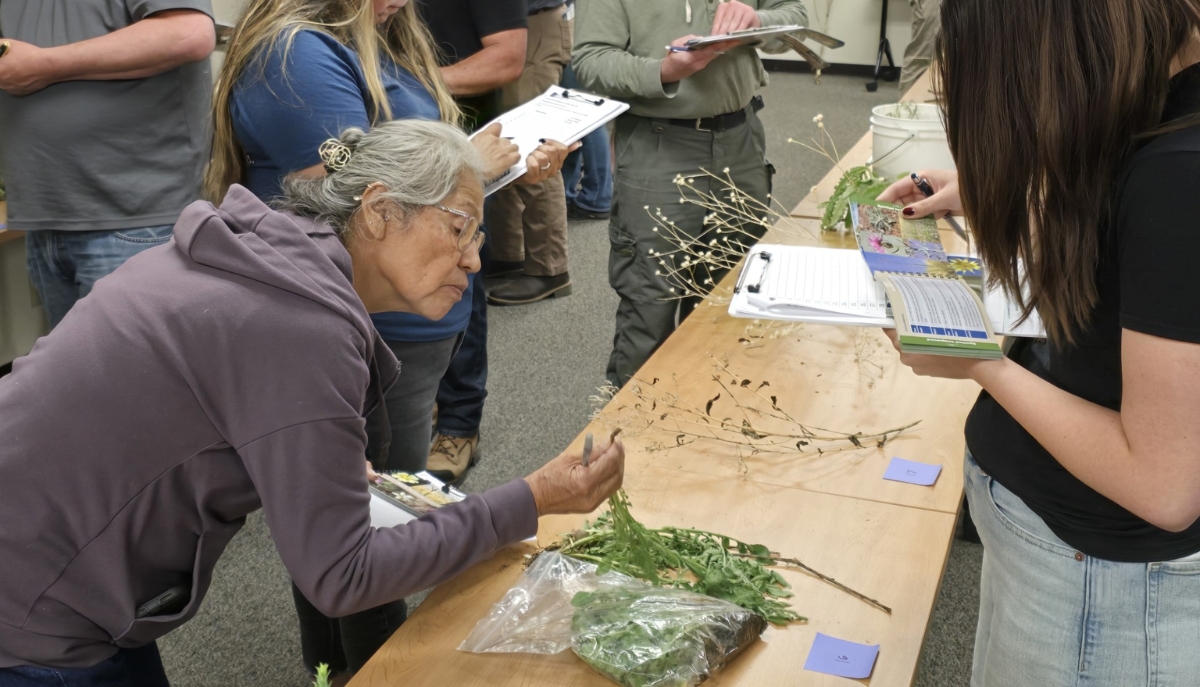
Integrated Pest Management practices protect Nevada waterways
Encouraging people to adopt Integrated Pest Management (IPM) strategies can lower the risk of pesticide residues that harm water quality.
The University of Nevada, Reno Extension hosted educational activities in 2025 focused on Integrated Pest Management to address the need for cleaner and safer Nevada waterways. These Community IPM Trainings reached Weed Warriors, Master Gardeners and others. Extension partnered with three universities in the region to host regional webinars to help pesticide applicators meet Certified Applicators Pesticide Safety Education requirements. The webinars covered pest management tools, native plant landscaping, cover crops and a host of other topics, helping Nevada residents and professionals adopt IPM practices that protect public health and improve environmental quality.
The 35 people who participated in one of the Nevada programs, Weed Warriors training, took a test of 16 weeds before and after they took the class. They were able to identify an average of six or more noxious weeds after taking the class, compared to before.
Water quality studies in Nevada from 10 years ago reported by the U.S. Geological Survey found detectable levels of pesticide residues in urban waterways. Recent monitoring results showed significantly lower concentrations of pesticides in Nevada rivers, even as Nevada’s urban population continues to grow. This suggests urban populations are using pesticides responsibly, lowering the risk to water quality and human health.
University of Nevada, Reno Extension; Utah State University; Montana State University; University of Idaho | Project supported by USDA competitive funds. Photo courtesy of Wendy Hanson Mazet.