Tag - Specialty Crops

Topic

Vegetables for sale at a farmers market stand.

Research and Extension ensure everyone has ample access to affordable, safe, nutritious food

Invasive pests damage crops, costing U.S. agriculture an estimated $30 billion every year. Pest management research and Extension stabilize the food supply chain. Researchers and Extension specialists in Oregon, developed cost-effective alternatives to glyphosate for herbicide-resistant Russian thistle control, protecting more than 30,000 acres of wheat and preventing over $1 million in yield losses so far.Oregon State University Extension Service. [...]

Read more...
A river bisects a field and forested riparian area

Research and Extension support resilient ecosystems

Recent studies and programs are conserving and protecting water used for drinking, fishing, irrigation and recreation.  Washington research helped establish 25 anaerobic digesters across the Pacific Northwest, turning dairy manure from more than 143,000 cows into biogas that provides more than 126 million kilowatt-hours of renewable energy per year. Digesters decrease water quality risks associated with nutrient runoff from manure [...]

Read more...
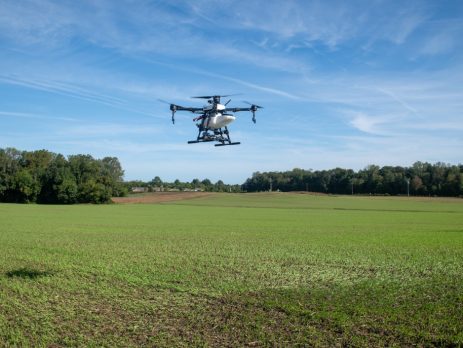
A drone flies over a field.

Research and Extension make agricultural systems more efficient, profitable, competitive and resilient

Strategies and tools for managing crop pests and diseases have increased productivity and profitability. For example: Extension units across the nation offer plant and pest diagnostic clinics. In New Mexico, free diagnoses saved producers an estimated $36,000 in testing fees in 2025, while also supporting biosecurity and export compliance. In Indiana, lab results and recommendations saved clients $890,000 in reduced [...]

Read more...
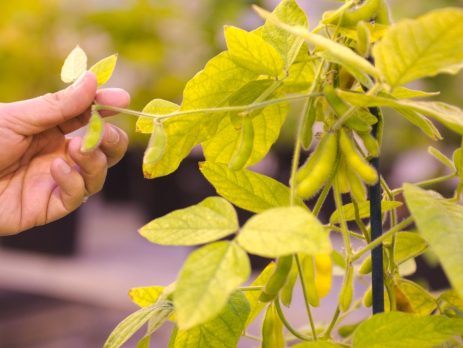
soybeans

Using genetics for crop disease resistance

Pests of major crops, including wheat, soybean, potatoes, tomatoes and wine grapes, cost American producers billions in yield losses each year and raise prices for consumers. Pathogens are steadily overcoming current genetic sources of resistance, making continuing efforts to identify and incorporate new genetics critical to reduce losses to farmers and protect markets and food security. Here are a few [...]

Read more...
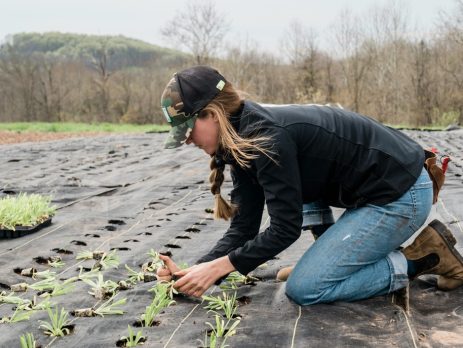
a farmer planting

Recognizing regenerative ag champions

Small-scale farmers who use regenerative practices play an important role in local food systems. These farmers often operate in areas with limited access to fresh food and provide healthy options for their communities. Despite their contributions, they rarely receive recognition or support. Raising awareness of their work can help strengthen community-based food production and encourage practices that improve soil [...]

Read more...
grapes on the vine

Disease-resistant wine grape reduces losses in Florida

Pierce’s disease devastates grapevines in warm, humid regions like Florida, making wine grape production nearly impossible without costly interventions. This disease forces growers to rely on chemical treatments and limits the viability of vineyards in the Southeast.  Plant breeders there successfully grew a new wine grape variety with genetic resistance to Pierce’s disease while maintaining desirable wine-making qualities. They used [...]

Read more...
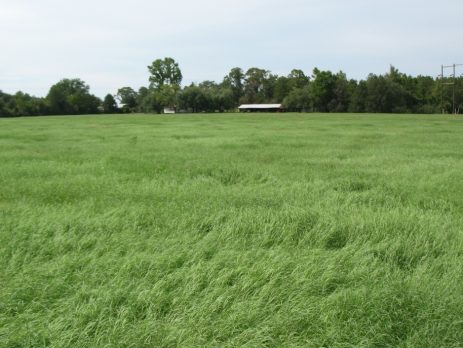
bermudagrass field

Texas livestock, forage producers focus on profitability

Forage production for livestock in Texas is a necessity and expensive. The annual cost of producing Bermudagrass forage per acre can span $200 to $450 when factoring in land costs, fertilization practices, machinery, expenses and variety grown. The cost of weed control in a pasture or hay meadow typically ranges from $5 to $24 per acre for herbicide alone.  The [...]

Read more...
A smiling woman in a green shirt and maroon cap crouches in a sunny field, harvesting a head of deep red leaf lettuce. She is working in a well-tended garden plot with irrigation lines, representing local agricultural impact and food production

Strengthening the agricultural workforce for the future

The workforce is changing. Across industries and states, trained workers are in demand to support local food systems, meet community needs, ensure safety and increase productivity. Land-grant universities are rising to the challenge of meeting these needs through partnerships, trainings, certifications and hands-on learning opportunities that strengthen the agricultural workforce. Here are a few examples of that work: Health and safety [...]

Read more...
A pair of hands in yellow gloves gently hold a strawberry plant, showing a flower and immature green strawberry, in a strawberry field.

Research helps increase specialty crop profitability

Specialty crop growers provide popular products to consumers. There are many challenges to growing the products commercially. Land-grant universities support growers with research and resources that help increase profitability and informed decision-making. Here are a few examples of that work: Apples are a popular product among consumers, but there are many challenges to growing them commercially in the Midwest and making [...]

Read more...
berries on the vine

New fruit, vegetable cultivars offer new opportunities for growers

Developing or restoring different fruit and vegetable cultivars allow farmers to plant crops based on disease resistance, fertilizer requirements, adaptations to site-specific soil and weather conditions or greater yields. Some cultivars can be a pathway to new market opportunities and new bio-based products. Here are a few examples of that work: Hemp is re-emerging as the basis of a viable industry [...]

Read more...
a diseased plant

Improving crop profitability through disease management

Land-grant university research and Extension programs help producers manage costly plant diseases through early detection, risk assessment and science-based tools. By integrating applied research, diagnostics and education, growers protect yields, reduce unnecessary pesticide use, improve return on investment and strengthen long-term agricultural resilience across variable production systems. Here are a few examples of that work: South Dakota State Extension plant pathology [...]

Read more...
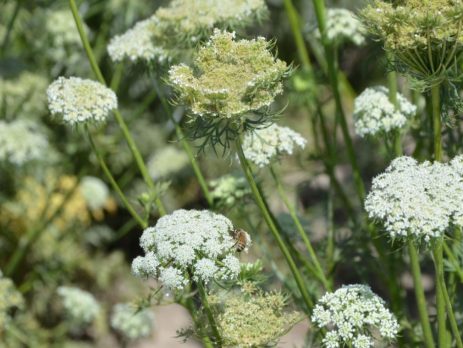
Flowering carrot plants

Identifying carrot seed disease pathogen to prevent yield loss

Central Oregon produces some of the world’s most valuable hybrid carrot seed, supporting a high-value specialty crop sector. Bacterial blight threatens seed quality yields and long-term industry viability, putting farm profitability and export competitiveness at risk.   Researchers at the Oregon State University Extension Service led a year-long field study in two commercial carrot seed fields to determine when bacterial blight [...]

Read more...
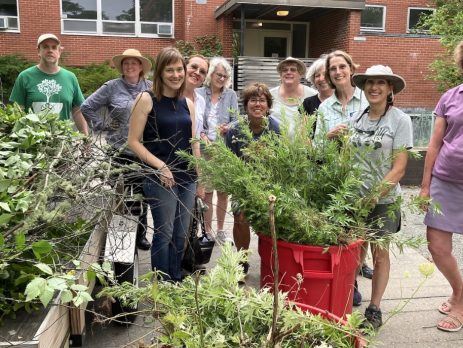
a smiling group of master gardeners

Horticulture programs sprout more resilient communities

Local horticulture is an important tool to combat food insecurity in underserved communities, while boosting environmental sustainability and community health. Volunteers with horticulture training through Extension Master Gardener programs partner with local organizations, schools and vulnerable communities to grow and distribute locally grown produce as well as create jobs.  Here are a few examples of that work: The Master Gardener program [...]

Read more...
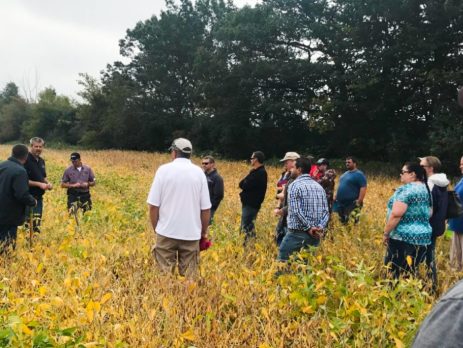
farmers watch a demonstration at a field day

Hands-on learning through trials and demonstrations

Lack of awareness and understanding of the latest research and technologies can impact profitability on small farms. Land-grant universities provide hands-on learning opportunities where producers can learn from one another, see real-time demonstrations and learn about the latest research trials to support decision-making. Here are a few examples of that work: Turmeric, a tropical plant that thrives in Guam, has been [...]

Read more...
two smiling Extension agents in a community garden

Growing food security in urban spaces

Urban communities continue to face persistent constraints related to food access, limited growing space and water availability. Urban, small-scale food production, including controlled environment agriculture such as greenhouses and vertical farming, is a rapidly growing part of local food systems. These systems support food security, environmental sustainability and community resilience. Here are a few examples of that work: A program to [...]

Read more...
participants at Ginger Field Day participate in planting

Ginger fills a niche in North Carolina

Extension specialists in North Carolina led a program to help small and limited-resource farmers learn about growing ginger, a high-value specialty crop.   Since ginger is a tropical plant not traditionally grown in North Carolina, farmers learned site-specific techniques about propagation, seeding, transplanting in high tunnels, pest management and harvesting mature rhizomes. The Ginger Field Day 2025 increased farmer confidence, adoption [...]

Read more...
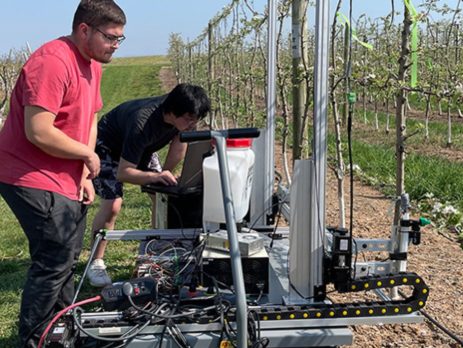
two scientists operate a robotic apple blossom sprayer

Emerging technology offers new tools for growers

Emerging technology is giving farmers tools to reduce the impacts of labor shortages, rising costs, changing weather patterns and regulatory demands, while improving production and profitability. These tools, using drones, robots, artificial intelligence and machine learning, offer a path to sustain productivity, worker safety and environmental performance in the agricultural economy. Projects demonstrate how these technical tools and artificial [...]

Read more...
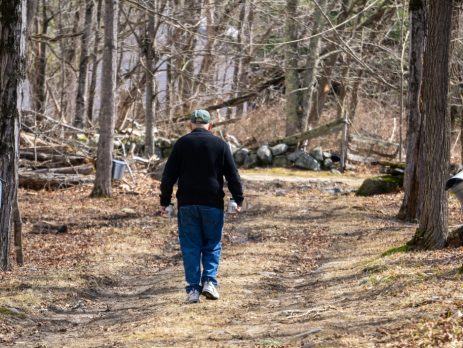
a man walking through forest with sugaring buckets

Designing multi-crop systems for sweet success in maple sugarbushes

Researchers at Cornell in New York are creating diversified agroforestry systems that can take advantage of the understory in maple stands or sugarbushes. While maple sugaring is a popular and growing sector, adding crops that can thrive under the trees can create more diversified lines of value-added maple products.   Over several years, multiple cultivars of 18 species of fruit- and [...]

Read more...
lettuce growing in a field

Decades of field data help desert lettuce growers improve pest control

Lettuce growers face recurring pest pressure from an array of insects that drive yield losses and high management costs. Long-term, field-based data has been used to identify emerging pest issues, evaluate management effectiveness, guide research priorities and strengthen integrated pest management (IPM) recommendations for growing lettuce in the desert areas of Arizona and Southern California.   For 19 years, University of [...]

Read more...
Mario Soto and Aurelie Poncet with a plant and a light-emitting device.

Building resilient agriculture through pest management

Land-grant university pest management programs strengthen agricultural resilience by delivering research-based education that helps farmers manage pests more effectively and safely. These programs improve pest control decisions, reduce unnecessary pesticide use and minimize health and environmental risks—supporting healthier ecosystems and long-term productivity. Here are a few examples of that work: Louisiana State University’s AgCenter’s Field Crop Integrated Pest Management (IPM) Program [...]

Read more...
a group of participants in a field examine cover crops

Illinois study finds cover crop adoption doubles

Cover crops improve soil health and water quality. They also reduce greenhouse gas emissions. But only about 5% of U.S. agricultural lands use them, despite billions of dollars in annual federal investments through efforts like cost-share and incentive payments to farmers.  University of Illinois Urbana-Champaign researchers in a new, first-of-its-kind study, say investing in farm demonstration networks can bolster cover [...]

Read more...
agroforestry

Decision support tool visualizes benefits of agroforestry

Agroforestry — the intentional integration of trees and shrubs in agricultural systems — can provide a multitude of environmental benefits. However, few farmers in the Midwest have adopted practices such as planting trees as windbreaks, integrating trees on pastures or growing tree crops intercropped with annual crops.  Researchers at the University of Illinois Urbana-Champaign developed a decision support tool to [...]

Read more...
Tahirah Johnson examines testing samples under a magnifying glass in a research lab on the University of Maryland Campus in 2024.

Innovative methods for safer, healthier food production practices

Regional food production is critical to local economies and supporting American food systems. Rising reports of foodborne illnesses, increased antibiotic resistance and newer production systems like soilless agriculture necessitate a better understanding of the risks and options to improve the safety and health value of food products from produce to shellfish and tree nuts. 1890 land-grant universities are examining [...]

Read more...
a person cooking on a cast iron skillet

Preserving food traditions

America’s heritage is deeply rooted in food. It’s important for people to learn where food comes from, how it is produced and how to prepare it. Land-grant universities are connecting youth and adults to these traditions to sustain agricultural knowledge while preparing the next generation with practical skills, responsibility and leadership capacity. Here are a few examples of that work: For [...]

Read more...
crops growing out of dry, cracked soil

Understanding and identifying solutions for weather impacts on agriculture

Drought, severe weather and wildfires can have significant economic impacts on agriculture. Research and educational programming by land-grant universities helps us understand these effects and strengthen resilience. Here are a few examples of that work: Red clover, a commonly used forage crop in the northeastern U.S., increases its phytoestrogen levels under drought conditions, potentially affecting livestock reproductive health. The economic impact [...]

Read more...