Decades of field data help desert lettuce growers improve pest control
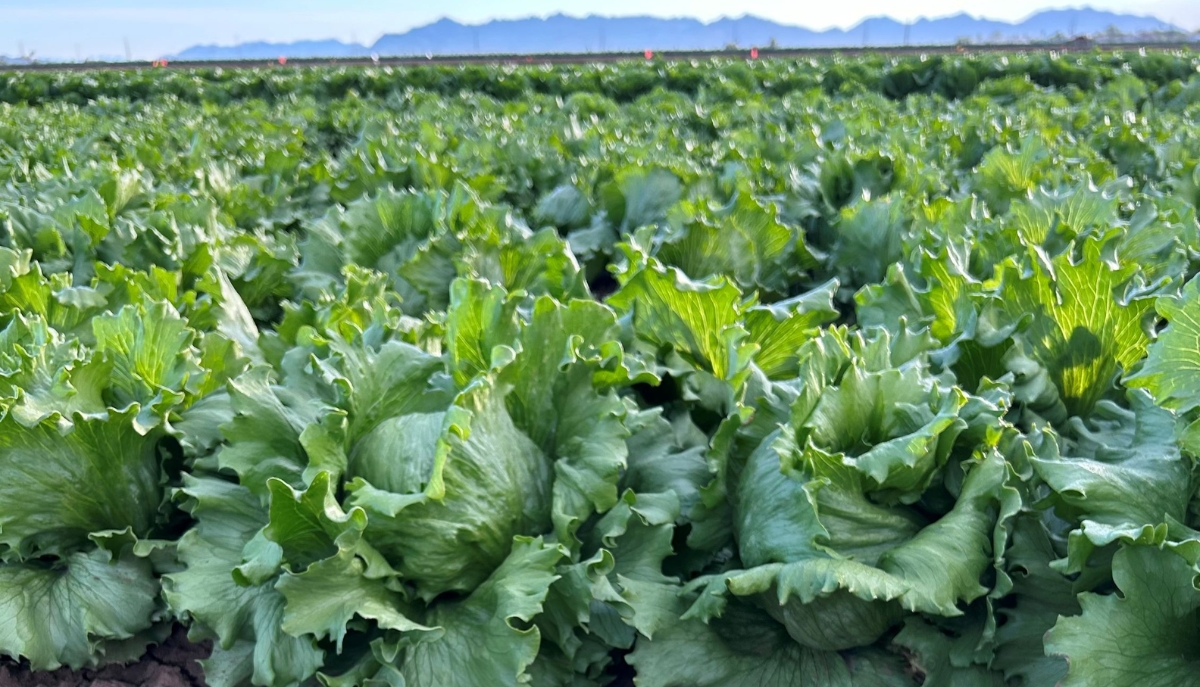
Lettuce growers face recurring pest pressure from an array of insects that drive yield losses and high management costs. Long-term, field-based data has been used to identify emerging pest issues, evaluate management effectiveness, guide research priorities and strengthen integrated pest management (IPM) recommendations for growing lettuce in the desert areas of Arizona and Southern California.
For 19 years, University of Arizona Cooperative Extension entomologist John Palumbo collaborated with pest control advisors to collect real-life data on insect pest pressure, control practices, management costs and yield impacts through the Lettuce Insect Losses Survey. Survey results are summarized and analyzed each year to inform IPM research, outreach priorities and Extension recommendations. Following the Palumbo’s passing in 2025, the survey was conducted for the 20th consecutive year.
Over the years, desert lettuce growers following Extension recommendations adopted use of selective insecticides and IPM-based practices. These trends corresponded with reduced reliance on broad-spectrum insecticides, improved pest control efficiency and more targeted pest management strategies. Local produce growers have lessened environmental impacts in lettuce production by continuing to incorporate newer, selective reduced-risk insecticides into their insect management programs.
Use of these safer products among growers has increased by 55% since 2005. Currently, 62% of insecticide sprays are selective materials that preserve natural pest control and are softer on the environment.
The Lettuce Insect Losses Survey provides growers, researchers and policymakers with reliable, field-based evidence of pest pressure, management costs and yield impacts.
University of Arizona Cooperative Extension | Project supported by USDA competitive funds. Photo courtesy of University of Arizona Cooperative Extension.