Tag - Research

Mission Area

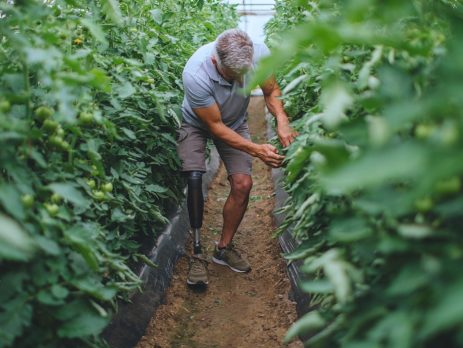
a man with a prosthetic leg examines a tomato plant

Readying veterans for agricultural enterprises

Military veterans across the Midwest are increasingly pursuing careers in agriculture, yet many lack access to training in production economics, enterprise budgeting and sustainable farm management, essential skills for making informed decisions.   In 2025, Michigan State University Extension partnered with organizations from Michigan, Indiana, Ohio and Illinois to support the Military Veteran Farming Conference, designed to provide veterans with practical [...]

Read more...
berries on the vine

New fruit, vegetable cultivars offer new opportunities for growers

Developing or restoring different fruit and vegetable cultivars allow farmers to plant crops based on disease resistance, fertilizer requirements, adaptations to site-specific soil and weather conditions or greater yields. Some cultivars can be a pathway to new market opportunities and new bio-based products. Here are a few examples of that work: Hemp is re-emerging as the basis of a viable industry [...]

Read more...
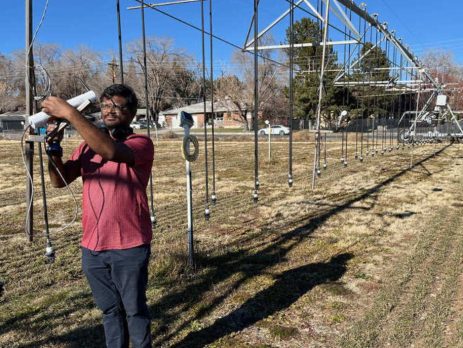
a researcher examines equipment for irrigation measurement

Informed decisions to optimize water use and irrigation investments

Harsh weather conditions and limited water access are driving research and technology innovation that will help farmers and producers make informed decisions about irrigation investments and how to optimize water use efficiency.   In Nevada, water is so limited that inefficient use of irrigation water can reduce crop yields and threaten a farm’s financial viability. Traditional irrigation systems assume uniform field [...]

Read more...
a diseased plant

Improving crop profitability through disease management

Land-grant university research and Extension programs help producers manage costly plant diseases through early detection, risk assessment and science-based tools. By integrating applied research, diagnostics and education, growers protect yields, reduce unnecessary pesticide use, improve return on investment and strengthen long-term agricultural resilience across variable production systems. Here are a few examples of that work: South Dakota State Extension plant pathology [...]

Read more...
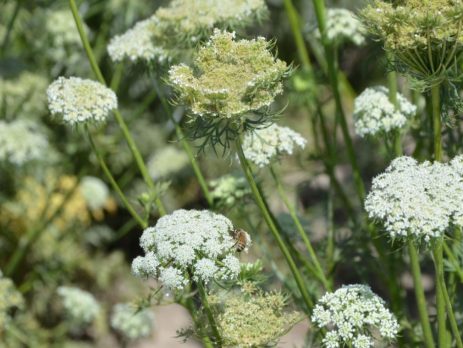
Flowering carrot plants

Identifying carrot seed disease pathogen to prevent yield loss

Central Oregon produces some of the world’s most valuable hybrid carrot seed, supporting a high-value specialty crop sector. Bacterial blight threatens seed quality yields and long-term industry viability, putting farm profitability and export competitiveness at risk.   Researchers at the Oregon State University Extension Service led a year-long field study in two commercial carrot seed fields to determine when bacterial blight [...]

Read more...
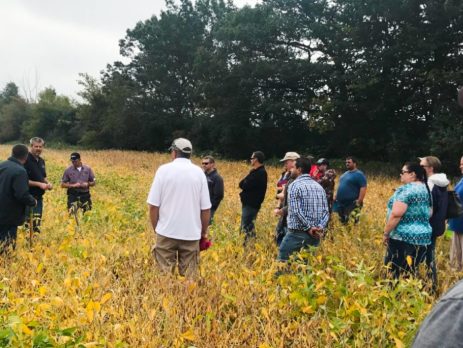
farmers watch a demonstration at a field day

Hands-on learning through trials and demonstrations

Lack of awareness and understanding of the latest research and technologies can impact profitability on small farms. Land-grant universities provide hands-on learning opportunities where producers can learn from one another, see real-time demonstrations and learn about the latest research trials to support decision-making. Here are a few examples of that work: Turmeric, a tropical plant that thrives in Guam, has been [...]

Read more...
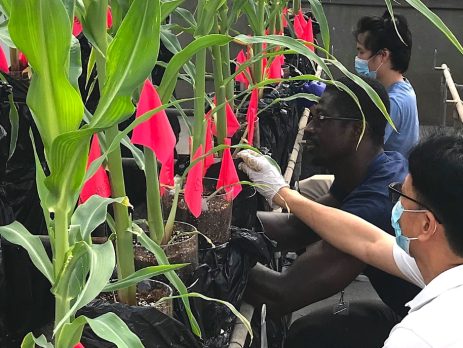
two smiling Extension agents in a community garden

Growing food security in urban spaces

Urban communities continue to face persistent constraints related to food access, limited growing space and water availability. Urban, small-scale food production, including controlled environment agriculture such as greenhouses and vertical farming, is a rapidly growing part of local food systems. These systems support food security, environmental sustainability and community resilience. Here are a few examples of that work: A program to [...]

Read more...
scientists examine plants grown with biochar

From field to fork: biochar strengthens the entire food system

Corn production is central to U.S. agriculture and food systems, yet its reliance on nitrogen fertilizer creates both economic and environmental challenges. While nitrogen is essential for high yields, corn typically uses less than half of the applied fertilizer. Unused nitrogen increases production costs and contributes to nutrient runoff, groundwater contamination, harmful algal blooms and ecosystem degradation. Producers and communities are [...]

Read more...
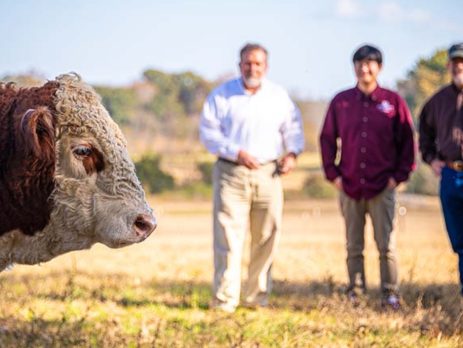
Scientists stand in a pasture with a bull in the foreground

Fine-tuning livestock production systems to overcome challenges

Livestock researchers are exploring new ways to achieve higher profitability through reproductive research, technology and traditional education outreach to help offset rising production costs. Here are a few examples of that work: In Louisiana, the Geaux Beef Heifer Development Program was created to support producers with expert-guided, forage-based heifer development. The program utilized artificial insemination or natural breeding combined with expert [...]

Read more...
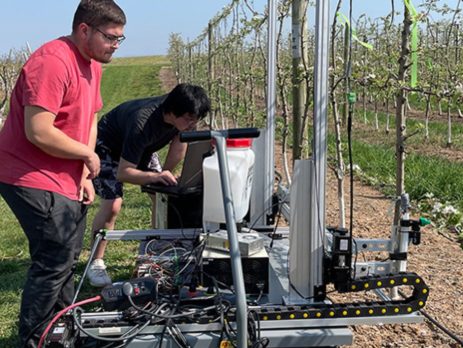
two scientists operate a robotic apple blossom sprayer

Emerging technology offers new tools for growers

Emerging technology is giving farmers tools to reduce the impacts of labor shortages, rising costs, changing weather patterns and regulatory demands, while improving production and profitability. These tools, using drones, robots, artificial intelligence and machine learning, offer a path to sustain productivity, worker safety and environmental performance in the agricultural economy. Projects demonstrate how these technical tools and artificial [...]

Read more...
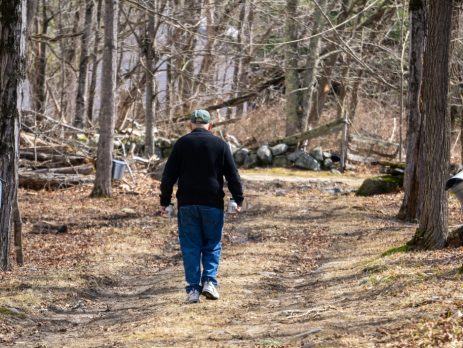
a man walking through forest with sugaring buckets

Designing multi-crop systems for sweet success in maple sugarbushes

Researchers at Cornell in New York are creating diversified agroforestry systems that can take advantage of the understory in maple stands or sugarbushes. While maple sugaring is a popular and growing sector, adding crops that can thrive under the trees can create more diversified lines of value-added maple products.   Over several years, multiple cultivars of 18 species of fruit- and [...]

Read more...
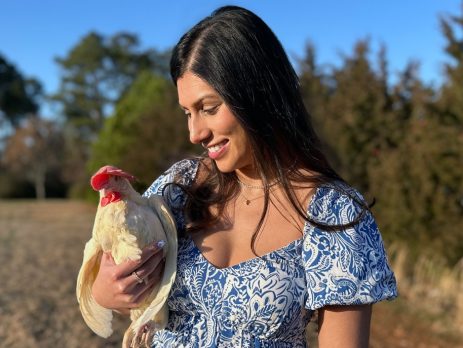
women holding a hen

Creating healthier, higher-yielding eggs

Researchers at North Carolina State University have found several ways to increase egg production, ensuring a steady inventory hits the grocery supply chain.  With more eggs coming from cage-free housing, as much as 40% in 2024, commercial egg producers have heightened interest in understanding which hens are most adaptive to this environment.  In cage-free housing, thousands of hens can fly freely [...]

Read more...
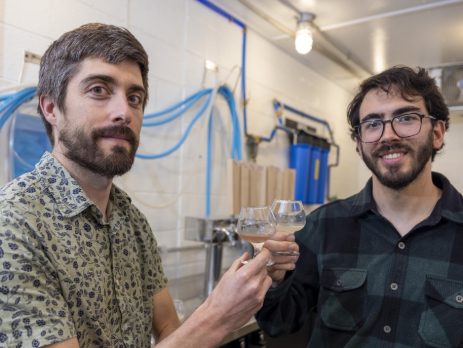
Scott Lafontaine stands with Bernardo Guimaraes in their small-scale beverage development facility

Cheers to gluten-free beer made with malted rice

Arkansas produces more rice than any other U.S. state, including about half of the nation’s long-grain rice. As long-grain rice exports have dropped from 50% in 2010 to 43% in 2024, growers have looked for new domestic markets. Beer shows potential. Brewers who use rice in beer typically rely on milled rice, which requires additional processing steps and costs.  Researchers [...]

Read more...
Mario Soto and Aurelie Poncet with a plant and a light-emitting device.

Building resilient agriculture through pest management

Land-grant university pest management programs strengthen agricultural resilience by delivering research-based education that helps farmers manage pests more effectively and safely. These programs improve pest control decisions, reduce unnecessary pesticide use and minimize health and environmental risks—supporting healthier ecosystems and long-term productivity. Here are a few examples of that work: Louisiana State University’s AgCenter’s Field Crop Integrated Pest Management (IPM) Program [...]

Read more...
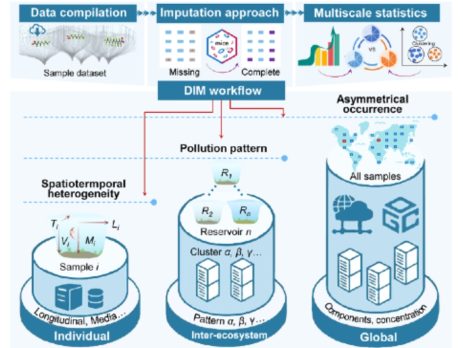
figure of reservoir containers

Researchers investigate contamination in global reservoirs

Reservoirs are an important drinking water source. As populations grow, large amounts of plastic, pharmaceuticals and other chemicals are released into the environment, polluting drinking water.   Researchers from the New Mexico Agricultural Experiment Station are part of an international collaboration that applied a data-driven framework to investigate contaminants in reservoirs around the world. They looked at microplastics, antibiotics, PFAS (Per- [...]

Read more...
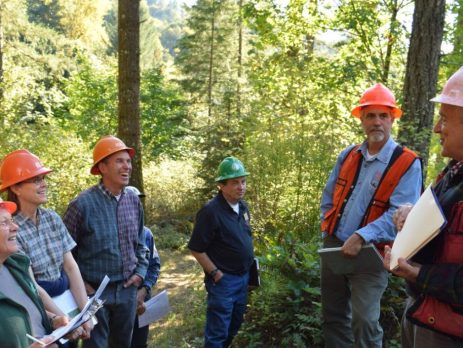
OSU Extension Master Woodland Managers attend a workshop.

Protecting private forests by growing good stewardship

More than half of forest land in the United States is privately owned. This land produces nearly all of the harvested timber that is used for building houses or made into forest products. Practicing good stewardship of private lands is important for ecosystem and community health. Because the more than 10 million private owners of these lands are often [...]

Read more...
mouse

New Hampshire researchers study how small mammals adapt when forest seed cycles shift

Interactions between plants and animals are key to the biodiversity and long-term ecological resilience of forests. Small mammals such as mice, voles and shrews play an essential role in this system by dispersing seeds, allowing new trees to grow. Because seed production can fluctuate dramatically from year to year, especially during large “masting” events, understanding how these animals adjust [...]

Read more...
nanoplastics

Nanoplastics can make E. coli more toxic, Illinois researchers find

Nanoplastics — ultrafine plastic particles formed when larger pieces of plastic break down — are everywhere, from soils to waterways to the human body. Because they can attach to microbes and be absorbed by plant roots, nanoplastics’ potential impacts on human health are a growing concern. Recent evidence suggests these particles may contribute to antibiotic resistance and increase the [...]

Read more...
bee

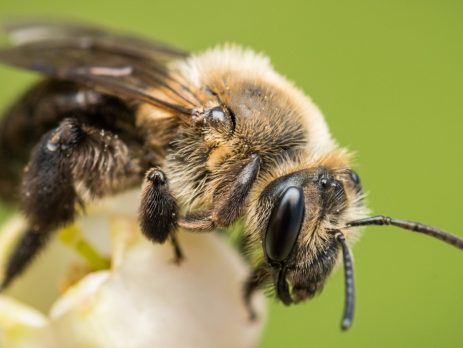
Leveraging a highly trained volunteer network to document bee biodiversity

Many high-value crops such as flowering fruit trees, berries and vegetables rely on native bee populations, but these critically important pollinators are declining nationwide. Scientists can monitor the diversity and abundance of species using data collected across broad geographic ranges through public natural history social platforms such as iNaturalist. The challenge, however, is that photography-based monitoring can introduce unintended [...]

Read more...
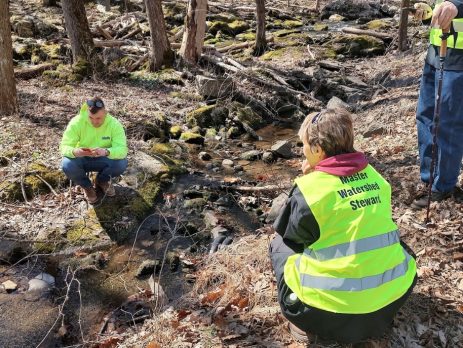
Master Watershed Stewards examine a creek

Land-grant universities help communities tackle stormwater challenges

Across the country, communities face challenges in managing runoff after rainfall. When not properly managed, stormwater can cause flooding, erode land and transport contaminants and debris into waterbodies. Land-grant universities are helping residents, businesses and local governments find solutions — from installing rain gardens to changing the way ditches are drained — while raising public awareness of stormwater issues [...]

Read more...
Prairie strip in soybean field

Iowa researchers study how prairie strips can boost soil health

Prairie strips are narrow bands of perennial, herbaceous vegetation strategically planted within crop fields. Studies have demonstrated their benefits for erosion control, water quality and wildlife habitat.   However, their impacts on soil health were not well documented until Iowa State University scientists conducted a comprehensive study. They examined 15 sites encompassing a range of Iowa landforms, each consisting of a [...]

Read more...
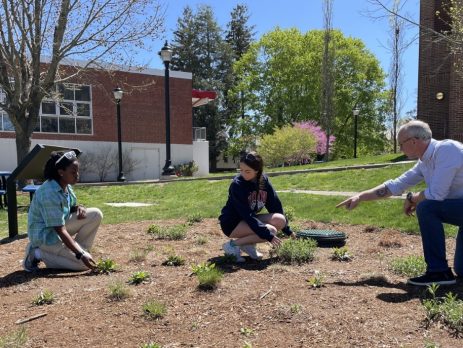
three people working in a rain garden between two buildings

In Connecticut, rain gardens show promise for stormwater management

Stormwater management is a challenge that many communities face. Roads, parking lots and similar surfaces make up much of the urban landscape, but rainwater can’t soak into the ground where pavement is present. That increases localized flooding risks and the possibility of untreated pollutants flowing into streams and rivers.  In Connecticut, Extension experts are encouraging residents, businesses and municipalities to [...]

Read more...
a group of participants in a field examine cover crops

Illinois study finds cover crop adoption doubles

Cover crops improve soil health and water quality. They also reduce greenhouse gas emissions. But only about 5% of U.S. agricultural lands use them, despite billions of dollars in annual federal investments through efforts like cost-share and incentive payments to farmers.  University of Illinois Urbana-Champaign researchers in a new, first-of-its-kind study, say investing in farm demonstration networks can bolster cover [...]

Read more...
A wildfire at Prime Hook National Wildlife Refuge in Delaware.

Utah researchers investigate connection between wildfires, floods

Many people might assume that streams and reservoirs aren’t affected by wildfires. But uncontrolled blazes can threaten these water sources, which are essential for agriculture, wildlife and families.  When vegetation is lost during a fire, exposed soil becomes highly vulnerable to erosion. Subsequent storms can then wash sediment, woody debris and excess runoff into nearby waterways, altering water flow and [...]

Read more...
a lake

Strengthening water quality across landscapes

Access to clean, reliable water for communities, ecosystems and agriculture is increasingly threatened by issues such as nutrient pollution and emerging contaminants. Land‑grant universities are addressing these challenges through innovative research and hands‑on Extension programming that empowers volunteers, land managers and future water‑quality stewards. Here are a few examples of that work: Researchers in Montana found evidence that wetland conservation can [...]

Read more...