
Nanoplastics can make E. coli more toxic, Illinois researchers find
Nanoplastics — ultrafine plastic particles formed when larger pieces of plastic break down — are everywhere, from soils to waterways to the human body. Because they can attach to microbes and be absorbed by plant roots, nanoplastics’ potential impacts on human health are a growing concern. Recent evidence suggests these particles may contribute to antibiotic resistance and increase the virulence of disease-causing bacteria, underscoring the need for research that examines how nanoplastics interact with pathogens.causing bacteria, underscoring the need for research that examines how nanoplastics interact with pathogens.
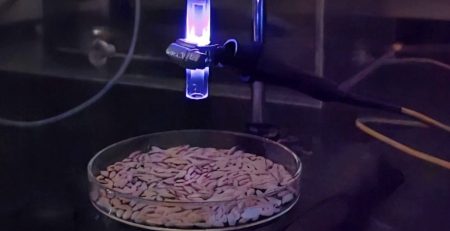
To better understand these risks, experiment station researchers in Illinois investigated how charged nanoplastic particles influence the growth and virulence of E. coli O157:H7, a major foodborne pathogen. In controlled laboratory experiments, the team exposed free floating and biofilm forming bacteria to positively charged, negatively charged and neutral nanoplastics. Because bacterial cells carry a negative surface charge, the researchers hypothesized that positively charged particles would bind more readily and potentially trigger harmful physiological changes.floating and biofilmforming bacteria to positively charged, negatively charged and neutral nanoplastics. Because bacterial cells carry a negative surface charge, the researchers hypothesized that positively charged particles would bind more readily and potentially trigger harmful physiological changes.
Their findings confirmed that positively charged nanoplastics caused significant stress in E. coli. Stressed cells produced more Shiga-like toxin — the compound responsible for severe human illness. They also multiplied more slowly at first and formed biofilms at reduced rates; however, growth eventually recovered. Even bacteria protected within biofilms showed elevated stress responses and increased toxin production when exposed to positively charged particles.like toxin
These results suggest that nanoplastics may heighten the virulence of dangerous pathogens, with potential implications for food safety and in medical settings where biofilms commonly form. By revealing how plastic pollution may influence disease risk and antibiotic resistance, this research supports efforts to strengthen public health and environmental policies.
Illinois Agricultural Experiment Station | Project supported by USDA competitive funds. Photo courtesy of Illinois Agricultural Experiment Station.