Tag - Research

Mission Area

The top of a Pheonix canariensis palm tree due to Thielaviopsis trunk rot.

Florida researchers find a speedier way to screen palms for disease resistance

Florida’s iconic palms are under attack by Thielaviopsis trunk rot, a fungal disease that causes plants to collapse and die suddenly. With little information known about disease resistance in palms, homeowners and landscapers were left without guidance on which species are more resilient in the face of the new threat.  Researchers at the University of Florida Institute of Food and [...]
Read more...
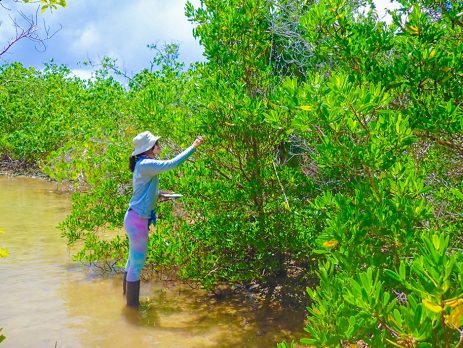
a researcher examines a mangrove

Early research helps prepare for new pest invasion in Pacific mangroves

The native mangrove tree Lumnitzera littorea (ngånga’ in CHamoru) is facing a new threat to its small population in Guam’s Sasa Bay Marine Preserve. Low germination rates have signaled an unknown pressure, but similar findings in Sri Lanka have pointed to the presence of micromoths that were infesting and destroying mangrove seeds. These trees provide important ecological functions, including [...]

Read more...
agroforestry

Decision support tool visualizes benefits of agroforestry

Agroforestry — the intentional integration of trees and shrubs in agricultural systems — can provide a multitude of environmental benefits. However, few farmers in the Midwest have adopted practices such as planting trees as windbreaks, integrating trees on pastures or growing tree crops intercropped with annual crops.  Researchers at the University of Illinois Urbana-Champaign developed a decision support tool to [...]

Read more...
forest

Bringing automation to forest production with precision tools

Rising equipment costs, unpredictable weather, long hours and hazardous conditions make logging a high-risk industry. Not only is it difficult to attract and maintain skilled workers to forest production, but these challenges also make it difficult for firms to forecast the impacts of external factors to remain competitive.  Researchers at Auburn University in Alabama partnered with equipment manufacturers to develop [...]

Read more...
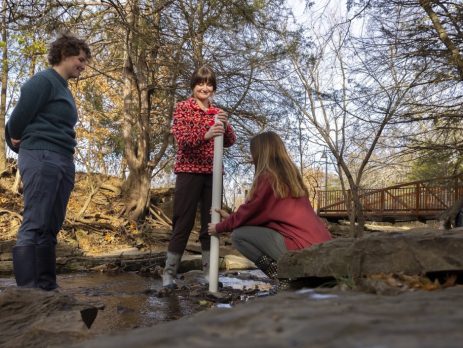
Three women stand in a shallow creekbed. One watches as the other two use a large plastic pipe to collect water samples.

Arkansas researchers study environmental effects of de-icers

Winter road safety depends heavily on salt-based deicers, but there are concerns about how their use is contributing to increased salinity in streams and affecting aquatic ecosystems. Beet brine, which is made from a mixture of salt and beet molasses, has emerged as a potential alternative because it reduces overall salt application. But unlike traditional road salt, beet brine [...]

Read more...
Tahirah Johnson examines testing samples under a magnifying glass in a research lab on the University of Maryland Campus in 2024.

Innovative methods for safer, healthier food production practices

Regional food production is critical to local economies and supporting American food systems. Rising reports of foodborne illnesses, increased antibiotic resistance and newer production systems like soilless agriculture necessitate a better understanding of the risks and options to improve the safety and health value of food products from produce to shellfish and tree nuts. 1890 land-grant universities are examining [...]

Read more...
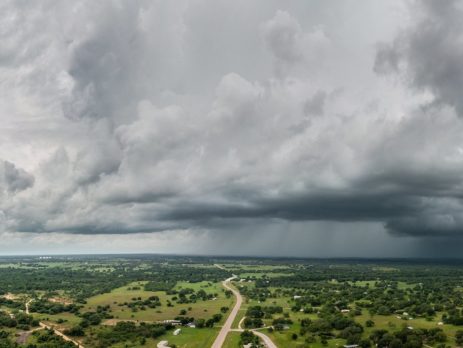
storm over farmland

Preparing for extreme weather

Extreme weather can affect communities, farms, businesses and livelihoods. These weather events, such as drought, wildfires and flooding can pose harm to people, livestock, plants and water quality. As extreme weather becomes more frequent and more intense, land-grant universities are equipping farmers, ranchers and communities with the proper tools to be prepared for and recover from its impacts. Here are [...]

Read more...
Fort Valley State University scientist harvesting a ripe peach on the campus research plot.

Addressing food insecurity to drive community impact

Food security is fundamental to the health, resilience and economic vitality of rural and urban communities. Across the United States,1890 Land‑grant Universities are uniquely positioned to meet this critical need by advancing research, education and Extension programs that connect communities to practical solutions and sustainable food system innovations. Here are a few examples of that work: When food insecurity hits, older [...]

Read more...
Scientists test a vaccine and delivery system at a catfish pond.

New vaccine and delivery system protect catfish against fatal disease, reduce antibiotic reliance

Catfish is the largest aquaculture industry in the United States. For decades, catfish producers have struggled against pervasive infestation from E. ictaluri, which mainly affects fingerlings (juveniles), targeting the fish’s brain and resulting in abnormal behavior and swimming patterns, swelling, ulcers and death. ESC has been treated with antibiotics delivered through feed. However, as orders for medicated feed rose [...]

Read more...
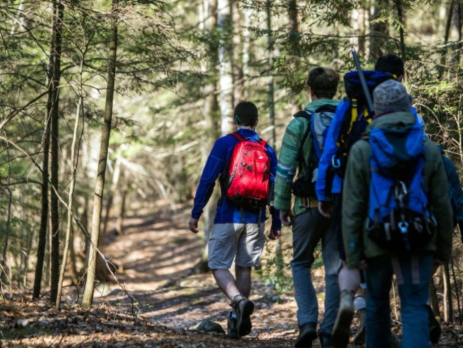
people hiking

Enhancing health and well-being through physical fitness

Regular physical activity, such as walking, is critical for overall health and well-being. It helps improve cardiovascular health, strengthen muscles, enhance flexibility and reduce stress and anxiety. It also aids in weight management and reduces the risk of chronic diseases like diabetes and hypertension. The Land-grant University System plays a significant role in promoting physical fitness and health through [...]

Read more...
chickens around a feeder

Mitigating costly poultry diseases

Avian diseases pose a major challenge to the nation’s $77 billion poultry industry and drastically increase the cost of poultry products for consumers. Avian diseases can also pose a health threat to other animals and humans. At the same time, there is a demand to produce poultry without antibiotics or other drugs commonly used to fight diseases. Working together, [...]

Read more...
a purple flowering plant

Research provides more sustainable pest management options

Agricultural land and natural ecosystems face growing threats from invasive and noxious grasses and weeds, feral animals, pests and diseases that impair ecosystem services and agricultural productivity. Chemical pesticides can pose human and environmental health risks. Land-grant university research had led to findings, tools and strategies for managing pests more sustainably. Here are a few examples of that work: Research and [...]

Read more...
view of tree canopy from below

Private land stewardship protects environment and communities

Practicing good stewardship of private lands is important for the health of our ecosystems and communities. Researchers, Extension professionals and educators at land-grant universities across the United States provide training, tools and other resources to help private landowners manage their land in ways that are environmentally friendly and economically sustainable. Here are a few examples of that work: Extension professionals in [...]

Read more...
crops growing out of dry, cracked soil

Understanding and identifying solutions for weather impacts on agriculture

Drought, severe weather and wildfires can have significant economic impacts on agriculture. Research and educational programming by land-grant universities helps us understand these effects and strengthen resilience. Here are a few examples of that work: Red clover, a commonly used forage crop in the northeastern U.S., increases its phytoestrogen levels under drought conditions, potentially affecting livestock reproductive health. The economic impact [...]

Read more...
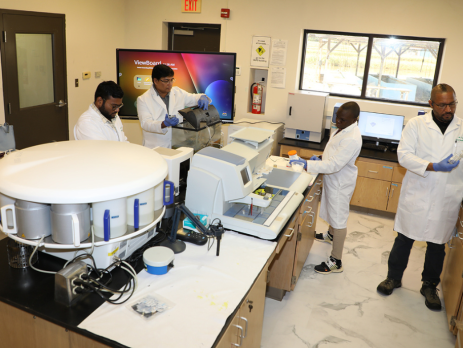
scientists in a lab

Harnessing artificial intelligence for agricultural innovation

Land-grant universities are leveraging artificial intelligence (AI) to improve agricultural efficiency, productivity and sustainability. Here are a few examples of that work: In Georgia, researchers are developing an AI-powered app to help farmers accurately identify Sericea lespedeza, a valuable forage crop with natural anthelmintic properties, reducing time ad labor costs.Fort Valley State University; USDA Capacity-Research. See full statement.   In Arkansas, researchers are [...]

Read more...
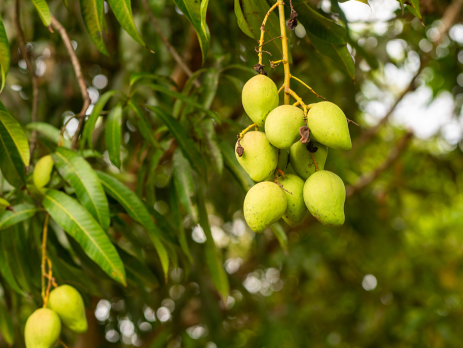
fruit growing on a tree

Understanding root causes of chronic health conditions, more natural ways to treat them

Chronic health concerns, including diabetes, autoimmune disorders and vitamin deficiency, are costly and debilitating to patients and the healthcare system. Researchers across the Land-Grant University System are looking at new and often natural ways to help ease the onset or effects of common, chronic conditions, and promote better health along the way. Here are a few examples of that work: In [...]

Read more...
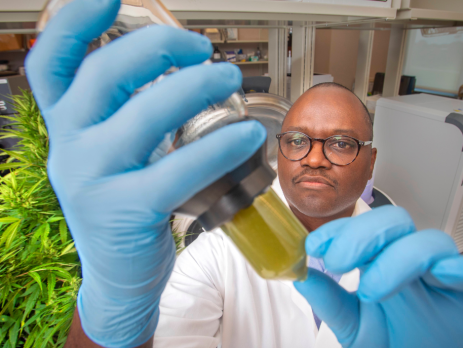
a scientist examines a sample

Land-grant university research uses natural methods to combat issues in antimicrobial resistance

Resistance to commonly used antimicrobials is a growing threat to human health. Researchers at land-grant universities have identified natural substances that can be used to fight bacteria and other microbes. These alternatives may be more sustainable options as they could pose fewer health risks and help limit the spread of antimicrobial resistance. Reducing antimicrobial resistance is key to preserving [...]

Read more...
two scientists look at a tablet

Food industry worker training reduces foodborne illness and enhances workforce development

Foodborne illnesses are a common and costly, yet preventable, public health issue. Training workers in the food industry on food safety issues is critical to public health as well as workforce development. Land-grant universities across the country continue to find innovative and effective methods to train workers on foodborne illness, how to prevent it and how to train other [...]

Read more...
a scientist takes notes

Optimizing use of heat to minimize food safety risks, maximize food quality

Using heat is essential for reducing the risk of foodborne illnesses in fresh products like eggs and milk and dry goods like spices, flour and powdered milk. In addition, a number of commodities require use of heat for processing. Finding the right balance of heat to ensure food quality and safety is an ongoing process, and one that researchers [...]

Read more...
a father and child running

A holistic approach to diabetes prevention and management

Land-grant universities play a crucial role in addressing diabetes. Their work helps individuals and families adopt healthier lifestyles, manage diabetes effectively and prevent complications. Extension programs provide evidence-based nutrition education, promote physical activity and support access to affordable, healthy food. Research is driving innovations in diabetes prevention and management. By combining scientific expertise with local engagement, land-grant universities empower [...]

Read more...
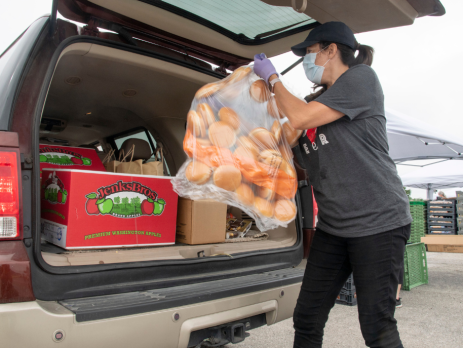
a person loading food into a car trunk

Supporting entrepreneurs, building stronger economies and fortifying food systems

The Land-grant University System empowers entrepreneurs, strengthens local economies and fortifies food systems in communities across the United States. Through their research, education and Extension initiatives, these institutions spark advancements that accelerate economic development and advance food security, ensuring resilient and strong communities. Here are a few examples of that work: Santa Fe County has experienced a decline in the number [...]

Read more...
a scientist examining plants in a controlled environment agriculture setting

Advancing sustainable food production in soilless environments

Land-grant universities across the nation are working to make the food supply more secure by exploring the best ways to produce crops without soil. Hydroponic and aquaponic systems have many benefits, including reducing the inputs and space needed to produce food. Researchers are studying how to make the foods grown in these controlled environments safer and better. Extension personnel [...]

Read more...
ducks

Protecting biodiversity for healthy ecosystems and communities

Biodiversity supports healthy ecosystems and recreation around the world. A diverse range of species ensures stability and resilience in the face of environmental changes. Protecting biodiversity also preserves the opportunity for new discoveries, such as species that can be used as biological pest control agents or medicines. Land-grant university researchers and Extension professionals are working to protect the biodiversity [...]

Read more...
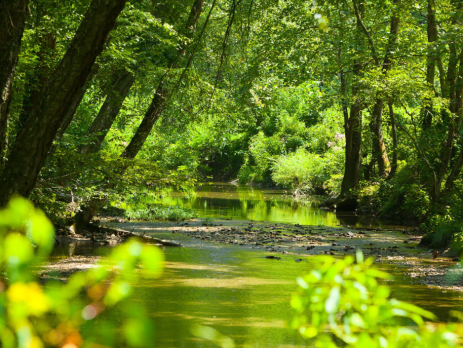
a creek through the woods

Precision monitoring aids decision makers and stakeholders in protecting key watersheds

Nutrient pollution, biodiversity losses and weather variability pose extraordinary challenges for the sustainability of natural ecosystems and the species that inhabit them. Land-grant universities are developing and applying emerging technologies that can help to more efficiently, accurately and safely monitor, measure and precisely manage these systems with minimal environmental impact. Here are a few examples of that work: To better understand [...]

Read more...
a small body of water

Protecting valuable water resources

Water resources that sustain agriculture and communities continue to face critical challenges. Land-grant universities are working to discover new ways to increase water use efficiency, reduce water use and protect water quality. Here are a few examples of that work: Researchers at Cornell University in New York engineered novel enzymes that can break down microplastics into small products that can be [...]

Read more...