Tag - Food Systems

Topic

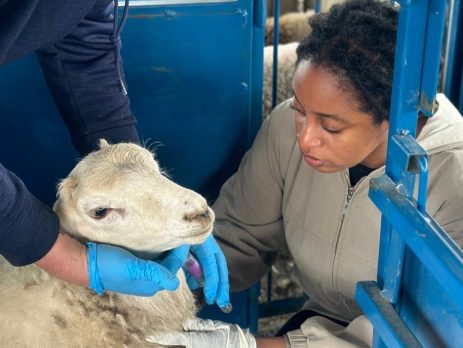
a vet giving a sheep a vaccine

Enhancing food safety with research and training

The United States food supply is among the safest in the world, but every day news stories report food recalls for a variety of safety reasons. Food safety must be maintained through every step of the production process, and land-grant institutions are the key to research and training that helps the food industry provide safe, healthy food. Here are a [...]

Read more...
grapes on the vine

Disease-resistant wine grape reduces losses in Florida

Pierce’s disease devastates grapevines in warm, humid regions like Florida, making wine grape production nearly impossible without costly interventions. This disease forces growers to rely on chemical treatments and limits the viability of vineyards in the Southeast.  Plant breeders there successfully grew a new wine grape variety with genetic resistance to Pierce’s disease while maintaining desirable wine-making qualities. They used [...]

Read more...
kebabs

Bots for kebabs

Consumer demand is strong for grilled kebabs — meat and vegetable cubes on skewers — that require highly labor-intensive tasks and complex hand-eye coordination. This repetitive, low-skilled job of producing kebabs is getting harder to fill, and even the existing semi-autonomous skewering systems require human handling and oversight. Food processing companies are increasingly recognizing the need to fully automate [...]

Read more...
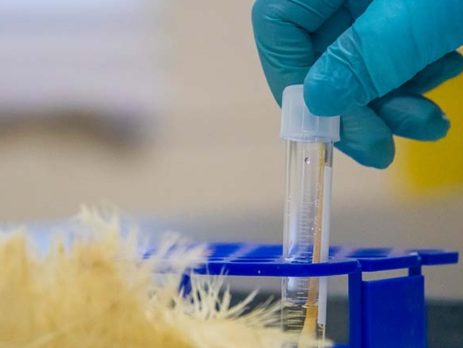
Scientists test a sample for C. perfringens at the MAFES H. H. Leveck Animal Research Center.

Billion-dollar bacterial test for poultry

Necrotic enteritis (NE) is estimated to cost $6 billion in annual losses to the poultry industry, where it causes the death of cells and tissue in the bird’s intestinal lining. It thrives in birds with prior gut damage and those that feed on diets high in wheat or fishmeal. Often, birds do not display symptoms until they have already [...]

Read more...
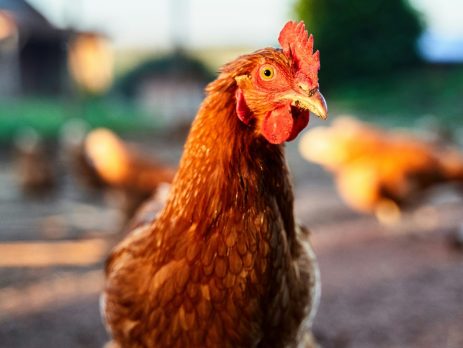
chicken

Artificial intelligence helps protect from Avian influenza

In the fight against the costly impacts of avian influenza, protecting poultry flocks from contact with wild birds is an important deterrent. However, the methods for effectively controlling wild birds are limited. In Georgia, researchers developed a novel method for detecting wild birds on farms, using night vision technology and artificial intelligence.  To aid in monitoring wild bird activities near [...]

Read more...
a chicken being held about to receive a swab test

Producers learn to manage for bird flu during outbreak

Highly pathogenic avian influenza, also known as bird flu, plagues the U.S. poultry industry. In addition to poultry impacts, the dairy industry experienced a spillover event and a one-time occurrence was identified in pigs.  Because of the changing nature of the outbreaks, Purdue Extension in Indiana worked with other state agencies to provide up-to-date information to animal producers, Extension educators [...]

Read more...
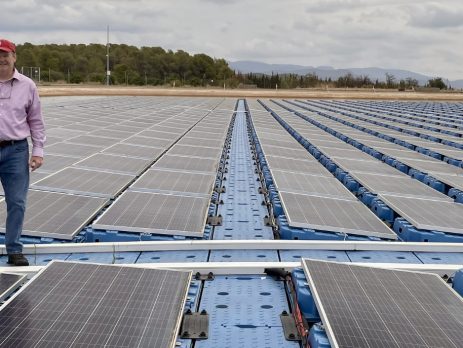
Mike Popp stands on a floating solar array with trees and mountains in the background.

Promoting research-based solar development

With the growth and expansion of solar energy production, producers and consumers in rural areas frequently express concern over whether solar development may compete with farmland availability or affect property values and local economies. For example, solar growth in Arkansas included 1,100 megawatts added in 2024, prompting questions about its impact on agricultural land use.  To address these concerns, a [...]

Read more...
A smiling woman in a green shirt and maroon cap crouches in a sunny field, harvesting a head of deep red leaf lettuce. She is working in a well-tended garden plot with irrigation lines, representing local agricultural impact and food production

Strengthening the agricultural workforce for the future

The workforce is changing. Across industries and states, trained workers are in demand to support local food systems, meet community needs, ensure safety and increase productivity. Land-grant universities are rising to the challenge of meeting these needs through partnerships, trainings, certifications and hands-on learning opportunities that strengthen the agricultural workforce. Here are a few examples of that work: Health and safety [...]

Read more...
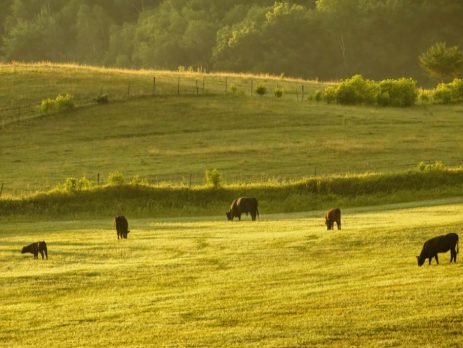
cows grazing

Soil carbon under managed grazing in Southern Wisconsin

Building organic carbon soil (SOC) on agricultural land is an important strategy for stabilizing the climate by storing carbon that would otherwise contribute to greenhouse gas emissions. Perennial grasslands managed for dairy and beef production are often promoted for their ability to increase SOC while also improving water quality, reducing flooding, enhancing biodiversity and supporting profitable farms. However, the [...]

Read more...
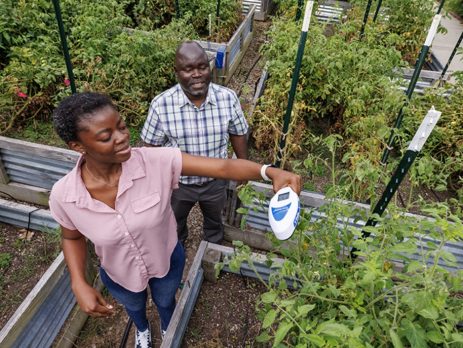
Blessing Masasi, Ph.D., N.C. A&T State University Department of Natural Resources and Environmental Design, right, and graduate student Anuoluwapo Adelabu check hydration levels in tomato plants, using a handheld device.

Smart irrigation helps farmers save water

Many farmers rely on traditional methods to decide when to irrigate their fields, using visual cues like wilting leaves or the feel of dry soil. But these methods lack the precision necessary to preserve water resources and may not meet the needs of crops.   North Carolina A&T Cooperative Extension researchers are using sensor technology and soil data to help farmers [...]

Read more...
A pair of hands in yellow gloves gently hold a strawberry plant, showing a flower and immature green strawberry, in a strawberry field.

Research helps increase specialty crop profitability

Specialty crop growers provide popular products to consumers. There are many challenges to growing the products commercially. Land-grant universities support growers with research and resources that help increase profitability and informed decision-making. Here are a few examples of that work: Apples are a popular product among consumers, but there are many challenges to growing them commercially in the Midwest and making [...]

Read more...
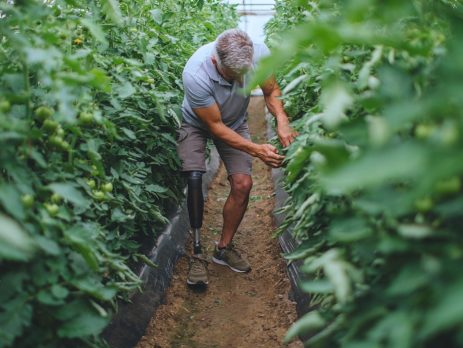
a man with a prosthetic leg examines a tomato plant

Readying veterans for agricultural enterprises

Military veterans across the Midwest are increasingly pursuing careers in agriculture, yet many lack access to training in production economics, enterprise budgeting and sustainable farm management, essential skills for making informed decisions.   In 2025, Michigan State University Extension partnered with organizations from Michigan, Indiana, Ohio and Illinois to support the Military Veteran Farming Conference, designed to provide veterans with practical [...]

Read more...
lavender field

Newest weapon against lice: lavender, cloves and thyme

A team of Extension professionals in Vermont have developed and tested a nonchemical alternative to treating winter lice infestations in cattle and sheep to bypass increasing resistance to insecticide and environmental impacts from chemicals.  The solution is essential oils. Mineral oils steeped with lavender, clove and thyme are known to have insecticidal properties. Lab and farm trials both showed the treatment [...]

Read more...
berries on the vine

New fruit, vegetable cultivars offer new opportunities for growers

Developing or restoring different fruit and vegetable cultivars allow farmers to plant crops based on disease resistance, fertilizer requirements, adaptations to site-specific soil and weather conditions or greater yields. Some cultivars can be a pathway to new market opportunities and new bio-based products. Here are a few examples of that work: Hemp is re-emerging as the basis of a viable industry [...]

Read more...
a diseased plant

Improving crop profitability through disease management

Land-grant university research and Extension programs help producers manage costly plant diseases through early detection, risk assessment and science-based tools. By integrating applied research, diagnostics and education, growers protect yields, reduce unnecessary pesticide use, improve return on investment and strengthen long-term agricultural resilience across variable production systems. Here are a few examples of that work: South Dakota State Extension plant pathology [...]

Read more...
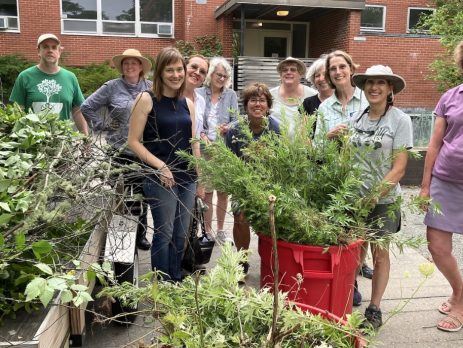
a smiling group of master gardeners

Horticulture programs sprout more resilient communities

Local horticulture is an important tool to combat food insecurity in underserved communities, while boosting environmental sustainability and community health. Volunteers with horticulture training through Extension Master Gardener programs partner with local organizations, schools and vulnerable communities to grow and distribute locally grown produce as well as create jobs.  Here are a few examples of that work: The Master Gardener program [...]

Read more...
farmers watch a demonstration at a field day

Hands-on learning through trials and demonstrations

Lack of awareness and understanding of the latest research and technologies can impact profitability on small farms. Land-grant universities provide hands-on learning opportunities where producers can learn from one another, see real-time demonstrations and learn about the latest research trials to support decision-making. Here are a few examples of that work: Turmeric, a tropical plant that thrives in Guam, has been [...]

Read more...
two smiling Extension agents in a community garden

Growing food security in urban spaces

Urban communities continue to face persistent constraints related to food access, limited growing space and water availability. Urban, small-scale food production, including controlled environment agriculture such as greenhouses and vertical farming, is a rapidly growing part of local food systems. These systems support food security, environmental sustainability and community resilience. Here are a few examples of that work: A program to [...]

Read more...
scientists examine plants grown with biochar

From field to fork: biochar strengthens the entire food system

Corn production is central to U.S. agriculture and food systems, yet its reliance on nitrogen fertilizer creates both economic and environmental challenges. While nitrogen is essential for high yields, corn typically uses less than half of the applied fertilizer. Unused nitrogen increases production costs and contributes to nutrient runoff, groundwater contamination, harmful algal blooms and ecosystem degradation. Producers and communities are [...]

Read more...
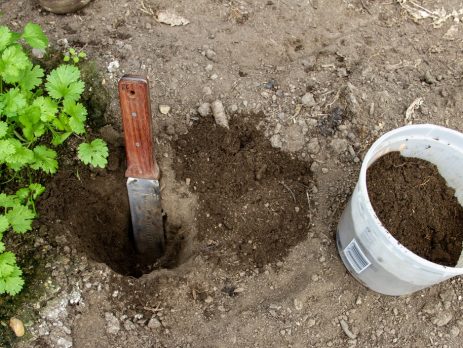
Soil is dug from a small pit in an herb garden

Filling the knowledge gap on Alaska’s agricultural soils

Alaska’s vast geography and diverse climates create highly variable soil conditions, yet limited data has historically constrained agricultural planning and soil management across the state. Understanding these soils is critical for improving farm productivity, expanding local food production and strengthening food security in a region where growing conditions are uniquely challenging.  Since 2023, University of Alaska Fairbanks (UAF) researchers have [...]

Read more...
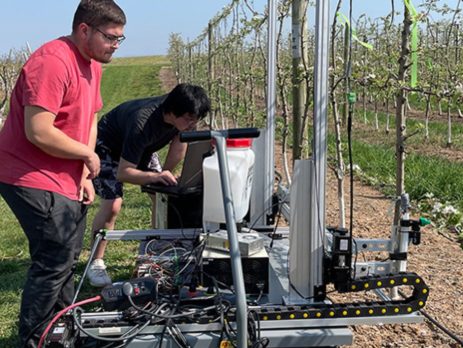
two scientists operate a robotic apple blossom sprayer

Emerging technology offers new tools for growers

Emerging technology is giving farmers tools to reduce the impacts of labor shortages, rising costs, changing weather patterns and regulatory demands, while improving production and profitability. These tools, using drones, robots, artificial intelligence and machine learning, offer a path to sustain productivity, worker safety and environmental performance in the agricultural economy. Projects demonstrate how these technical tools and artificial [...]

Read more...
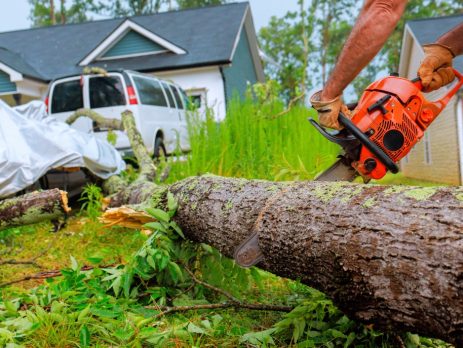
Worker cuts down fallen tree with chainsaw in suburban neighborhood after storm

Disaster response and recovery: partnering in times of local community need

As threats from wildfire and extreme weather increase, producers and communities need information to help prepare and resources to support recovery once impacted. Land-grant universities are responding with tools, resources, communications and staffing support that will strengthen resilience and long-term recovery. Here are a few examples of that work: In response to impacts from Hurricane Helene, Extension in Georgia mobilized to [...]

Read more...
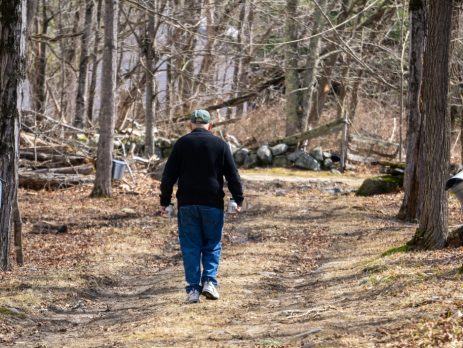
a man walking through forest with sugaring buckets

Designing multi-crop systems for sweet success in maple sugarbushes

Researchers at Cornell in New York are creating diversified agroforestry systems that can take advantage of the understory in maple stands or sugarbushes. While maple sugaring is a popular and growing sector, adding crops that can thrive under the trees can create more diversified lines of value-added maple products.   Over several years, multiple cultivars of 18 species of fruit- and [...]

Read more...
lettuce growing in a field

Decades of field data help desert lettuce growers improve pest control

Lettuce growers face recurring pest pressure from an array of insects that drive yield losses and high management costs. Long-term, field-based data has been used to identify emerging pest issues, evaluate management effectiveness, guide research priorities and strengthen integrated pest management (IPM) recommendations for growing lettuce in the desert areas of Arizona and Southern California.   For 19 years, University of [...]

Read more...
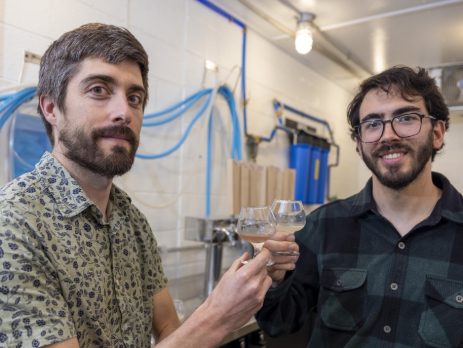
Scott Lafontaine stands with Bernardo Guimaraes in their small-scale beverage development facility

Cheers to gluten-free beer made with malted rice

Arkansas produces more rice than any other U.S. state, including about half of the nation’s long-grain rice. As long-grain rice exports have dropped from 50% in 2010 to 43% in 2024, growers have looked for new domestic markets. Beer shows potential. Brewers who use rice in beer typically rely on milled rice, which requires additional processing steps and costs.  Researchers [...]

Read more...