Tag - Texas

State/Territory

young child walking in strawberry patch

Land-grant university research and Extension support resilience for youths, families and communities nationwide

Here are a few examples of that work:  The effectiveness of the Department of Defense’s Military Family Readiness System depends on well-trained Extension professionals with current, research-based tools and resources. Extension specialists in Kentucky contributed by providing personal finance training to military service providers so they can pass on knowledge, tools and resources that help military families prevent and navigate financial [...]

Read more...
Healthy foods and exercise equipment.

Research and Extension strengthen nutrition, health and well-being

Chronic diseases are the leading cause of illness, disability and death in America. Research and Extension are fighting back. Over half of adults who participated in a Texas diabetes education program now choose healthier foods, monitor glucose levels during exercise, and control their diabetes to avoid interference with daily life. These changes could help participants save up to $94,021 in [...]

Read more...
Vegetables for sale at a farmers market stand.

Research and Extension ensure everyone has ample access to affordable, safe, nutritious food

Invasive pests damage crops, costing U.S. agriculture an estimated $30 billion annually. Pest management research and Extension are stabilizing the food supply chain. Efforts have led to: Cost-effective alternatives to glyphosate for herbicide-resistant Russian thistle control in Oregon, protecting more than 30,000 acres of wheat and preventing over $1 million in yield losses so far.Oregon State University Extension Service; Other [...]

Read more...
A river bisects a field and forested riparian area

Research and Extension support resilient ecosystems

Recent studies and programs are conserving and protecting water used for drinking, fishing, irrigation and recreation.  Washington research helped establish 25 anaerobic digesters across the Pacific Northwest, turning dairy manure from more than 143,000 cows into biogas that provides more than 126 million kilowatt-hours of renewable energy per year. Digesters decrease water quality risks associated with nutrient runoff from manure [...]

Read more...
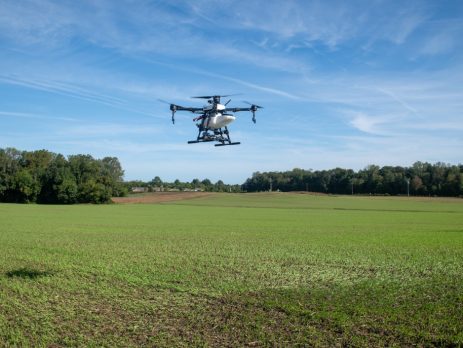
A drone flies over a field.

Research and Extension make agricultural systems more efficient, profitable and resilient

Strategies and tools for managing crop pests and diseases have increased productivity and profitability. For example: Extension units across the nation offer plant and pest diagnostic clinics. In New Mexico, free diagnoses saved producers an estimated $36,000 in testing fees in 2025, while also supporting biosecurity and export compliance. In Indiana, lab results and recommendations saved clients $890,000 in reduced [...]

Read more...
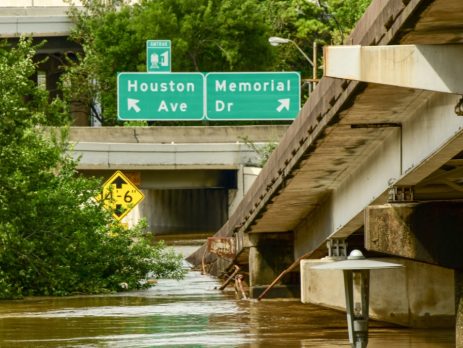
Buffalo Bayou Park Houston, flooded after Hurricane Beryl

Texas A&M AgriLife Extension provides disaster relief and recovery

In 2025, the state of Texas experienced 31 severe weather events, including drought, floods and major fires. The Texas State Emergency Operations Center activated 21 times in 2025 for a total of 94 days. Texas A&M AgriLife Extension Disaster Assessment and Recovery (DAR) is an educational network that focuses on preparing for, mitigating and responding to disasters. The DAR [...]

Read more...
Youths wearing life vests stand on a dock as they fill out forms while an adult explains the process

Extension introduces youths to career opportunities in agriculture and STEM

The United States is facing a dearth of skilled and educated workers across the agricultural industry. With many young people being several generations removed from agriculture within their families, and removed from where their food comes from, introducing youths to the variety of careers in agriculture and food systems and teaching related skills can build a new generation of [...]

Read more...
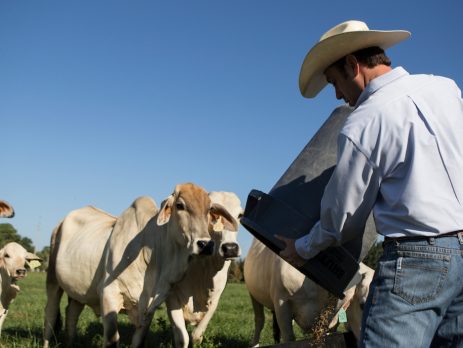
Farmer spreading feed for cattle

Confronting farm stress through research, Extension

Across the Land-grant University System, outreach and research-based work are critical to strengthening the health, safety and well-being of agricultural communities. By pairing scientific evidence with trusted Extension networks, land-grant universities address urgent challenges while improving quality of life nationwide. Here are a few examples of that work: Researchers in Pennsylvania held discussion groups with 68 farm women in Ohio, Vermont [...]

Read more...
Wellness on Wheels truck

Empowering community resilience

Community resilience support is a critical function of the land-grant system because it equips individuals, families and local organizations with the knowledge, tools and partnerships needed to adapt to economic, environmental and public health challenges. Through research-based education and Extension outreach, land-grant universities strengthen local capacity, promote equity and help communities not only recover from disruption but build long-term [...]

Read more...
two girls sitting at a table with information

Preparing youth for adulthood with financial literacy programs

Youths often enter adulthood unprepared to effectively manage finances. Studies reveal concerning trends, such as that only 24% of students and 20% of their parents believe they are adequately prepared for adult financial challenges, or that 27% of Gen Z individuals have no savings. Without meaningful opportunities to learn budgeting concepts and gain practice with budgeting, managing income and [...]

Read more...
UConn Extension experts at a well water testing booth

Well water testing improves public health 

Clean and safe water is essential to public health, agricultural productivity and environmental sustainability. Those with private wells are responsible for their own water safety. Without accessible testing, education and coordinated planning, contaminants can threaten drinking water, food safety and ecosystem health, particularly in rural communities.  Here are a few examples of that work: In Connecticut, 65% of participating households took [...]

Read more...
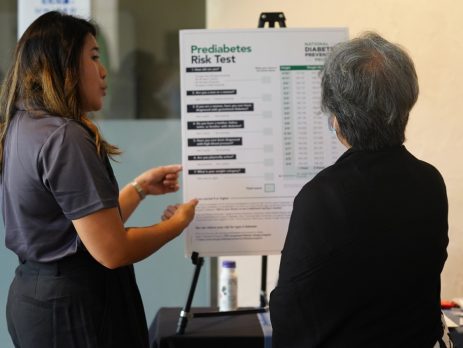
an Extension educator talks toa community member about a prediabetes risk test

Land-grant universities improve lives through diabetes education, prevention

More than 38 million Americans have diabetes, and nearly 98 million have prediabetes, which costs the U.S. $412.9 billion annually between health care and lost productivity. Those affected often lack access to education that supports day-to-day diabetes self-management. Complications can include kidney disease, heart disease, loss of limbs and vision loss. This prevalent chronic disease is a major contributor [...]

Read more...
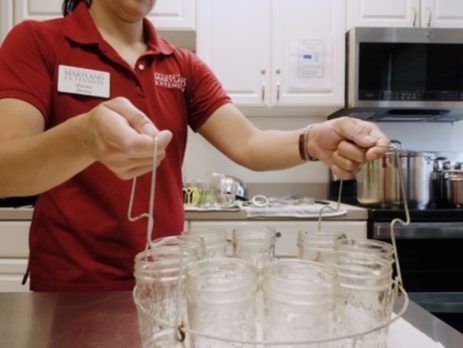
UME Agent, Shauna Henley, preparing mason jars for sterilization

Extension trainings keep Americans safe from foodborne illness

Foodborne illness is a widespread, costly public health concern in the United States. Each year, one in six Americans becomes sick from contaminated food, leading to hospitalizations, long-term health complications and even death. Pregnant women, the elderly, young children and people with weakened immune systems or chronic diseases are most at risk. Because food safety risks can occur at [...]

Read more...
an Extension agent shows youths plants from a community garden

Encouraging health and wellness in U.S. youth through hands-on activities, education

One in five school-aged children nationally suffer from obesity, and regular physical activity and balanced diets can lead to improved focus, behavior, self-esteem and academic performance. Encouraging healthy behaviors at an early age fosters a value for physical activity, healthy eating and preventive habits. These healthy behaviors can lead to fewer chronic diseases, resulting in lower health care costs and a [...]

Read more...
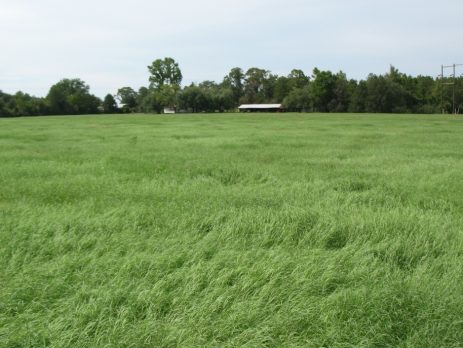
bermudagrass field

Texas livestock, forage producers focus on profitability

Forage production for livestock in Texas is a necessity and expensive. The annual cost of producing Bermudagrass forage per acre can span $200 to $450 when factoring in land costs, fertilization practices, machinery, expenses and variety grown. The cost of weed control in a pasture or hay meadow typically ranges from $5 to $24 per acre for herbicide alone.  The [...]

Read more...
a rancher tends to her horses

Ranch Management University program helping new landowners understand agriculture, natural resources

In Texas, many inherit land properties without any formal training in soil health, livestock management, wildlife habitat or water stewardship. The result can be land that is under-utilized, mismanaged or environmentally degraded. The David McKnight ’73 Ranch Management University program offered by Texas A&M AgriLife Extension helps new and inexperienced landowners understand the fundamentals of natural resource management.   Through applied [...]

Read more...
Bennett Trust logo

Land stewardship program strengthens Edwards Plateau

With a goal to empower landowners to care for the Edwards Plateau, the Bennett Trust Land Stewardship program at Texas A&M AgriLife Extension provides practical, research-based guidance emphasizing conservation, sustainable ranching and natural resource management.  The annual Women’s Land Stewardship Conference has drawn over 350 women from a variety of backgrounds, equipping them with a practical tool for brush control, [...]

Read more...
two smiling Extension agents in a community garden

Growing food security in urban spaces

Urban communities continue to face persistent constraints related to food access, limited growing space and water availability. Urban, small-scale food production, including controlled environment agriculture such as greenhouses and vertical farming, is a rapidly growing part of local food systems. These systems support food security, environmental sustainability and community resilience. Here are a few examples of that work: A program to [...]

Read more...
rice growing

Combating rice delphacid in the Southwest

Rice delphacid, an invasive insect that has caused economic damage in the Southwest, has received quick attention from Texas A&M AgriLife with response work focusing on trial research and producer education, as well as partnership and collaboration with the rice industry.  Due to rapid economic growth in the Houston area, the annual cost to produce a rice crop in Texas [...]

Read more...
two UAPB athletes speaking at a meeting

Land-grant universities educate individuals and communities about health, nutrition and chronic disease prevention

Many American individuals and communities struggle with building or maintaining healthy lifestyles that contribute to better health outcomes. A lack of awareness of health information and resource constraints limit people’s abilities to eat healthy foods or get enough physical activity. Extension leaders from 1890 land-grant universities are bringing information to communities struggling with high rates of obesity and chronic [...]

Read more...
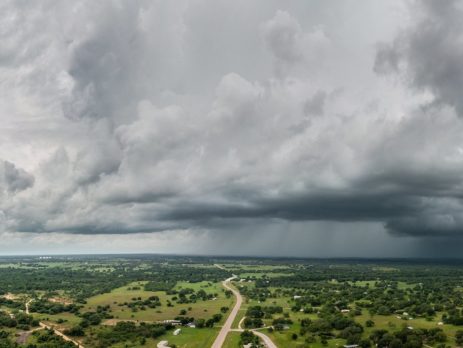
storm over farmland

Preparing for extreme weather

Extreme weather can affect communities, farms, businesses and livelihoods. These weather events, such as drought, wildfires and flooding can pose harm to people, livestock, plants and water quality. As extreme weather becomes more frequent and more intense, land-grant universities are equipping farmers, ranchers and communities with the proper tools to be prepared for and recover from its impacts. Here are [...]

Read more...
a young boy uses a laptop

Empowering communities by advancing digital literacy

Digital literacy is essential to economic mobility, civic engagement and workforce readiness in today’s communities. Extension programs at 1890 land‑grant universities play a vital role in expanding opportunities in rural and urban communities to build technology skills and support workforce development. Here are a few examples of that work: In Georgia, an Extension initiative is strengthening connectivity and technology skills across [...]

Read more...
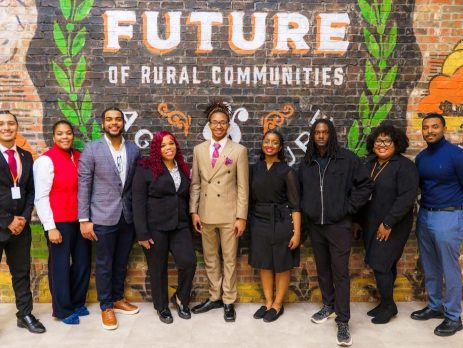
a group of smiling students

Advancing higher education and career readiness

Sectors across the agricultural landscape need more educated and skilled workers to support our national and local food systems. 1890 land-grant universities offer different pathways to introduce students to career opportunities and prepare them for employment. Here are a few examples of that work: In Tennessee, Extension leaders brought a cohort of undergraduate students to the Farm Credit Mid-America headquarters to [...]

Read more...
a family preparing a salad

Delivering nutrition and health education and resources at the community level

The SNAP-Ed program provides research-based nutrition education to SNAP recipients and those who are eligible for benefits, helping individuals and families make more nutritious food choices, stretch their food dollars and lead healthier lifestyles. Land-grant universities play a key role by leveraging Extension professionals to deliver nutrition education and resources directly to a wide audience of communities. The program [...]

Read more...
view of tree canopy from below

Private land stewardship protects environment and communities

Practicing good stewardship of private lands is important for the health of our ecosystems and communities. Researchers, Extension professionals and educators at land-grant universities across the United States provide training, tools and other resources to help private landowners manage their land in ways that are environmentally friendly and economically sustainable. Here are a few examples of that work: Extension professionals in [...]

Read more...