Tag - 2025

Year

two people sawing a tree

Volunteers help protect and restore local environments

Land-grant universities across the United States are finding ways to engage the public in science and stewardship that address real-world problems in their communities. With training and tools, volunteers are able to collect important data that help scientists, natural resource organizations, community members and the government protect and restore land, air and water resources — and the ecosystem services [...]

Read more...
a person looks at information on their phone and laptop

Extension builds financial resilience for community prosperity

Extension professionals at land-grant universities across the United States are helping communities build financial resilience by providing access to education and resources that foster financial literacy and money management. Here are a few examples of that work: Twenty-one percent of Oklahoma children live below the poverty level. An Extension program called Reality Check helped youths learn money management practices and job [...]

Read more...
an adult and teen work on a car

Extension programs drive economic growth and community vitality

Especially in rural areas, business owners, local leaders and others can have trouble finding support, information and resources. Across the nation, Extension programs are helping boost local economies and build vibrant communities. Here are a few examples of that work: In Mississippi, Extension professionals lead a program that educates new small business owners about resources and strategies that can help them [...]

Read more...
a family preparing a meal

Extension programs help families grow stronger as they navigate life’s challenges

Parenting isn’t easy — and neither are a myriad of other experiences that can arise in family life. To help people navigate situations like adjusting to co-parenting after a divorce, family disagreements and end-of-life planning, Extension professionals at land-grant universities lead research-backed initiatives that strengthen families and offer support for those going through difficult circumstances. Here are a few examples [...]

Read more...
an experimental setup for plant growth

Land-grant university research creates sustainable domestic products from agricultural waste and biomass

Petroleum and other nonrenewable materials are widely used for daily products, but many of these items can be made from biomass, including food and agricultural wastes. Bioproducts enhance energy, food and national security while reducing fossil fuel reliance and emissions. They also create jobs, boost the economy, provide farmers with extra income and reduce harmful disposal methods. Here are a [...]

Read more...
a person watching the "Field Crops Virtual Breakfast" on a laptop

Virtual education programs reach clientele where they live

Since 2020, virtual education has increasingly helped land-grant university research and Extension programs be more available to clientele where they live. These virtual programs are user-friendly and can be tailored to an audience’s educational level. By creating a virtual series that is informative and interactive, land-grant universities can significantly enhance the reach and impact of research and Extension information. Here [...]

Read more...
fruit growing on a tree

Specialty crop growers benefit from land-grant university research

Scientists at land-grant universities are responding to local grower needs to strengthen specialty crop quality and economics. Here are a few examples of that work: Researchers in New York are studying a new threat to vineyards. Research on how the disease is spread through hoppers led to recommendations on management practices to manage the virus spread.Cornell AgriTech. See full statement.   Two-thirds of [...]

Read more...
a ladybug

Land-grant universities offer solutions for pest management

Land-grant university pest management programs promote sustainable agriculture. In particular, research-based education helps farmers use pesticides more effectively and safely, improving pest control efficiency and reducing human and environmental exposure to chemicals that can pose health risks. Overall, these practices foster more sustainable farming, leading to healthier ecosystems and improved long-term agricultural productivity. Here are a few examples of that [...]

Read more...
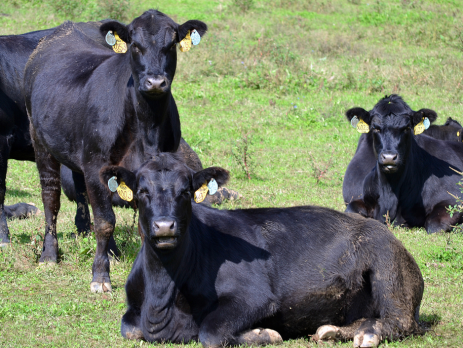
cows

Land-grant university research, outreach support beef production

The United States is the world’s top producer of beef, contributing to about 20% of the world’s production. In 2023, the U.S. beef industry had an estimated value of $102 billion. Land-grant universities are supporting the beef industry through research, Extension and education, ensuring producers remain economically viable and are able to safely meet changing market demands. Here are a [...]

Read more...
pigweed

Research and outreach on invasive species keep agriculture productive, profitable

Land-grant university research and outreach is helping manage the impacts invasive weeds and species have on growers and agricultural productivity. Here are a few examples of that work: When invasive pigweed threatened Idaho agriculture, Extension educators educated stakeholders on identification and best management practices. Educational materials have been widely shared, including more than 50 presentations to more than 4,000 direct contacts [...]

Read more...
a robot picking berries

Digital agriculture enhances production, monitoring capabilities

Data modeling, automated machinery and drones are just a few of the technologies that are powering improved efficiencies in livestock and crop production. Land-grant universities are at the forefront of researching and applying these technologies, paving the way for increased productivity, better disease management and optimized harvest timing. Here are a few examples of that work: In Idaho, many cattle producers [...]

Read more...
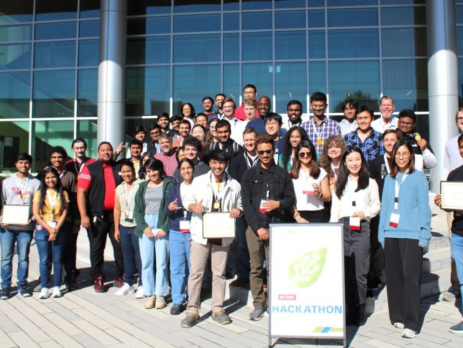
a group of smiling students

Education opportunities elevate agriculture issues and importance

Reaching youths and students early increases awareness of the importance of agriculture and the critical issues impacting producers. Land-grant universities are creating solutions to address educational gaps, improve understanding critical issues like cyber-biosecurity and provide students with practical knowledge, skills and information for the future. Here are a few examples of that work: Researchers in New Mexico recognized an opportunity for [...]

Read more...
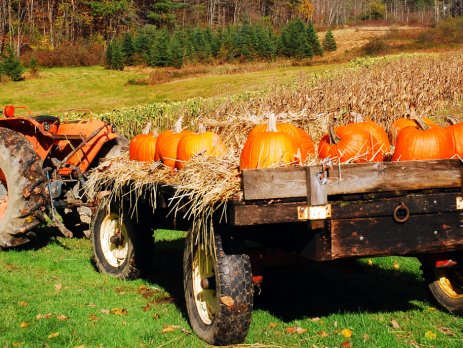
pumpkins in a tractor wagon

Research and Extension strengthens markets through technology, education

Preserving and strengthening markets is essential to the sustainability of the agricultural sector. Through technology and educational programs provided by land-grant universities, small agricultural businesses can identify new trends, develop risk management strategies and adopt new methods to ensure their businesses thrive. Here are a few examples of that work: Broadband plays a vital role in marketing businesses and facilitating commerce. [...]

Read more...
a scientist examining a plant

Land-grant scientists help farmers manage costly plant diseases effectively

Each year, plant diseases cost the global economy around $220 billion. Plant diseases kill crops and make their products unmarketable, wasting food and other resources while driving up costs for farmers and consumers. Land-grant university scientists are helping farmers monitor for diseases and manage them in a safe and cost-effective manner. Here are a few examples of that work: Researchers in [...]

Read more...
a person wearing PPE and looking at a device

Land-grant universities support the viability of livestock production

From teaching producers biosecurity techniques to keeping poultry cool in extreme temperatures to identifying genetic traits that will optimize production, land-grant university researchers and Extension professionals are supporting the viability of livestock production in the United States. Here are a few examples of that work: Researchers at land-grant universities nationwide are developing and using advanced technologies and data to improve poultry [...]

Read more...
peppers

Land-grant universities foster community, student resilience

The 1890 land-grant universities are committed to strengthening communities, farmers and students through meaningful outreach initiatives. Their engagement ensures that resources are tailored to meet local needs such as food security and economic development. Through these efforts, the universities are fostering more resilient communities for generations to come. Here are a few examples of that work: A food bank needs assessment [...]

Read more...
sheep

Advancing food security through sustainable livestock and crop innovations

Research at 1890 land-grant universities addresses critical challenges in animal and plant production. Collectively, these projects support sustainable food systems and food security by improving livestock and crop health, reducing reliance on agrochemicals and increasing production efficiency. Here are a few examples of that work: An Arkansas study on sheep health explored natural dietary supplements to reduce antibiotic and dewormer dependency, [...]

Read more...
students work on a plant-based science experiment

Recruiting the next generation of students to STEM careers

As the population grows, the demand for innovative, science-driven solutions in food production and resource management increases. Agricultural STEM careers will play a vital role in boosting global food security and economic development while sustaining natural resources. The 1890 land-grant universities are key in bridging the gap between high school students and these STEM careers. Here are a few examples [...]

Read more...
a person in woodworking shop works at a laptop

Building stronger rural economies: The role of education & entrepreneurship

The Community Economic Development Program at the University of Wisconsin Extension launched research-driven programs to support entrepreneurs, community leaders, and stakeholders. The Wisconsin Rural Entrepreneurial Venture provided three years of coaching to rural communities, helping seven towns strengthen local business ecosystems. The Homegrown program assisted 60 community leaders in underserved areas with economic data analysis, support networks and business [...]

Read more...
two seniors work in a garden

North Dakota program helps older adults in rural communities live independently 

North Dakota is faced with unique challenges in caring for and about its older residents. A documented shift of the state’s population from rural counties to urban areas has resulted in a higher proportion of older adults in small towns and sparsely populated locations.  Assuring North Dakota is a good place to live and age well is a complex problem [...]

Read more...
two people holding hands

In New York, Extension program offers support for families dealing with estrangement 

When a rift divides a family and relatives becomes estranged from one another, there’s limited guidance for how to handle these emotional situations and attempt to reconcile. Seeking to create resources and tools to help, Cornell University Extension professionals in New York developed an online course and website focused on this issue.  The online training targets professionals, including Extension educators, [...]

Read more...
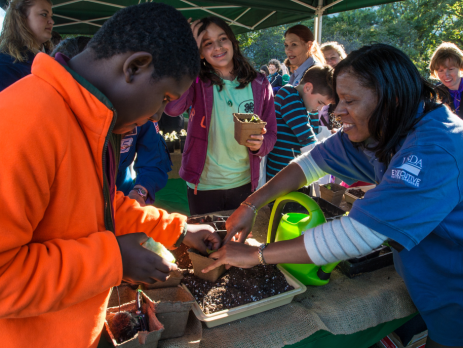
a 4-h leader helps a participant with a planting

Breaking barriers: Expanding 4-H opportunities in Florida

Orange Park, Florida, traditionally had low youth involvement in 4-H due to misconceptions and lack of local clubs. Since 2021, the University of Florida Institute of Food and Agricultural Sciences has worked to increase engagement. A breakthrough came when a St. Johns Country Day School student won the 4-H in Space program, sparking interest in STEM opportunities.  In spring 2023, [...]

Read more...
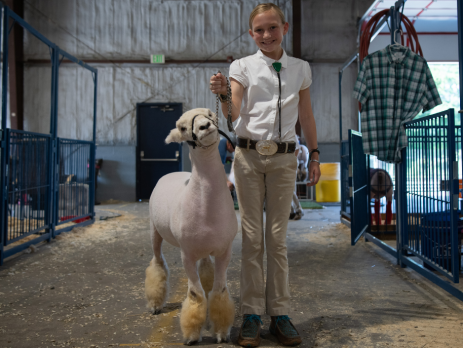
a 4-H participant smiles next to her show sheep

Illinois 4-H program guides youths on the path to success

Beyond the immediate benefits felt by communities through the service projects spearheaded by 4-H youths, the lasting effects extend far into adulthood. Research shows that individuals who engage with 4-H during their formative years are not only more likely to attain economic stability but also exhibit heightened civic engagement compared to their counterparts in the general population.  Commitment to community [...]

Read more...
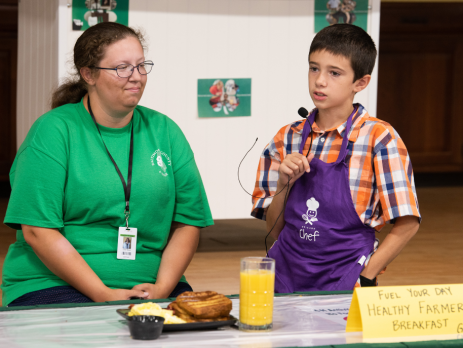
a 4-h participant and leader present a cooked meal

Youth volunteers lead wellness lessons through Mississippi Extension program

In Mississippi, 4-H members are stepping up to educate those in their communities about a wide variety of health topics.  Through the Mississippi State University Extension’s 4-H Junior Master Wellness Volunteer Program, 100 youths made 96,000 contacts in 2024 through one-on-one and group presentations, community service projects, social media messages and a health fair. After receiving training and with guidance [...]

Read more...
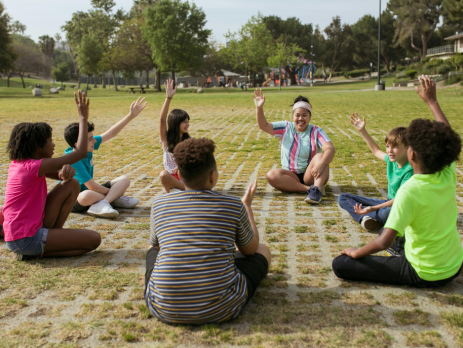
a group of campers sit in a circle with their hands raised

Expanding access to high-quality summer learning with Missouri 4-H

Experiential learning helps youth develop essential life skills, yet educational gaps widened during the COVID-19 pandemic. Research confirms that quality out-of-school programs improve personal development, academic attitudes and long-term success. To address these challenges, Missouri 4-H expanded programming in 2024, increasing accessibility and forging new partnerships to reach youth. With grant support, Missouri 4-H introduced career exploration programs, simulations and day [...]

Read more...