
Tag - 2025

Year

a strawberry plant

Extension helps strawberry farmers in Georgia and South Carolina save their growing season

Strawberries grown in Georgia bring in more than $15 million in sales annually, but the true value of growing strawberries is in agritourism — farms that open their doors to families to come pick fruit and enjoy a taste of farm life. For the past four years, the strawberry business in Georgia has been hindered by a new, highly [...]
Read more...

Dogs can be lifesavers for livestock

Like guardian angels, guardian dogs can be lifesavers for livestock. Increasing conflicts between livestock and predatory wildlife have prompted ranchers to seek effective and affordable protection for their cattle, sheep and other livestock. Through workshops, consultations and online resources, Texas A&M AgriLife Extension researchers help livestock producers manage and train livestock guardian dogs to effectively deter predators such as coyotes, [...]

Read more...
tractor with a mechanical mower mowing grass on the side of the asphalt road

Autonomous machine systems to increase productivity, efficiency of crop production

Purdue University in Indiana is leading an autonomous machinery project to enhance productivity, efficiency and elevate profitability by alleviating labor workload.  Autonomous machines can capture data and help overcome labor-related limitations. This data capture helps farmers with comprehensive insights and data-driven decision making.  Purdue has used an autonomous inner-row sensor platform, harvest logistics tracking and autonomous roadside mowing as part of [...]

Read more...
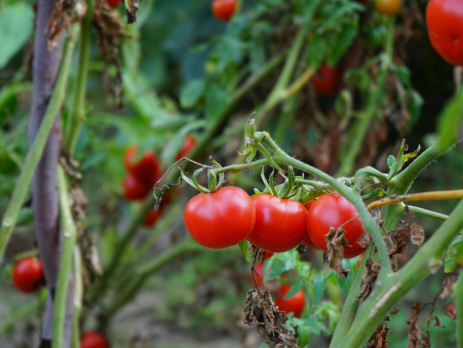
tomatoes on the vine

Optimizing nutrition for tomatoes enhances economic returns to growers

Nutrient deficiencies and excess can reduce tomato crop productivity, harvest quality and economic return. Mississippi State University Extension researchers evaluated nitrogen application rates in field tomato production in north Mississippi during the summer seasons of 2023 and 2024. They collected soil, water, leaf, fruit, stem and harvest samples, then processed and analyzed them. Based on the field studies, they determined [...]

Read more...
a feral hog

Trapping training helps reduce feral hog population in Arkansas

Feral hogs cause extensive economic losses in agricultural economies and impact forests, wildlife habitat and the landscape. The U.S. Department of Agriculture estimates feral hogs cause $41.3 million in crop, pasture and livestock losses annually in Arkansas alone. To address feral hog populations, Arkansas Extension agents received training in net capture systems and installed eight systems to capture the hogs. [...]

Read more...
hemp

Helping hemp growers improve crop quality

Hemp, a non-psychoactive variety of Cannabis sativa L, has re-emerged as a popular crop after the 2018 Farm Bill granted hemp “crop status,” therefore removing it from the Drug Enforcement Administration list. It is sought after for a wide variety of consumer and industrial products including cosmetics, foods, fiber, building materials, biofuel and soil remediation. Vermont Agricultural Experiment Station scientists [...]

Read more...
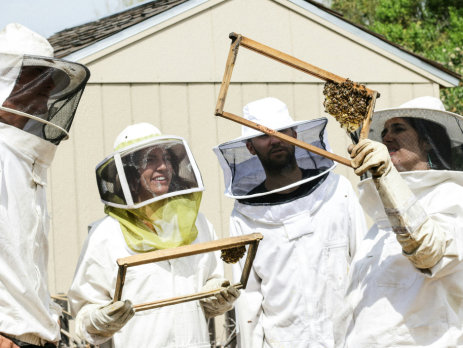
four people in beekeeper suits examine honeycombs from a beehive

Extension assists Michigan beekeepers to improve honeybee management

The Michigan State University Extension apiculture team partnered with the Michigan Beekeepers Association to conduct a needs assessment of the state’s small-scale beekeepers. Keeping bee colonies alive and disease identification and management were identified as the most important issues. An Extension apiculture educator then collaborated with Michigan beekeeping clubs to deliver in-person education on managing varroa mites and integrated pest management, [...]

Read more...
a group of scientists smile around the AI-powered robot in an experimental field

Robots make plant inventory easy as 1, 2, 3

Ornamental plant growers manually count tens of thousands of plants each season to get an accurate inventory before they commit to fulfilling major orders. An Alabama ornamental nursery might have as many as 80,000 plants per acre, with larger nurseries covering more than 1,000 acres. Some growers estimate they spend more than $6.5 million in labor each year simply [...]

Read more...
a person spraying pesticide on a plant

Restricted-use pesticide training boosts wages and saves local farmers money on pesticide management costs

Most farmers need to pay a contractor to spray restricted-use pesticides on their farms if they don’t have a license to do so. At $8 per acre, applied three times each growing season, the cost can really add up. On average, a farmer in Jackson County, Florida, can expect to spend more than $2,400 on pest control each season. A [...]

Read more...
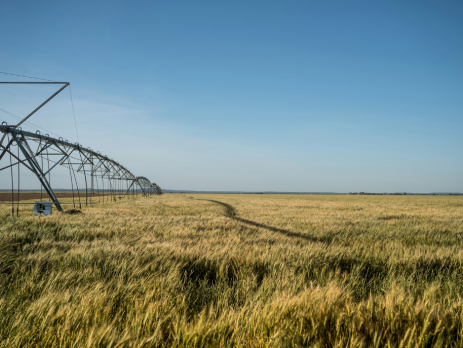
irrigation on a wheat field

Tennessee farmers increase irrigation for higher crop yields

When adopting irrigation, Tennessee row-crop producers must make appropriate choices of when and where to place it because the cost is high, varying from $1,500 to $2,500 per acre in a region where rainfall and good water-holding soils often provide a majority of the crop’s water requirement. University of Tennessee researchers and educators held on-farm research demonstrations, webinars and educational [...]

Read more...
cattle in a smoky wooded area

Wildfire smoke research provides insights to help ranchers protect their herds and reduce stress

Wildfires that scorched nearly 2 million acres in Eastern Oregon exposed many local cattle to significant levels of wildfire smoke. In the aftermath, cows across the state, on both dairy and beef operations, have been getting sick with symptoms like runny noses, runny eyes and severe discharge. An Oregon State University Extension Service beef specialist hypothesized that inhaling smoke dries [...]

Read more...
two scientists take a sample

Land-grant universities drive sustainability through innovative agricultural practices

The 1890 land-grant universities are dedicated to improving the well-being of economically challenged communities. By focusing on sustainable practices, these institutions help address key challenges like food security, environmental stewardship and economic resilience. Through research, Extension and education, they equip farmers and communities with innovative techniques that preserve resources for future generations. Here are a few examples of that work: Researchers [...]

Read more...
a scientist in a university laboratory

Developing the next generation of agricultural workers

A skilled workforce is critical to sustaining agriculture, advancing food security and fostering economic growth. Land-grant universities are preparing students for the agricultural workforce through hands-on training, research opportunities and industry partnerships. These programs focus on historically underserved communities, ensuring broad participation in food and agriculture careers. Here are a few examples of that work: Georgia Extension professionals are helping students [...]

Read more...
a farmer pulls a plant from the ground

Reducing barriers to success for new farmers

Beginning farmers face an increased need for educational support and networking to remain profitable. Land-grant universities are working to understand and meet these individual and community needs. Here are a few examples of that work: In Wisconsin, Extension partnered with 12 agricultural associations and community organizations to facilitate focus groups exploring needs of beginning and early career farmers. They introduced Extension [...]

Read more...
grapes in a vineyard

Leaf removal supports healthy wine grapes

Wine grape vineyards are vulnerable to fungal diseases that can ruin the grape crop and make the wine unsellable if not managed properly. As more wine producers move toward organic farming or using biodynamic methods, the fungicides producers can use are limited. One nonchemical way to reduce these diseases is to remove leaves in the cluster zone of the [...]

Read more...
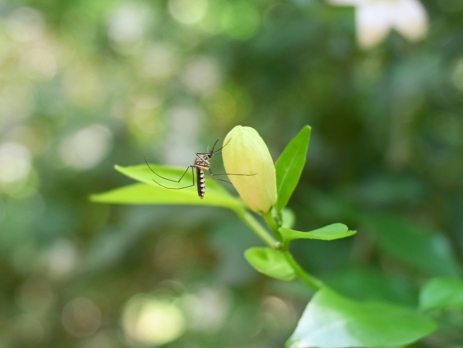
a mosquito on a flower

Reducing mosquito populations through nectar control

Mosquitoes pose a significant public health challenge as vectors of diseases such as Zika, malaria and West Nile virus. At the same time, they contribute to ecosystems as pollinators and as a food source for various species. In urban and suburban environments, managing mosquito populations is crucial for reducing disease transmission while minimizing ecological disruption. A research project at [...]

Read more...
drone flying overhead

Researchers develop learning approach for drone-based surveillance, scouting 

Unmanned Aerial Systems (UAS) aid farmers in crop disease management, field scouting and pesticide applications. UAS has the unique ability to gather aerial imagery and other large amounts of data although interpreting aerial images can be complex and time consuming. Researchers at Purdue University in Indiana have developed AgSemiSeg, a semi-supervised learning approach designed for agricultural semantic segmentation. The objective [...]

Read more...
sheep in a field

Livestock education programs result in $1.5 million in savings

People need protein in their diet to maintain health. The Pennsylvania State University Livestock Extension team offered an array of educational programs to help beef cattle, goat, sheep and swine producers increase efficiency, profitability and produce a high-quality product. The team’s curriculum focused on basic production practices, reproduction, feeding, nutrition, health care, marketing practices and financial analysis. Online courses for [...]

Read more...
aerial view of Mediterranean food

Mediterranean diet decreases medication needs

Chronic diseases such as heart disease, stroke, cancer and diabetes remain the leading causes of death and disability in New Mexico and across the United States. The Centers for Disease Control and Prevention reports that six in 10 Americans live with at least one chronic disease, contributing to rising healthcare costs. Unhealthy diets, obesity and physical inactivity are key [...]

Read more...
a mosquito on human skin

Texas vector and tick management education

The Texas A&M AgriLife Extension Vector Management Program is the state’s only comprehensive educational resource for vector control professionals, providing up-to-date information on insect vectors, disease transmission and management strategies. Established in response to the 2012 West Nile Virus outbreak, which infected 1,868 Texans and resulted in 89 fatalities, the program has since expanded to address a broader range [...]

Read more...