Tag - 2025

Year

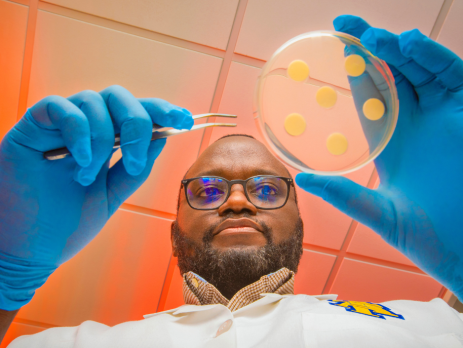
a scientist examines samples in a petri dish

Innovative delivery system extends shelf life of bioactives

Bioactives are naturally present in foods and are associated with several health benefits to consumers. However, these compounds often occur in limited amounts, too small to reach an effective concentration. They also tend to oxidize when exposed to oxygen, light or heat.  At North Carolina A&T State University, researchers created an oleogel using rice bran wax and carnauba wax as [...]

Read more...
a scientist shows off a potato in a field

Breeding spuds to take the heat

Heat waves are becoming more common, and common crops are struggling to keep up. One problem is a photosynthetic glitch known as photorespiration, which occurs at a greater rate in some plants like potato crops exposed to hot conditions. The reason: An enzyme key to the process of photosynthesis mistakes oxygen for carbon dioxide during photorespiration, wasting energy and [...]

Read more...
chickens in an outdoor pen

Interventions developed to reduce bacteria transmission in livestock

Food-borne diseases may be preventable with changes in behavior or the adoption of new practices.   An interdisciplinary study conducted at Purdue University in Indiana identified knowledge gaps that hinder producers from adopting food-safety practices. The researchers also developed technologies to reduce the contamination of food products from pathogens in poultry. The technologies can be used in place of broad-spectrum antibiotics [...]

Read more...
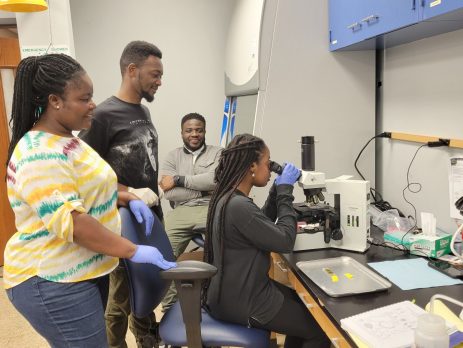
students and faculty examine samples under a microscope

Researchers find natural ways to provide sheep immunity from parasites

Overuse of antibiotics and dewormers in animal production can lead to the development of parasite resistance. As a result, conventional control programs relying solely on chemical interventions are becoming increasingly ineffective.  At the University of Arkansas at Pine Bluff, researchers are looking for natural means of controlling livestock parasites. In a two-year study they tested black walnut-hull powder and a [...]

Read more...
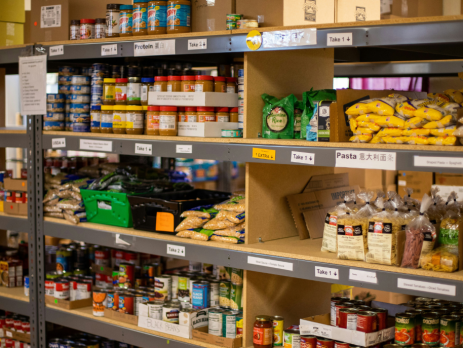
shelves of a food bank

Novel data set combines public and private food assistance measures

Determining whether food insecurity is a temporary event or a long-term condition for families is difficult given a lack of comprehensive food assistance information.  Researchers at the Cornell Agricultural Experiment Station in New York constructed a novel data set that matched Food Bank client use records from a six-county region with similar data of the Supplemental Nutrition Assistance Program (SNAP) [...]

Read more...
tractor driving through a field

First local food summit energizes Kansas communities

Many communities across the state of Kansas are working to improve their local food systems. However, these efforts often lack cooperation or coordination with other local food programs across the state. The Kansas Local Food Summit was the first event in the state to bring these many groups together.  Organized by the local food systems team at Kansas State University, [...]

Read more...
a flooded agricultural field

Cover crops help reclaim contaminated vegetable fields

When 84 Vermont vegetable farms were flooded by heavy rains, crops were destroyed on nearly 450 acres, at an estimated loss of $4.6 million. The flooded soil also became contaminated, affecting the safety of produce and soil nutrient levels. The loss represented about 10% of the state’s commercial vegetable production.  The University of Vermont Extension provided free soil testing to [...]

Read more...
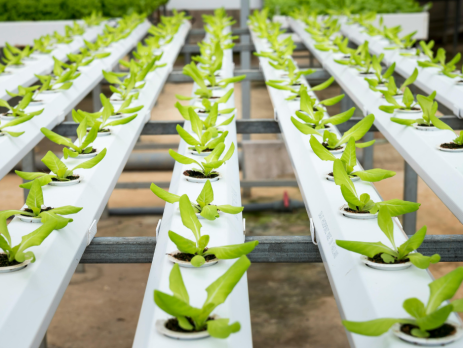
rows of hydroponic crops

Researching strategies to protect produce from contamination

Food contamination can occur at various stages from farm to table. At Louisiana State University AgCenter, researchers are studying foodborne pathogens to better understand how they are transmitted and what might be done to prevent them from contaminating fresh and processed foods.  Among the research projects are efforts to treat foods to make them less vulnerable to contamination. Those include [...]

Read more...
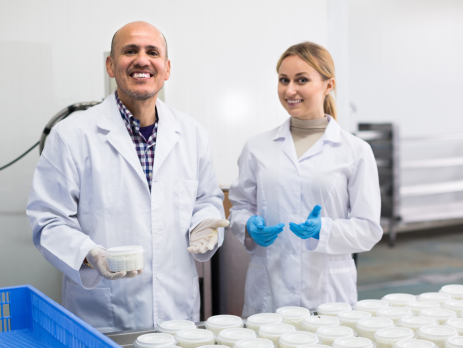
two scientists smile next to samples of dairy byproducts

Upcycling a problematic food waste offers a safe food additive and new market for farmers

Acid whey, a byproduct of Greek yogurt, is a major contributor to food waste and can have a negative environmental impact if not properly managed. In recent years, the production of Greek yogurt and acid-coagulated cheeses has grown, but the acid whey waste that results is not easily disposable, causing challenges for water treatment and lowering oxygen levels in [...]

Read more...
researchers observe drone data collection

Drone images help monitor for invasive beetle in Palau

The invasive coconut rhinoceros beetle has damaged at least 25% of Guam’s coconut trees, the Guam Department of Agriculture’s Biosecurity Division estimates. About 800 miles away, officials in the Micronesian island Palau are looking for efficient ways to monitor this invasive pest. They’re seeking to prevent a resurgence that could devastate the economy and livelihoods that rely on native [...]

Read more...
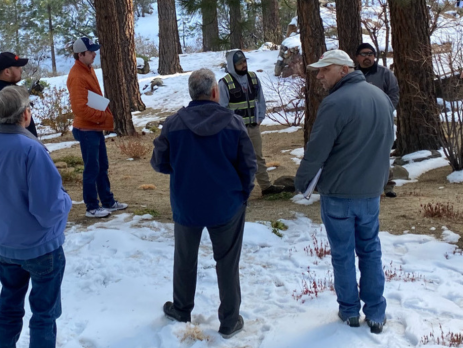
a group of training participants learn about fire safety

Promoting proactive wildfire mitigation

Many of the large wildfires that occur across Nevada each year happen in wildlands that are adjacent to communities, resulting in large-scale evacuations, substantial loss of property, extensive smoke inhalation and significant economic impacts on business and commerce. Wildfire preparedness education and the implementation of fire adapted community concepts can contribute to the long-term health of Nevada’s landscapes and [...]

Read more...
a downed tree across a road

Evaluating forest hurricane damage with AI and lasers

As hurricanes continue to increase in intensity and frequency in the Gulf of Mexico, the risk of damage to homes and businesses continues to rise. Hurricanes can also destroy forests and timber farms, impacting local and regional economies. Getting an accurate assessment of how much timber is damaged by hurricanes is essential for environmental management decisions, salvaging logging operations, [...]

Read more...
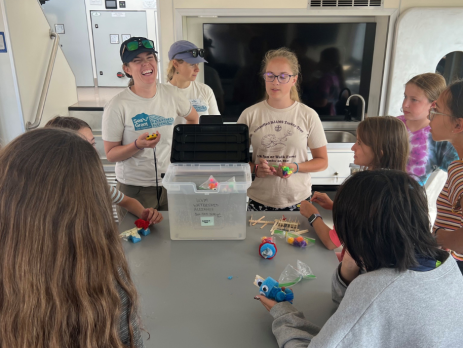
a group of students an instructor work on a project together

Using a floating classroom to inspire future stewards

The Lake Champlain basin is home to nearly 500,000 people in Vermont and New York, with almost half of this population relying on the lake for their drinking water. The lake also supports the region’s economy through jobs, recreation and enjoyment, all of which rely on current and future generations to maintain and protect the water’s quality and access.   University [...]

Read more...
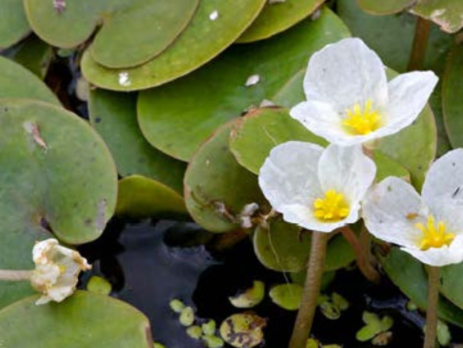
European frog-bit, an invasive species of aquatic plant

Preventing the spread of aquatic invasive species in Michigan

Hobbies such as aquarium keeping and water gardening can bring nature into homes but can also inadvertently contribute to the introduction and spread of invasive species into local lakes and streams. These invaders, often characterized by hardiness and rapid growth, can threaten ecosystems and native species. Because hobbyists rely on retailers for guidance on disposing of unwanted aquatic plants [...]

Read more...
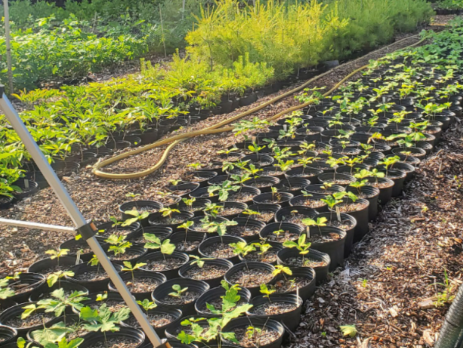
a row of potted sprouts in an experimental plot

Sourcing seeds to bolster Pennsylvania forest resiliency

Humans depend on forests for wood and other ecosystem services. In Pennsylvania, many forests suffer from insect infestations, diseases, invasive plants and climate impacts that have degraded their quality over time.   Many trees regenerate naturally, but planting trees will help to restore our forests. It’s seen as a valuable management strategy to bring the kind of species we want into [...]

Read more...
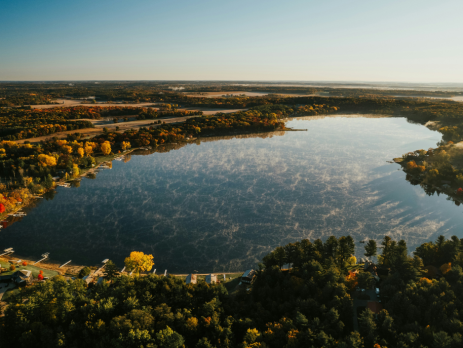
aerial view of a Wisconsin lake

Research explores freshwater lake microbiomes

Freshwater lakes are an important drinking water source. People use these lakes for recreation and fishing. But they’re also vital ecosystems to some aquatic communities. Each lake has its own community of microorganisms, called a microbiome. Certain factors, such as precipitation and nutrient runoff, can affect whether there are more “good” bacteria or “bad” toxin-producing bacteria in a lake. Unfortunately, [...]

Read more...
3 people riding horses on a prairie with the text "Generation Next: Our Turn to Ranch" and the Texas A&M Agrilife Extension logo

Supporting the next generation of ranchers in Texas

The Generation Next course led by Texas A&M AgriLife Extension gives new landowners (or those who expect to inherit land) the knowledge, skills and motivation they need to operate successful ranches and achieve their dreams. The 12-week, online course is taught twice per year covering topics that include understanding agricultural business taxes and insurance, finance tracking, evaluating land resources, land [...]

Read more...
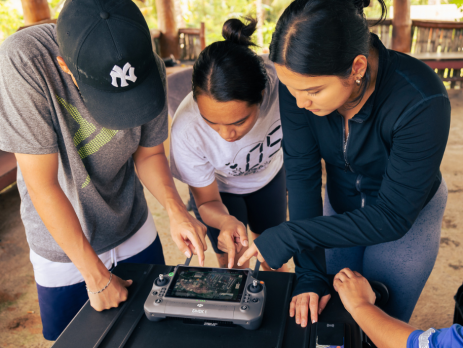
two people reference a tablet in an outdoor setting

Involving youths in agriculture

A growing need to produce a qualified workforce to solve issues in agriculture such as changing environmental conditions means involving more youths. Youths have a strong potential to grow into leaders who can address these issues. The University of Arkansas at Pine Bluff (UAPB) is establishing educational centers related to regenerative agriculture and aquaculture on campus and at the UAPB [...]

Read more...
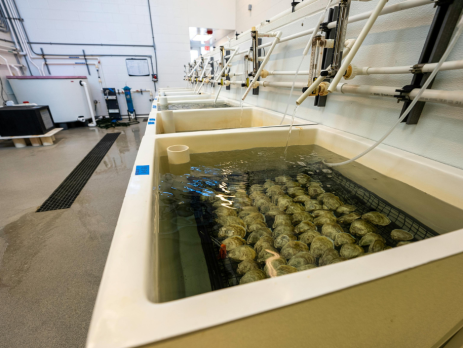
clams in an industrial sink

Creating biosecure standards for a growing aquaculture industry

Shellfish harvests contribute more than $1 billion annually to the New Jersey economy. Although wild caught harvests are sustainable, they are maxed out. A viable alternative is shellfish aquaculture, which can provide many environmental benefits, yet the growth of this type of farming relies on the hatchery production of seed or juvenile shellfish. Interstate transfer of seed stock to support [...]

Read more...

Illinois researchers use designer biochar to tackle nutrient pollution

Farmers apply fertilizer to crops to help them grow, but nitrogen and phosphorus in those fertilizers can seep from fields into adjacent waterways and degrade water quality. Once in waterways, nitrogen and phosphorus pose threats to drinking water supplies and to habitat for aquatic organisms. They can also contribute to harmful algal blooms in the Gulf of Mexico. Researchers at [...]

Read more...

Using remote imaging to aid management decisions

Alaska’s 126 million acres of forested land provide critical ecosystem services that benefit local and global communities. With persistent warming, inconsistent participation, insect pests and intensifying wildfires, Alaska’s forests are facing serious threats to biodiversity as well as local communities and economies. University of Alaska Fairbanks researchers have developed processes that allow them to visually and spectrally observe changes in [...]

Read more...
two scientists take samples from a tree

Research guides management decisions to protect Guam’s native forests

Guam’s limestone forests are being overtaken by an invasive overstory tree called Vitex parviflora, known commonly as the molave tree. Native to the Philippines, Vitex is now the most common invasive tree species in Guam. Because this tree tends to form a monoculture, it competes with the native species that are needed to balance and sustain Guam’s ecosystems. Clearing the [...]

Read more...
3 scientists taking samples in a field

Extended-season cattle grazing reduces invasive grasses and wildfire risk in eastern Oregon

Wildfires have burned 2.5 million acres in eastern Oregon since 2010, devastating the natural landscape and negatively impacting rangelands essential to Oregon’s cattle and dairy industries. In this region, invasive grasses out-compete native plants and create a buildup of “fine fuels” that increase wildfire risks. To address this issue, an Oregon State University Extension Service specialist and associate professor in [...]

Read more...
closeup of hay

Reducing the cost of production for biofuels

Renewable products, such as biobutanol that is derived from biomass feedstocks, can provide alternative energy solutions to petroleum-based products like gasoline and diesel. However, producing renewable biofuels and biochemicals faces significant challenges due to the inefficient fermentation processes and high production costs. Researchers at The Ohio State University developed an innovative separation technology that reduced production costs of biobutanol by [...]

Read more...
researcher Pam Roberts standing in experimental tomato crops

Multistate project studies solutions to bacterial spot in tomatoes, peppers

Tomatoes are big business for Florida farmers, contributing $500 million annually. Bell and chili peppers are also popular crops among consumers with production value of more than $536 million. However, bacterial spot is a threat to yields and harvest revenue.  University of Florida researchers are working to solve this major issue along with scientists at the University of Georgia, North [...]

Read more...