Breeding spuds to take the heat
Heat waves are becoming more common, and common crops are struggling to keep up. One problem is a photosynthetic glitch known as photorespiration, which occurs at a greater rate in some plants like potato crops exposed to hot conditions. The reason: An enzyme key to the process of photosynthesis mistakes oxygen for carbon dioxide during photorespiration, wasting energy and missing the opportunity to build carbohydrates. This can lead to lower productivity for a crop that is important in the U.S. and worldwide.
To address this, a research team at the University of Illinois Urbana-Champaign have succeeded in engineering potatoes that are less prone to making this type of photorespiratory mistake during heatwaves.
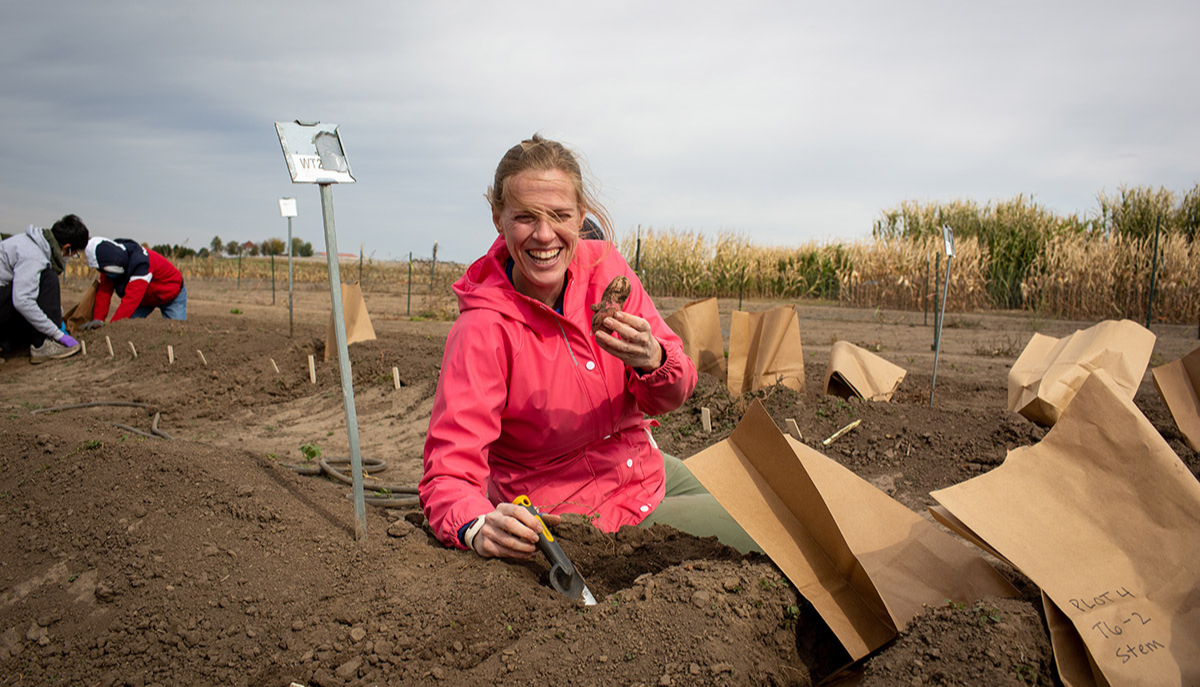
The scientists, affiliated with the Realizing Increased Photosynthetic Efficiency (RIPE) Project, tested their modified potatoes in real-world field conditions over multiple years that included several significant heatwave events. Not only did the engineered potatoes not wither in the heat, they grew 30% more tubers than conventional potatoes, taking full advantage of their increased photosynthetic efficiency and heat tolerance. Importantly, the yield gain did not impact the nutritional value of the engineered potatoes.
These spuds appear to thrive in high heat conditions, which could make future crops more resilient. In addition, the scientists suggest similar results could be achieved for other important root tuber crops like cassava, a staple food in sub-Saharan Africa.
View the full statement on the NIDB.
Project supported by Non-Profit Grants & Contracts. Photo courtesy of Illinois Agricultural Experiment Station.