Creating biosecure standards for a growing aquaculture industry
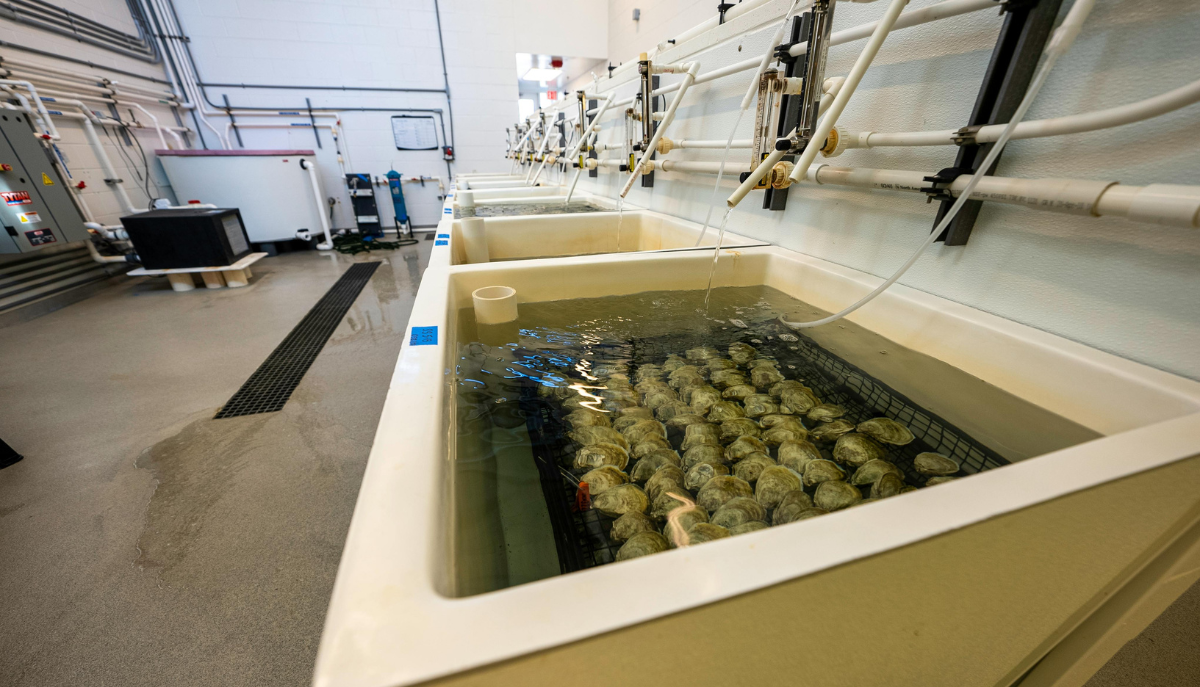
Shellfish harvests contribute more than $1 billion annually to the New Jersey economy. Although wild caught harvests are sustainable, they are maxed out. A viable alternative is shellfish aquaculture, which can provide many environmental benefits, yet the growth of this type of farming relies on the hatchery production of seed or juvenile shellfish.
Interstate transfer of seed stock to support this growing industry brings the risk of transferring disease, causing many regulators to be cautious about permitting importation of shellfish from outside jurisdictions.
The Rutgers Haskin Shellfish Research Laboratory in New Jersey and the Virginia Institute of Marine Science Shellfish Pathology Laboratory established the Regional Shellfish Seed Biosecurity Program to develop safe and secure mechanisms to produce and transfer shellfish seed for aquaculture. The team created a website to:
- Provide an awareness among stakeholders about disease risk involved with shellfish transfers.
- Provide best management practices for hatcheries and nurseries and an avenue to have products recognized as biosecure when produced without further need for additional health examinations that cost both time and money.
- Provide information on past and current status and distributions of shellfish pathogens.
Several states now look to the program to also help protect their shellfish resources and industries. The program has not only established standards for biosecurity of shellfish hatchery and nursery operations, it is also providing structure that creates habitat and helps protect shorelines, filtering particles out of the water to allow sunlight to reach sea floor plants and removing excess nutrients that can lead to harmful algae blooms.
View the full statement on the NIDB.
Project supported by Hatch funds.