Tag - Human Nutrition/Health/Wellness

Topic

a senior couple holds hands and looks at their land

Reducing farm stress

Farm stress management addresses the unique mental, emotional and financial pressures that agricultural producers face, helping them build resilience as they confront unpredictable weather, volatile markets and demanding workloads. Supporting farmers’ well‑being is critical not only for their personal health but also for the stability and sustainability of our food systems and rural communities. Extension plays an essential role [...]


Read more...
seniors doing chair exercises

Reducing fall risk and promoting independence

Falls and physical inactivity are critical public health concerns for older adults. National data indicate that only 21.6% of men and 17.6% of women aged 50–64 meet the recommended guidelines for aerobic and muscle-strengthening activities. This number decreases to just 9% among adults aged 65 and older. Insufficient activity leads to reduced muscle strength, balance and mobility, which in [...]

Read more...
wildland firefighters

Protective clothing for wildland firefighters

Wildland firefighters face escalating health risks as fire seasons lengthen and fires become more intense. Their work demands long shifts involving strenuous physical labor — hiking, digging, carrying heavy packs and operating equipment — with exposure to extreme heat, dense smoke, humidity, high altitude and rough terrain. These conditions heighten the risk of heat stress, respiratory issues, dehydration, musculoskeletal [...]

Read more...
girl slicing a pepper and other vegetables

Peer-led program encourages healthier snack choices

In Louisiana, the Children, Youth and Families at Risk (CYFAR) grant, leveraged by support from the LSU AgCenter, encourages youth to create positive change in their communities. At one school, CYFAR students noticed a growing issue: Many of their peers were choosing unhealthy snacks during the school day.   To encourage better choices, the students created a “Healthy Snack Swap Challenge.” [...]

Read more...
egg and avocado on toast

Online resource a ‘recipe’ for healthier, more affordable food choices

Many Michigan residents face barriers to healthy eating, including limited time, cooking knowledge and financial constraints. Having easy, affordable and nutritious meal ideas readily available can improve food security and support long-term health. However, people often struggle to find the practical resources to meet their needs.  In June 2025, Michigan State University (MSU) Extension launched a free online recipe website to [...]

Read more...
a smiling pregnant woman

New maternal health program strengthens preparedness, well-being

Many pregnant women face preventable complications, inadequate postpartum education and challenges with self-advocacy during medical appointments. According to CDC data, Ohio’s maternal mortality rate average between 2018 and 2022 was higher than the U.S. average, at 24.5 per 100,000. Ohio also struggles with a 10.7% preterm birth rate — graded a D+ nationally. These statistics reflect systemic gaps in [...]

Read more...
Lead author and Ph.D. candidate Matt Bolino (left), working under the mentorship of microbiologist Steven Frese (standing), led the lab experiments comparing how the structural differences between lab-made whey protein and the kind that comes from cows affect gut microbes.

Nevada researchers find key differences between lab-made and natural milk proteins

Researchers at the University of Nevada, Reno investigated whether lab-made (yeast-derived) milk proteins are truly equivalent to those naturally found in cow’s milk. Although marketed as identical, these alternative proteins differ in meaningful biochemical ways that may influence digestion, immunity and gut microbiome health. The researchers conducted a three-part study, including a protein composition analysis, a sugar molecule comparison [...]

Read more...
GLP injector

Medications for type-2 diabetes, weight loss also impact food preferences

As the popularity of medications such as Ozempic and Wegovy (glucagon-like peptide-1 receptor agonists or GLP-1s) rises, questions have emerged about how these drugs affect food preferences and consumption. While earlier research established that GLP-1s suppress appetite and promote weight loss, little was known about their influence on specific food categories and overall dietary behavior. This gap limited the [...]

Read more...
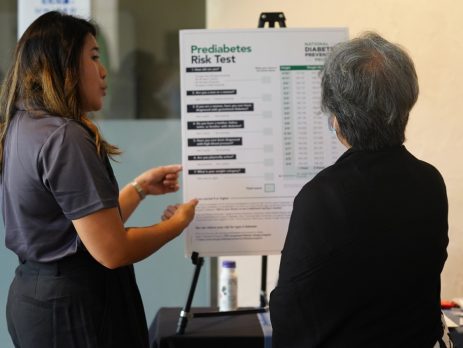
an Extension educator talks toa community member about a prediabetes risk test

Land-grant universities improve lives through diabetes education, prevention

More than 38 million Americans have diabetes, and nearly 98 million have prediabetes, which costs the U.S. $412.9 billion annually between health care and lost productivity. Those affected often lack access to education that supports day-to-day diabetes self-management. Complications can include kidney disease, heart disease, loss of limbs and vision loss. This prevalent chronic disease is a major contributor [...]

Read more...
an Extension agent shows a member of the public how to read a nutrition label on a box of cereal

Improving food and nutrition knowledge and skills

The Expanded Food and Nutrition Education Program (EFNEP) helps adult and youth participants improve their nutrition and health. It promotes budget-friendly food choices by teaching skills in how to plan meals, shop wisely, and prepare affordable, nutritious foods. It empowers participants and builds self-confidence, leadership and lifelong healthy habits. By teaching food resource management and efficient use of available [...]

Read more...
hands holding a glass of milk

Improving cardiovascular and bone health in older adults

Cardiovascular disease and osteoporosis are two of the most common, costly and disabling chronic conditions affecting adults in the United States. Diet strongly influences both, yet there is long-standing public confusion and professional debate about whether dairy foods are beneficial or harmful for heart and bone health. Conflicting headlines about saturated fat, milk and other dairy products have made [...]

Read more...
two seniors lifting small dumbbells

Healthy aging

Healthy aging is essential for maintaining independence, well-being and quality of life as people grow older, and it benefits not only individuals but also their families and communities. Cooperative Extension programs play a vital role in supporting this process by offering research-based education, practical skills and community-centered resources. These resources help adults stay active, socially connected and informed about [...]

Read more...
a scientist examines a test tube

Gut microbial research promotes better health, prevents chronic illness

Gut microbial research is important because the microbes living in the digestive system play a central role in human and animal health. They help regulate metabolism, support immune function and protect against harmful pathogens. Understanding the gut microbiome can reveal early markers of disease, improve nutritional strategies and guide the development of personalized medicine. Research also shows strong links [...]

Read more...
a young person wearing exercise clothing eating a healthy meal

Food is medicine

The “food is medicine” approach emphasizes the role diet has in preventing disease, supporting overall health and improving quality of life. Land-grant universities connect research-based nutrition and community education to the people who need it most. By supporting access to fresh, locally grown foods, teaching evidence-based nutrition practices and partnering with communities to reduce health disparities, land‑grant programs help [...]

Read more...
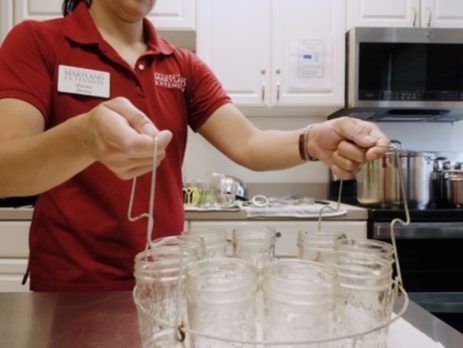
UME Agent, Shauna Henley, preparing mason jars for sterilization

Extension trainings keep Americans safe from foodborne illness

Foodborne illness is a widespread, costly public health concern in the United States. Each year, one in six Americans becomes sick from contaminated food, leading to hospitalizations, long-term health complications and even death. Pregnant women, the elderly, young children and people with weakened immune systems or chronic diseases are most at risk. Because food safety risks can occur at [...]

Read more...
4-H teens and instructor baking

Extension programming educates, empowers teens to make informed health choices in supportive environments

Teenage youth are one of our greatest resources for influencing change that leads to healthier communities; they are our next generation of leaders. When creating programming for older youth, Extension specialists take into consideration the unique physical, emotional and social changes during adolescence to tailor programming effectively. Across the country, Extension is tackling health issues for teenagers with innovative [...]

Read more...
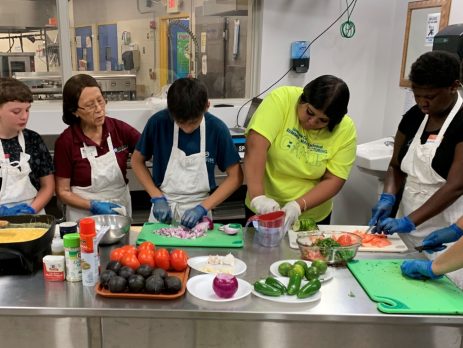
a group of youth and an instructor cook in an industrial kitchen

Expanding food and nutrition education among youth

Early habits among youth often last a lifetime. Extension provides the Expanded Food and Nutrition Education Program (EFNEP) to both youth and adults to improve habits in nutrition, physical activity and food safety. Youth-centered programs help participants develop healthy habits, reduce obesity levels and promote overall well-being. Here are a few examples of that work: Youth in Maine face high rates [...]

Read more...
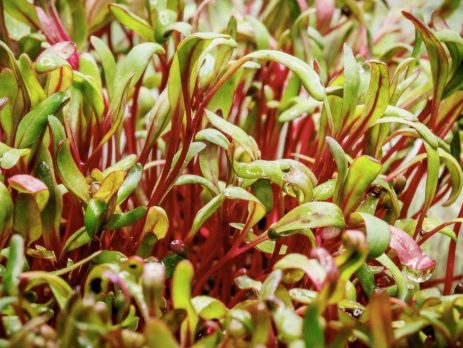
microgreens

Enhancing the safety and nutrition of hydroponic produce

Hydroponic farming offers a sustainable way to grow safe, healthy food while using less water, land and energy. However, food safety concerns and limited strategies to boost nutritional quality remain key challenges. This project addresses these issues by developing clean, chemical‑free technologies — specifically laser and ultrasound treatments — to reduce harmful bacteria and enhance the nutritional value of [...]

Read more...
an Extension agent shows youths plants from a community garden

Encouraging health and wellness in U.S. youth through hands-on activities, education

One in five school-aged children nationally suffer from obesity, and regular physical activity and balanced diets can lead to improved focus, behavior, self-esteem and academic performance. Encouraging healthy behaviors at an early age fosters a value for physical activity, healthy eating and preventive habits. These healthy behaviors can lead to fewer chronic diseases, resulting in lower health care costs and a [...]

Read more...
closeup of two seniors holding hands

Emergency planning empowers rural caregivers and dementia care partners

Rural caregivers supporting individuals with Alzheimer’s disease and related dementias face intensified challenges during natural disasters, medical crises and unexpected disruptions. In Colorado’s rural counties — where the population of older adults is growing most rapidly — limited access to specialized support can leave families unprepared and vulnerable. Without clear plans for emergencies, caregivers often experience avoidable stress, financial [...]

Read more...
holding hands for support

Building networks to aid mental health strengthens communities

Mental health challenges affect individuals and families across the country, yet stigma and lack of knowledge often prevent people from seeking or offering help, especially in rural communities with fewer mental health resources. At land-grant universities across the U.S., Extension programming works to equip individuals to recognize, respond to and support those experiencing mental health or substance use issues through [...]

Read more...
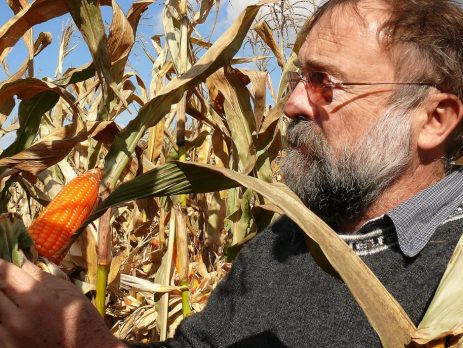
researcher looking at orange corn on the stalk

Breeding corn with orange grain high in antioxidant carotenoids

Carotenoids are antioxidant compounds naturally found in plants, but humans cannot synthesize them and must obtain them through diet. In the U.S., there are widespread deficiencies in two key macular carotenoids — lutein and zeaxanthin — which accumulate in the retina and brain. Low levels of these nutrients are linked to poorer visual health, increased risk of age‑related macular [...]

Read more...
gallons of milk

Artificial intelligence decodes microbes’ message in milk safety testing approach

Ensuring the safety and integrity of the food supply is critical to public health, consumer confidence and the economic stability of the agricultural sector. In a groundbreaking collaboration, researchers from the Pennsylvania State University, Cornell University in New York, and IBM Research have demonstrated how artificial intelligence can strengthen dairy safety by detecting subtle microbial signals that indicate potential [...]

Read more...
a group of seniors painting

Art program for seniors improves emotional well-being

Seniors in Big Horn County, nestled in northwestern Wyoming, have the highest depression rate among their age group in the state, at 16%. They face disproportionate mental health challenges including financial insecurity, social isolation and a life expectancy nearly two years shorter than the state average. Recent needs assessments identified access to mental health services as a top concern, [...]

Read more...
two seniors drinking tea at a table

An integrated community-based approach to hypertension

Hypertension is one of the most significant chronic health challenges facing older adults, affecting two-thirds of Americans over age 60 and contributing to cardiovascular disease, cognitive decline and loss of independence. Despite its prevalence, this population has the lowest hypertension control rates, increasing strain on families, health systems and community resources. While the Dietary Approaches to Stop Hypertension (DASH) [...]

Read more...