Tag - 1890

Region

a father and child running

A holistic approach to diabetes prevention and management

Land-grant universities play a crucial role in addressing diabetes. Their work helps individuals and families adopt healthier lifestyles, manage diabetes effectively and prevent complications. Extension programs provide evidence-based nutrition education, promote physical activity and support access to affordable, healthy food. Research is driving innovations in diabetes prevention and management. By combining scientific expertise with local engagement, land-grant universities empower [...]
Read more...
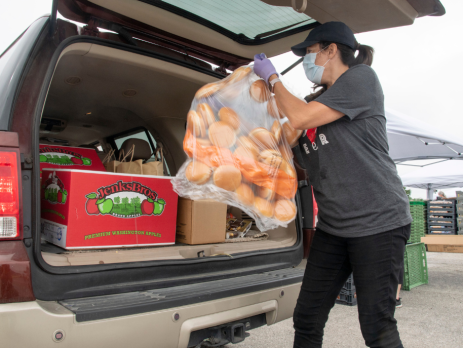
a person loading food into a car trunk

Supporting entrepreneurs, building stronger economies and fortifying food systems

The Land-grant University System empowers entrepreneurs, strengthens local economies and fortifies food systems in communities across the United States. Through their research, education and Extension initiatives, these institutions spark advancements that accelerate economic development and advance food security, ensuring resilient and strong communities. Here are a few examples of that work: Santa Fe County has experienced a decline in the number [...]

Read more...
a scientist examining plants in a controlled environment agriculture setting

Advancing sustainable food production in soilless environments

Land-grant universities across the nation are working to make the food supply more secure by exploring the best ways to produce crops without soil. Hydroponic and aquaponic systems have many benefits, including reducing the inputs and space needed to produce food. Researchers are studying how to make the foods grown in these controlled environments safer and better. Extension personnel [...]

Read more...
a creek through the woods

Precision monitoring aids decision makers and stakeholders in protecting key watersheds

Nutrient pollution, biodiversity losses and weather variability pose extraordinary challenges for the sustainability of natural ecosystems and the species that inhabit them. Land-grant universities are developing and applying emerging technologies that can help to more efficiently, accurately and safely monitor, measure and precisely manage these systems with minimal environmental impact. Here are a few examples of that work: To better understand [...]

Read more...
a person looks at information on their phone and laptop

Extension builds financial resilience for community prosperity

Extension professionals at land-grant universities across the United States are helping communities build financial resilience by providing access to education and resources that foster financial literacy and money management. Here are a few examples of that work: Twenty-one percent of Oklahoma children live below the poverty level. An Extension program called Reality Check helped youths learn money management practices and job [...]

Read more...
pigweed

Research and outreach on invasive species keep agriculture productive, profitable

Land-grant university research and outreach is helping manage the impacts invasive weeds and species have on growers and agricultural productivity. Here are a few examples of that work: When invasive pigweed threatened Idaho agriculture, Extension educators educated stakeholders on identification and best management practices. Educational materials have been widely shared, including more than 50 presentations to more than 4,000 direct contacts [...]

Read more...
a robot picking berries

Digital agriculture enhances production, monitoring capabilities

Data modeling, automated machinery and drones are just a few of the technologies that are powering improved efficiencies in livestock and crop production. Land-grant universities are at the forefront of researching and applying these technologies, paving the way for increased productivity, better disease management and optimized harvest timing. Here are a few examples of that work: In Idaho, many cattle producers [...]

Read more...
peppers

Land-grant universities foster community, student resilience

The 1890 land-grant universities are committed to strengthening communities, farmers and students through meaningful outreach initiatives. Their engagement ensures that resources are tailored to meet local needs such as food security and economic development. Through these efforts, the universities are fostering more resilient communities for generations to come. Here are a few examples of that work: A food bank needs assessment [...]

Read more...
sheep

Advancing food security through sustainable livestock and crop innovations

Research at 1890 land-grant universities addresses critical challenges in animal and plant production. Collectively, these projects support sustainable food systems and food security by improving livestock and crop health, reducing reliance on agrochemicals and increasing production efficiency. Here are a few examples of that work: An Arkansas study on sheep health explored natural dietary supplements to reduce antibiotic and dewormer dependency, [...]

Read more...
students work on a plant-based science experiment

Recruiting the next generation of students to STEM careers

As the population grows, the demand for innovative, science-driven solutions in food production and resource management increases. Agricultural STEM careers will play a vital role in boosting global food security and economic development while sustaining natural resources. The 1890 land-grant universities are key in bridging the gap between high school students and these STEM careers. Here are a few examples [...]

Read more...
a hand touches a growing plant

Extension, Food Bank partner to satisfy food demand, while opening economic opportunities to local farmers

A Maryland Food Bank needs assessment showed a growing desire for more non-native vegetables. An alternative crop specialist with the University of Maryland Eastern Shore Extension noted the economic opportunity for farmers. Alternative crops are high value, creating a niche market that sets small-scale farmers apart from commercial growers and increases their income potential. In 2023, the alternative crop specialist [...]

Read more...
a scientist examines samples in a petri dish

Innovative delivery system extends shelf life of bioactives

Bioactives are naturally present in foods and are associated with several health benefits to consumers. However, these compounds often occur in limited amounts, too small to reach an effective concentration. They also tend to oxidize when exposed to oxygen, light or heat.  At North Carolina A&T State University, researchers created an oleogel using rice bran wax and carnauba wax as [...]

Read more...
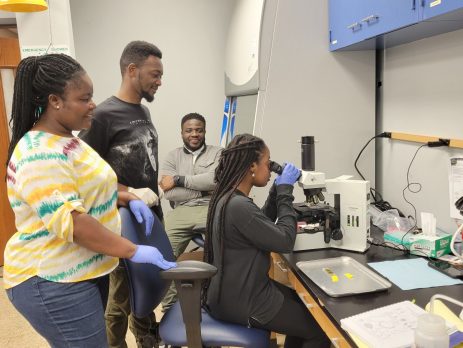
students and faculty examine samples under a microscope

Researchers find natural ways to provide sheep immunity from parasites

Overuse of antibiotics and dewormers in animal production can lead to the development of parasite resistance. As a result, conventional control programs relying solely on chemical interventions are becoming increasingly ineffective.  At the University of Arkansas at Pine Bluff, researchers are looking for natural means of controlling livestock parasites. In a two-year study they tested black walnut-hull powder and a [...]

Read more...
two people reference a tablet in an outdoor setting

Involving youths in agriculture

A growing need to produce a qualified workforce to solve issues in agriculture such as changing environmental conditions means involving more youths. Youths have a strong potential to grow into leaders who can address these issues. The University of Arkansas at Pine Bluff (UAPB) is establishing educational centers related to regenerative agriculture and aquaculture on campus and at the UAPB [...]

Read more...
two scientists take a sample

Land-grant universities drive sustainability through innovative agricultural practices

The 1890 land-grant universities are dedicated to improving the well-being of economically challenged communities. By focusing on sustainable practices, these institutions help address key challenges like food security, environmental stewardship and economic resilience. Through research, Extension and education, they equip farmers and communities with innovative techniques that preserve resources for future generations. Here are a few examples of that work: Researchers [...]

Read more...
a scientist in a university laboratory

Developing the next generation of agricultural workers

A skilled workforce is critical to sustaining agriculture, advancing food security and fostering economic growth. Land-grant universities are preparing students for the agricultural workforce through hands-on training, research opportunities and industry partnerships. These programs focus on historically underserved communities, ensuring broad participation in food and agriculture careers. Here are a few examples of that work: Georgia Extension professionals are helping students [...]

Read more...
young woman examines a plant in her garden

Historically Black land-grant universities reach diverse communities

In 1890, the Land-grant University System was expanded to include institutions for Black citizens. Today, these institutions continue to provide access to higher education for underserved communities, and their research and Extension programs impact people worldwide through advancements in agricultural productivity and sustainability, food security, human health, and community and youth development. Here are a few examples of that work: First-time [...]

Read more...
Dark storm clouds brewing over a field

Monitoring climate change to reduce emissions and waste

Land-grant universities are working to provide critical data, tools and strategies to help predict, monitor and mitigate climate change and its impacts on communities and natural resources. Here are a few examples of that work: Dairy waste is a major source of methane and nitrous oxide emissions, which contribute to global warming. Scientists in Washington showed that vermifiltration (which uses filters [...]

Read more...
a woman and child smile with a boxed laptop

Georgia 1890 land-grant pilots ecosystem for digital equity

Rural communities often lack adequate technology resources, including broadband access and personal computers for home use. Many students often do their work at public access locations, facing barriers such as limited hours, lack of transportation and limited digital skills. In response, Fort Valley State University in Georgia is reducing these barriers and increasing access for underserved students by using loaner [...]

Read more...
photo of a jar being removed from canning water by a pair of tongs

Holistic programs address community health

Obesity is on the rise in the United States, and this increases the risk of diabetes, hypertension and poor overall quality of life. Moreover, health disparities among low-income populations are well documented because food insecurity issues mean they lack nutritionally adequate and safe food. The Land-grant University System uses holistic programs to address community health. Here are a few examples [...]

Read more...
a shot of a person from the knees down, wearing jeans and athletic shoes

Fitness programs change lifestyles and health

Physical activity that increases the heart rate helps to decrease health risks and provides additional health benefits such as improved sleep, lower cholesterol and improved mental health. Fitness programs including walking and dancing are accessible to almost anyone, easy to start and can lead to behavior changes and positively impact residents’ health and well-being by decreasing risks for obesity, [...]

Read more...
grandfather and grandchildren watering a garden

Arkansas grandparents grow relationship with grandchildren through gardening

An increasing number of grandparents are raising their grandchildren. University of Arkansas at Pine Bluff’s Cooperative Extension Program is developing ways to support them and provide necessary resources. One way is by helping grandparents to grow their own food. The university’s School of Agriculture, Fisheries and Human Sciences partnered with the Jefferson County Cooperative Extension Service and the Pine Bluff [...]

Read more...
Aerial view of a field mapped out with drone technology

Emerging technologies aid conservation and management

Climate change and biodiversity losses pose extraordinary challenges for the sustainability of natural ecosystems and the species that inhabit them. Land-grant universities are developing and applying emerging technologies that can help to more efficiently, accurately and safely monitor, measure, and precisely manage these systems with minimal environmental impact. Here are a few examples of that work: In New Hampshire, researchers found [...]

Read more...
plant sprouts in a tray

Incubator farms strengthen food security

Food deserts in communities limit access to affordable, healthy foods and increase the risk of obesity, heart disease and diabetes. Communities with underserved, underrepresented populations are more likely to have a food desert. New farms are potential local solutions. Barriers can range from individuals having confidence in preparing fresh produce to accessing technical assistance, mentorship, land, capital, markets and [...]

Read more...
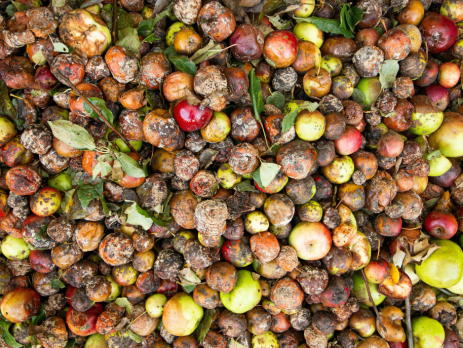
pile of rotten apples

Packaging improvements reduce food spoilage

The U.S. Department of Agriculture estimates that over 30% of food in the U.S. is lost to spoilage at the retail and consumer level. Researchers at Tennessee State University are developing environmentally friendly solutions to reduce the amount of food lost to spoilage. The goal is to create improved packaging composed of natural materials that incorporate natural compounds to [...]

Read more...