Tag - 1890

Region

the torso of a person checking something off on a clipboard

Research and education combine to fight food contamination

The U.S. Centers for Disease Control estimate that 48 million people become ill from foodborne illnesses annually, resulting in 3,000 deaths. Through research and education, land-grant institutions are working to reduce the pathogens contained in food and increase food security. Here are a few examples of that work: In Vermont, a certification program known as CAPS+ was developed to assure retailers [...]
Read more...
crops growing in a field

Creating new, sustainable products from agricultural waste and biomass

Petroleum and other nonrenewable materials are commonly used for plastics, industrial chemicals, pharmaceuticals, cosmetics and other products we use on a daily basis. But many of these products can be made from biomass, including food and agricultural wastes. Bioproducts offer a way to improve energy security, food security and national security while also cutting back on fossil fuel-related pollution [...]

Read more...
closeup photo of pills falling out of a prescription bottle

Protecting the environment from pharmaceuticals

Up to 29% of pharmaceuticals — both prescription and over-the-counter medications — and personal care products enter the environment each year untreated through human waste and improper disposal. Many water treatment plants are incapable of removing all the harmful chemicals from water systems. Although this is a fairly new area of study, these products are known to have adverse [...]

Read more...
waterfall into a body of water

Improving water quality in Ohio watersheds

Non-point-source nutrient runoff in agricultural watersheds, particularly nitrogen and phosphorus, continues to threaten the quality of surface and groundwater in Ohio watersheds. Impaired water quality detrimentally affects drinking water quality, recreational water use and aquatic life. Improving soil health and, consequently, water quality through best agricultural management practices is critical for achieving the twin goal of sustainable agricultural production [...]

Read more...
A tractor sprays pesticides in an orchard

Safer, more sustainable pest management

Managing pests is essential to healthy, safe and productive agricultural, urban, residential and natural areas. But pesticides can cause air and water pollution and unintended harm to nontarget organisms. Pesticide exposure has also been linked to human health problems. In addition, many pests eventually develop resistance to commonly used chemicals, rendering those chemicals ineffective. Researchers and Extension educators across [...]

Read more...
a rainbow shines through sprinkler mist on a field

Protecting our water

Water continues to be one of the most critical challenges facing agriculture and communities. Land-grant universities are working to discover new ways to increase water efficiency, reduce water use and protect water quality. Here are a few examples of that work: Researchers in Ohio are working to improve soil health and water quality through best agricultural management practices to prevent non-point-source [...]

Read more...
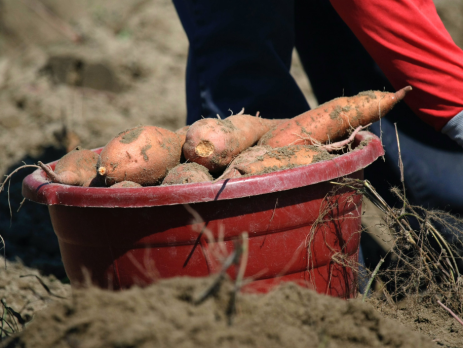
sweet potatoes in a bucket

Sweet potato seed program provides Arkansas farmers with high-quality seed stock

Sweet potatoes are propagated by stem cuttings, which makes the crop more susceptible to virus accumulation over time. More than 30 viruses are known to affect sweet potatoes. The use of virus-infected sweet potato slips for subsequent seasons can have a profoundly negative effect on a farmer’s operation, decreasing yield potential and profitability. The University of Arkansas at Pine Bluff’s [...]

Read more...
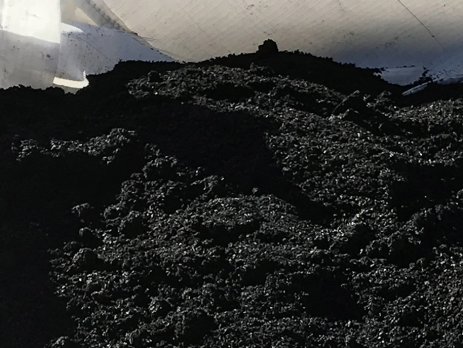
a bag of biochar

Researching biochar as a soil additive to increase profits, yields

Researchers at the University of Arkansas Pine Bluff Agricultural Research Station have found ways to solve two major challenges related to soil contamination and sub-optimal growth through the use of biochar – charcoal made from biomass. Biochar products can be used as a sustainable soil additive to capture agricultural chemicals. The product is added through conventional tillage and helps degrade [...]

Read more...