
Research and education combine to fight food contamination
The U.S. Centers for Disease Control estimate that 48 million people become ill from foodborne illnesses annually, resulting in 3,000 deaths. Through research and education, land-grant institutions are working to reduce the pathogens contained in food and increase food security.
Here are a few examples of that work:
- In Vermont, a certification program known as CAPS+ was developed to assure retailers that growers who participate provide produce that meets or exceeds food safety standards. Also developed was a processors food safety toolkit to help small and medium-sized operations better sell to large retailers.
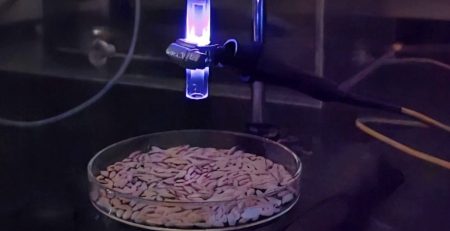
University of Vermont; project supported by USDA competitive and Smith-Lever (3b&c) funds. See full statement. - New Mexico researchers developed a method to continually monitor food products for aflatoxin, a potentially cancer-causing compound produced by certain molds. The noninvasive process detects the pathogen without destroying a portion of the crop.
New Mexico State University; project supported by private grants and contracts. See full statement. - After a multistate salmonella outbreak, Extension educators in Indiana supported growers by communicating with federal agencies that the contaminated products were no longer in the supply chain (since the state’s harvest season had passed), averting a large recall. They also provided food safety education to the growers. Federal testing found that all the farms were in compliance with food safety rules.
Purdue University; project supported by Smith-Lever (3b&c) funds. See full statement. - Connecticut has a coordinated food safety testing program to detect pathogens such as chemicals, harmful molds and pesticides. They also ensure that foods contain the nutrients claimed on labels.
University of Connecticut. See full statement. - In Maryland, researchers developed several technologies to detect contamination in fresh produce, poultry and seafood, which have been transferred to processors and regulators for use in ensuring safe, fresh food.
University of Maryland Eastern Shore; project supported by Evans-Alan and 1890 Extension funds. See full statement. - Oklahoma and Indiana provided ServSafe training to restaurant workers, high-school students, convenience store staff and food pantry workers to help ensure that food pathogens are not passed on in food-handling practices.
Oklahoma State University; project supported by state appropriations and county funding. See full statement. Purdue University; project supported by Smith-Level (3b&c) funds. See full statement.