Tag - Profitability/Competitiveness

Topic

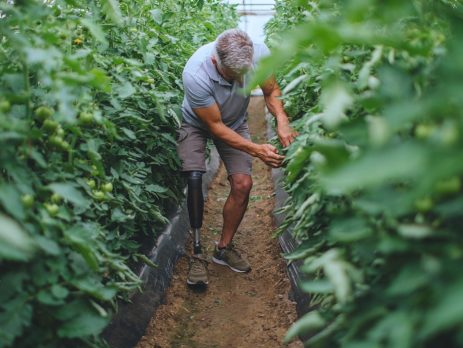
a man with a prosthetic leg examines a tomato plant

Readying veterans for agricultural enterprises

Military veterans across the Midwest are increasingly pursuing careers in agriculture, yet many lack access to training in production economics, enterprise budgeting and sustainable farm management, essential skills for making informed decisions.   In 2025, Michigan State University Extension partnered with organizations from Michigan, Indiana, Ohio and Illinois to support the Military Veteran Farming Conference, designed to provide veterans with practical [...]

Read more...
a rancher tends to her horses

Ranch Management University program helping new landowners understand agriculture, natural resources

In Texas, many inherit land properties without any formal training in soil health, livestock management, wildlife habitat or water stewardship. The result can be land that is under-utilized, mismanaged or environmentally degraded. The David McKnight ’73 Ranch Management University program offered by Texas A&M AgriLife Extension helps new and inexperienced landowners understand the fundamentals of natural resource management.   Through applied [...]

Read more...
single leaflet showing tip necrosis on a young New Mexico pecan tree

Plant disease testing saves New Mexico growers money

Plant diseases threaten crop yields, farm profitability and export markets. Most New Mexico farms are small or family-owned and lack access to private diagnostic services, increasing vulnerability to disease outbreaks and unnecessary pesticide use.  The New Mexico State University Plant Diagnostic Clinic provides New Mexico farmers with free diagnostic services using culture-based and molecular testing to identify plant diseases and [...]

Read more...
Bennett Trust logo

Land stewardship program strengthens Edwards Plateau

With a goal to empower landowners to care for the Edwards Plateau, the Bennett Trust Land Stewardship program at Texas A&M AgriLife Extension provides practical, research-based guidance emphasizing conservation, sustainable ranching and natural resource management.  The annual Women’s Land Stewardship Conference has drawn over 350 women from a variety of backgrounds, equipping them with a practical tool for brush control, [...]

Read more...
a diseased plant

Improving crop profitability through disease management

Land-grant university research and Extension programs help producers manage costly plant diseases through early detection, risk assessment and science-based tools. By integrating applied research, diagnostics and education, growers protect yields, reduce unnecessary pesticide use, improve return on investment and strengthen long-term agricultural resilience across variable production systems. Here are a few examples of that work: South Dakota State Extension plant pathology [...]

Read more...
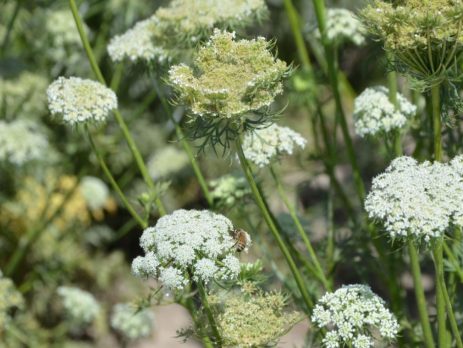
Flowering carrot plants

Identifying carrot seed disease pathogen to prevent yield loss

Central Oregon produces some of the world’s most valuable hybrid carrot seed, supporting a high-value specialty crop sector. Bacterial blight threatens seed quality yields and long-term industry viability, putting farm profitability and export competitiveness at risk.   Researchers at the Oregon State University Extension Service led a year-long field study in two commercial carrot seed fields to determine when bacterial blight [...]

Read more...
farmers watch a demonstration at a field day

Hands-on learning through trials and demonstrations

Lack of awareness and understanding of the latest research and technologies can impact profitability on small farms. Land-grant universities provide hands-on learning opportunities where producers can learn from one another, see real-time demonstrations and learn about the latest research trials to support decision-making. Here are a few examples of that work: Turmeric, a tropical plant that thrives in Guam, has been [...]

Read more...
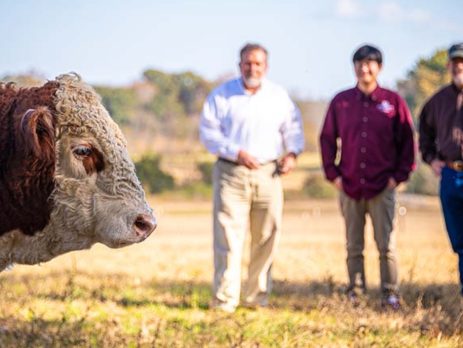
Scientists stand in a pasture with a bull in the foreground

Fine-tuning livestock production systems to overcome challenges

Livestock researchers are exploring new ways to achieve higher profitability through reproductive research, technology and traditional education outreach to help offset rising production costs. Here are a few examples of that work: In Louisiana, the Geaux Beef Heifer Development Program was created to support producers with expert-guided, forage-based heifer development. The program utilized artificial insemination or natural breeding combined with expert [...]

Read more...
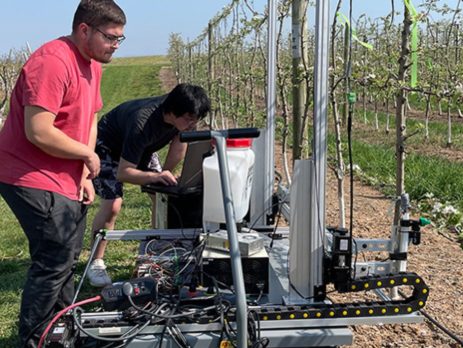
two scientists operate a robotic apple blossom sprayer

Emerging technology offers new tools for growers

Emerging technology is giving farmers tools to reduce the impacts of labor shortages, rising costs, changing weather patterns and regulatory demands, while improving production and profitability. These tools, using drones, robots, artificial intelligence and machine learning, offer a path to sustain productivity, worker safety and environmental performance in the agricultural economy. Projects demonstrate how these technical tools and artificial [...]

Read more...
rice growing

Combating rice delphacid in the Southwest

Rice delphacid, an invasive insect that has caused economic damage in the Southwest, has received quick attention from Texas A&M AgriLife with response work focusing on trial research and producer education, as well as partnership and collaboration with the rice industry.  Due to rapid economic growth in the Houston area, the annual cost to produce a rice crop in Texas [...]

Read more...
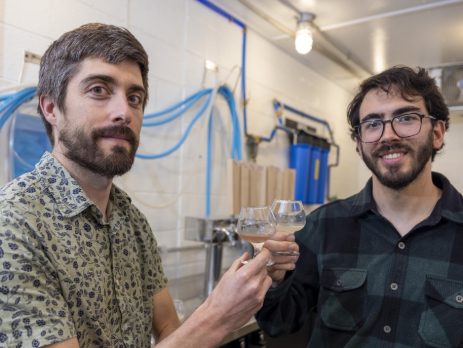
Scott Lafontaine stands with Bernardo Guimaraes in their small-scale beverage development facility

Cheers to gluten-free beer made with malted rice

Arkansas produces more rice than any other U.S. state, including about half of the nation’s long-grain rice. As long-grain rice exports have dropped from 50% in 2010 to 43% in 2024, growers have looked for new domestic markets. Beer shows potential. Brewers who use rice in beer typically rely on milled rice, which requires additional processing steps and costs.  Researchers [...]

Read more...
Mario Soto and Aurelie Poncet with a plant and a light-emitting device.

Building resilient agriculture through pest management

Land-grant university pest management programs strengthen agricultural resilience by delivering research-based education that helps farmers manage pests more effectively and safely. These programs improve pest control decisions, reduce unnecessary pesticide use and minimize health and environmental risks—supporting healthier ecosystems and long-term productivity. Here are a few examples of that work: Louisiana State University’s AgCenter’s Field Crop Integrated Pest Management (IPM) Program [...]

Read more...
attendees listening at a workshop

Agricultural tax education helps farmers understand tax law updates

With tax laws changing annually, farmers, businesses and tax professionals must navigate a challenging landscape to comply with the latest regulations. The University of Minnesota Extension’s Income Tax Short Course, as well as the Ag Tax School, provide focused opportunities for tax professionals to learn about the latest updates affecting current and future tax returns.   The programs are beneficial for [...]

Read more...
OSU Extension Master Woodland Managers attend a workshop.

Protecting private forests by growing good stewardship

More than half of forest land in the United States is privately owned. This land produces nearly all of the harvested timber that is used for building houses or made into forest products. Practicing good stewardship of private lands is important for ecosystem and community health. Because the more than 10 million private owners of these lands are often [...]

Read more...
Tahirah Johnson examines testing samples under a magnifying glass in a research lab on the University of Maryland Campus in 2024.

Innovative methods for safer, healthier food production practices

Regional food production is critical to local economies and supporting American food systems. Rising reports of foodborne illnesses, increased antibiotic resistance and newer production systems like soilless agriculture necessitate a better understanding of the risks and options to improve the safety and health value of food products from produce to shellfish and tree nuts. 1890 land-grant universities are examining [...]

Read more...
a piggy bank with the "Financial Literacy in Progress" logo

Empowering economic resilience through Extension

Across 1890 land-grant universities, Extension programs play a critical role in strengthening economic stability by delivering trusted, community-based education and technical assistance to underserved rural and urban populations. By expanding access to financial literacy, farm management training and wealth-building resources, these efforts empower families and producers to make informed decisions, protect assets and build long-term resilience that supports community [...]

Read more...
Scientists test a vaccine and delivery system at a catfish pond.

New vaccine and delivery system protect catfish against fatal disease, reduce antibiotic reliance

Catfish is the largest aquaculture industry in the United States. For decades, catfish producers have struggled against pervasive infestation from E. ictaluri, which mainly affects fingerlings (juveniles), targeting the fish’s brain and resulting in abnormal behavior and swimming patterns, swelling, ulcers and death. ESC has been treated with antibiotics delivered through feed. However, as orders for medicated feed rose [...]

Read more...
a tractor in a field

Addressing injuries and stress in agriculture

Farmers, ranchers and agricultural workers face significant challenges, from physical strain and injuries to financial uncertainty. Extension programs at land-grant universities address provide essential support tailored to the agricultural community. These programs not only improve individual well-being but also strengthen the resilience of rural economies by ensuring farmers and ranchers have the resources they need to continue their essential [...]

Read more...
a purple flowering plant

Research provides more sustainable pest management options

Agricultural land and natural ecosystems face growing threats from invasive and noxious grasses and weeds, feral animals, pests and diseases that impair ecosystem services and agricultural productivity. Chemical pesticides can pose human and environmental health risks. Land-grant university research had led to findings, tools and strategies for managing pests more sustainably. Here are a few examples of that work: Research and [...]

Read more...
view of tree canopy from below

Private land stewardship protects environment and communities

Practicing good stewardship of private lands is important for the health of our ecosystems and communities. Researchers, Extension professionals and educators at land-grant universities across the United States provide training, tools and other resources to help private landowners manage their land in ways that are environmentally friendly and economically sustainable. Here are a few examples of that work: Extension professionals in [...]

Read more...
crops growing out of dry, cracked soil

Understanding and identifying solutions for weather impacts on agriculture

Drought, severe weather and wildfires can have significant economic impacts on agriculture. Research and educational programming by land-grant universities helps us understand these effects and strengthen resilience. Here are a few examples of that work: Red clover, a commonly used forage crop in the northeastern U.S., increases its phytoestrogen levels under drought conditions, potentially affecting livestock reproductive health. The economic impact [...]

Read more...
a scientist examining plants in a controlled environment agriculture setting

Advancing sustainable food production in soilless environments

Land-grant universities across the nation are working to make the food supply more secure by exploring the best ways to produce crops without soil. Hydroponic and aquaponic systems have many benefits, including reducing the inputs and space needed to produce food. Researchers are studying how to make the foods grown in these controlled environments safer and better. Extension personnel [...]

Read more...
a creek through the woods

Precision monitoring aids decision makers and stakeholders in protecting key watersheds

Nutrient pollution, biodiversity losses and weather variability pose extraordinary challenges for the sustainability of natural ecosystems and the species that inhabit them. Land-grant universities are developing and applying emerging technologies that can help to more efficiently, accurately and safely monitor, measure and precisely manage these systems with minimal environmental impact. Here are a few examples of that work: To better understand [...]

Read more...
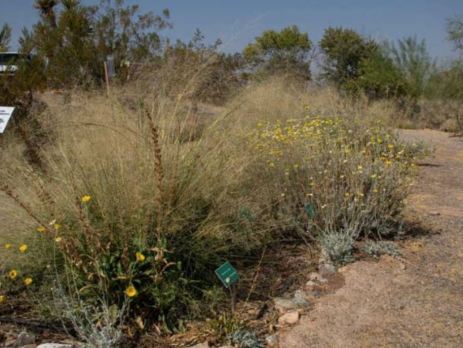
flowering plants growing in the desert

Extension programs help producers, communities manage pests sustainably

Agricultural land and natural ecosystems face growing threats from invasive and noxious grasses and weeds, feral animals, pests and diseases that impair ecosystem services and agricultural productivity. Chemical pesticides can pose human and environmental health risks. Extension educators at land-grant universities help agricultural producers and communities develop and implement pest management strategies that are cost-effective but also minimize risks. Here [...]

Read more...
a person looks at information on their phone and laptop

Extension builds financial resilience for community prosperity

Extension professionals at land-grant universities across the United States are helping communities build financial resilience by providing access to education and resources that foster financial literacy and money management. Here are a few examples of that work: Twenty-one percent of Oklahoma children live below the poverty level. An Extension program called Reality Check helped youths learn money management practices and job [...]

Read more...