
Tag - Northeast

Region

Dark storm clouds brewing over a field

Monitoring climate change to reduce emissions and waste

Land-grant universities are working to provide critical data, tools and strategies to help predict, monitor and mitigate climate change and its impacts on communities and natural resources. Here are a few examples of that work: Dairy waste is a major source of methane and nitrous oxide emissions, which contribute to global warming. Scientists in Washington showed that vermifiltration (which uses filters [...]

Read more...
watering plants in a community garden

In New York, Extension program instills community pride, one block at a time

In Rochester, New York, a program led by Master Gardeners and Cornell Cooperative Extension has helped low-income residents transform more than 700 blocks in their neighborhoods into beautiful, blooming gardens that instill community pride. It all started about a decade ago with a Master Gardener volunteer who came up with the idea for the community beautification effort. The program, called [...]

Read more...
three 4-h students compete in a robotics contest

Vermont youths build self-confidence, skills in robotics program

Robotics is a fun way to introduce youths to science, technology, engineering and mathematics (STEM). Its hands-on learning approach to designing, building, programming and testing robots to solve a challenge or complete a task fosters creativity and innovation. In the past two years, University of Vermont 4-H has partnered with the university’s College of Engineering and Mathematical Sciences to provide [...]

Read more...
photo of plates of healthy foods, including pita, veggies, salmon, chicken, and avocado toast

Improving gut health advances healthful outcomes

Probiotic bacteria have sparked considerable interest in both the food industry and among consumers, thanks to their potential to contribute to disease interventions and enhance human health. These microorganisms must navigate the challenging terrain of the gastrointestinal (GI) tract to exert their beneficial effects. Land-grant universities are discovering and sharing ways to improve probiotic absorption and gut health to [...]

Read more...
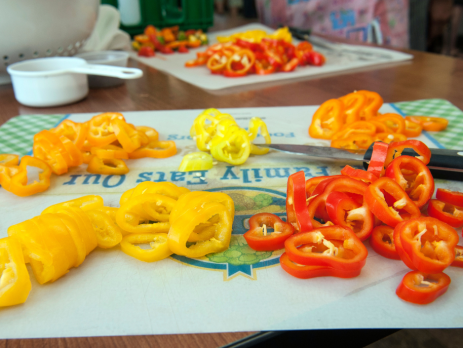
peppers being sliced on a cutting board

Supporting families with community nutrition programs

Youths and adults face a variety of health issues, from food insecurity to cardiovascular disease, obesity and diabetes. Cooperative Extension’s Expanded Food and Nutrition Education Program (EFNEP) and Supplemental Nutrition Assistance Program Education (SNAP-Ed) serve low-income residents nationwide and help address these issues by helping participants eat healthy, shop on a budget and stay active. Here are a few examples [...]

Read more...
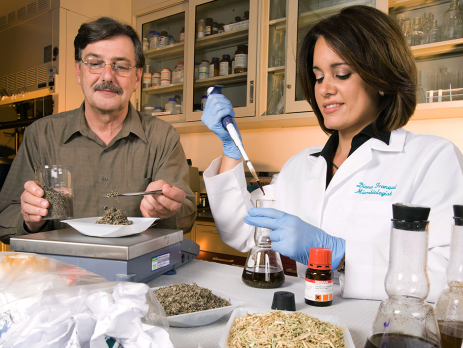
two scientists analyze samples in a food lab

Understanding how natural chemicals in food affect health

The foods and drinks we consume contain natural chemicals like vitamins, minerals, flavonoids, toxicants and hormones that can positively or negatively impact human health. Since 1971, a multistate project has brought together researchers at 22 land-grant universities to research the effects of these dietary bioactive chemicals. Studies shed light on mechanisms involved in bioactivity and determined how agricultural practices [...]

Read more...
brown chicken eggs in a carton

Improving safety of eating eggs through novel pathogen-killing method

Almost one in 10 cases of foodborne illness in the United States is associated with eggs. Americans eat, on average, 287 eggs per person annually. More than 14.1 billion eggs are incubated to produce chicks for the egg and poultry meat industries. Reducing the risk of disease-causing bacteria on eggshells is a priority for the industry, as is the [...]

Read more...
a woman checks her shopping cart at the grocery store

Helping immigrants shop smarter for food

New refugee families arriving in the United States face many challenges, including finding jobs, housing and adapting to their new community. They also need to learn how to navigate the aisles of a grocery store, prepare meals with foods that may be unfamiliar to them and stretch their food budget to feed their family. Making healthy food choices is [...]

Read more...
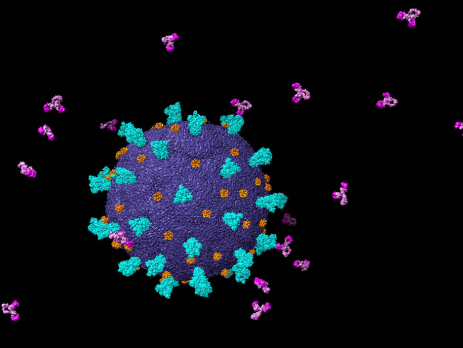
covid virus

Researchers develop nasal COVID-19 vaccine in mice, hamsters

New variants cause increases in COVID-19 cases and hospitalizations. While the updated mRNA vaccines remain effective at preventing severe illness and death, they may not be as effective in reducing infection and transmission over time. To overcome this gap, the U.S. government initiative called Project NextGen seeks to develop an effective and safe nasal vaccine for controlling the spread [...]

Read more...
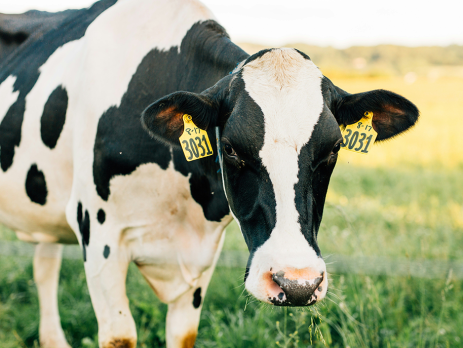
black and white cow in a field

Research identifies antibiotic resistance markers that make meat and milk safer

The World Health Organization (WHO) named resistance to antimicrobials one of the top 10 global public health threats because it decreases the effectiveness of medicines and makes infections more difficult to treat. The degree of threat this poses to the food supply is still unclear. Researchers at Pennsylvania State University led an international team that found that dairy cows [...]

Read more...
Photo of blueberries, glucose monitor, cherries, dumbbell and tape measure

Diabetes education helps individuals, families manage chronic disease

Type 2 Diabetes is increasing at an epidemic rate in the U.S. This chronic disease requires daily management to control blood sugar levels and prevent life-changing complications. Many individuals and families struggle with diet modifications that would help manage health and also have limited access to nutrition and diabetes professionals. The Land-grant University System helps fill that gap, providing [...]

Read more...
spices on a spoon

Using unique flavors to boost health

Developing dietary interventions that help to reduce increasingly common chronic diseases is an important goal for researchers and Extension professionals across the Land-Grant University System. Sometimes it is as simple as using a familiar flavor in a new way to add health benefits. Here are a few examples of that work: Louisiana ranks among the highest states in adults diagnosed with [...]

Read more...
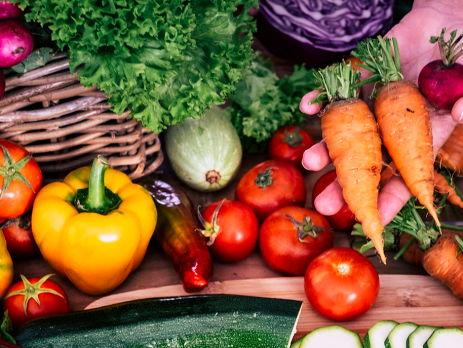
A hand holds carrots and a beet among a spread of other vegetables.

Getting more local, fresh produce into communities

Although fresh fruits and vegetables are key to health, difficulties abound in obtaining local produce. Land-grant institutions across the country work in a number of ways to promote growing produce as well as marketing and buying it locally. Here are a few examples of that work: In Georgia, the Fresh on DeK Mobile Farmers Market targets communities without access to a [...]

Read more...
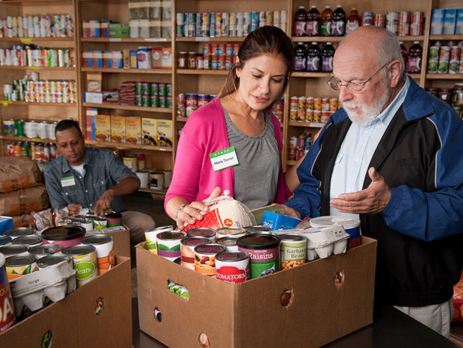
two people look in a box of food at a food pantry

Food security resources for local communities

Limited access to healthy food options can lead to problems such as poor health, chronic illness, child development and family instability. Food pantries can help people who lack adequate food resources access a range of products locally. By connecting food pantries with resources, land-grant universities are helping communities better serve those in need. Here are a few examples of that [...]

Read more...
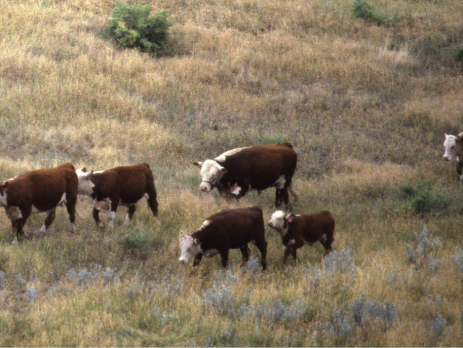
cattle walking through a field

Rapid response to animal and food safety and security threats

When disasters happen, land-grant universities are partners with local communities in sharing resources and information, providing training, offering testing and technical assistance and collaborating on future research. Timely and coordinated response efforts support local communities and producers and ensure access to a safe food supply. Here are a few examples of that work: Extension educators in Oregon responded quickly to coordinate [...]

Read more...
the torso of a person checking something off on a clipboard

Research and education combine to fight food contamination

The U.S. Centers for Disease Control estimate that 48 million people become ill from foodborne illnesses annually, resulting in 3,000 deaths. Through research and education, land-grant institutions are working to reduce the pathogens contained in food and increase food security. Here are a few examples of that work: In Vermont, a certification program known as CAPS+ was developed to assure retailers [...]

Read more...
a closeup of hands examining wheat

Strong farms strengthen local food systems

New farmers just starting out and established farmers looking to expand markets have something in common: looking to the Land-grant University System to support their growth. Strong local farms strengthen local food systems and food security. Here are a few examples of this work: When participant surveys indicated a need for more in-depth and hands-on farmer education, Idaho Extension educators responded [...]

Read more...
Aerial view of a field mapped out with drone technology

Emerging technologies aid conservation and management

Climate change and biodiversity losses pose extraordinary challenges for the sustainability of natural ecosystems and the species that inhabit them. Land-grant universities are developing and applying emerging technologies that can help to more efficiently, accurately and safely monitor, measure, and precisely manage these systems with minimal environmental impact. Here are a few examples of that work: In New Hampshire, researchers found [...]

Read more...
a honeybee sits in the middle of a flower

Pollinators support agriculture profitability

Bees, flies, moths and other pollinators are essential to the environment. Pollinators improve the quality and quantity of farmers’ crop yields, which adds an estimated $18 billion in crop production revenue annually. Pollinators also support healthy ecosystems needed for clean air, stable soils and diverse wildlife. However, both wild and domesticated pollinators are at risk, most notably many wild [...]

Read more...
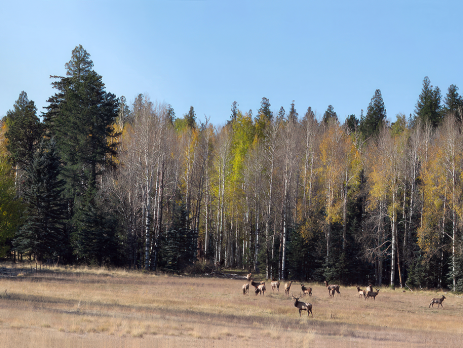
forest with wildlife

Forestlands are fundamental for healthy ecosystems

Forests are vulnerable to climate change, but when managed sustainably they can play an important role in mitigating climate change. Healthy trees provide oxygen by removing carbon dioxide from the air through photosynthesis. The carbon is stored in wood, plants and soil, helping to reduce carbon emissions. Land-grant universities are supplying research and outreach to improve our forestlands. Here are [...]

Read more...
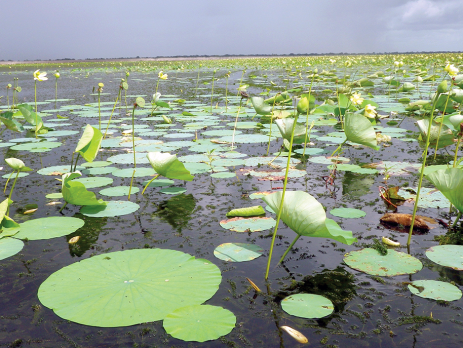
a body of water covered in lotus plants

Managing invasive species

Invasive species are organisms that are non-native to an ecosystem and whose introduction causes economic, social or environmental harm. Nearly every terrestrial, wetland and aquatic ecosystem in the United States has been invaded by non-native species, with economic losses estimated at $137 billion per year. Land-grant universities are leading the battle against invasive species. Here are a few examples of [...]

Read more...
a person's torso and hands, holding a cellphone

Gaining real-time insight on food insecurity

Social media is a great tool for immediate feedback on emergency situations. To gain an understanding of issues surrounding access to adequate food and assess how people felt about their food situation, Pennsylvania State University rural sociology researchers and international colleagues analyzed Twitter posts during the pandemic. Posts expressing anger, disgust or fear were strongly associated with actual food insufficiency [...]

Read more...
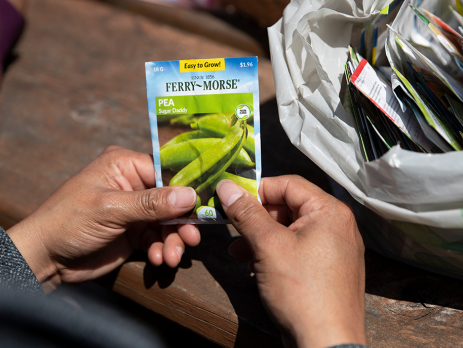
closeup of hands holding a pea seed packet. there is a bag of seed packets in the background.

Community gardens increase food security and community well-being

Based on the 2023 National Gardening Survey, 80% of American households participated in a gardening project in 2022. Through Extension trainings, seed libraries and gardening kits and the efforts of Extension Master Gardener volunteers, land-grant universities are increasing access to gardens, improving community well-being, and helping individuals learn to grow their own food. Here are a few examples of that [...]

Read more...
a group of scientists planting experimental crops

Reaching diverse farms and farmers

Extension educators and researchers across the Land-grant University System reach diverse farmers and farms through programming, information and accessible tools. Their work ensures farming resources are available to all individuals. Here are a few examples of that work: Minnesota Extension launched a pilot project to bring Minnesota-grown goat meat to halal customers. The collaboration has resulted in the first halal certified [...]

Read more...
a group of cows stands in a grassy area near some trees

Research, education improve livestock health

Livestock producers are continually searching for the best management strategies to protect animal health, which is essential to productivity and profitability as well as the animal’s well-being. Maintaining healthy animals also protects human health. Here are a few examples of how land-grant universities are contributing: When the highly pathogenic avian influenza (HPAI) threatened domestic poultry in Oregon, Extension responded rapidly with [...]

Read more...