Tag - Artificial Intelligence and Emerging Technologies

Topic

a group of children smile around a science experiment

Land-grant universities support youths, build stronger communities

The Land-grant University System plays a crucial role in equipping young people with the skills, knowledge and leadership abilities they need to thrive in their personal and professional lives. Here are a few examples of that work: In North Carolina, the Bertie DigiCon provided residents with tools and resources to overcome digital barriers. The event raised funds for youth development and [...]

Read more...
a purple flowering plant

Research provides more sustainable pest management options

Agricultural land and natural ecosystems face growing threats from invasive and noxious grasses and weeds, feral animals, pests and diseases that impair ecosystem services and agricultural productivity. Chemical pesticides can pose human and environmental health risks. Land-grant university research had led to findings, tools and strategies for managing pests more sustainably. Here are a few examples of that work: Research and [...]

Read more...
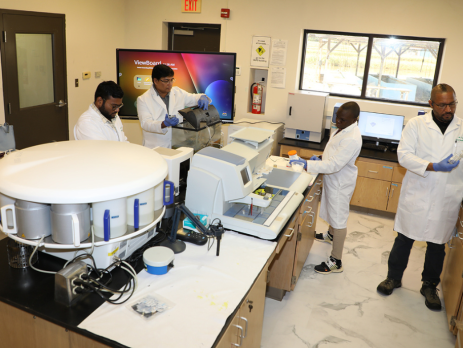
scientists in a lab

Harnessing artificial intelligence for agricultural innovation

Land-grant universities are leveraging artificial intelligence (AI) to improve agricultural efficiency, productivity and sustainability. Here are a few examples of that work: In Georgia, researchers are developing an AI-powered app to help farmers accurately identify Sericea lespedeza, a valuable forage crop with natural anthelmintic properties, reducing time ad labor costs.Fort Valley State University; USDA Capacity-Research. See full statement.   In Arkansas, researchers are [...]

Read more...
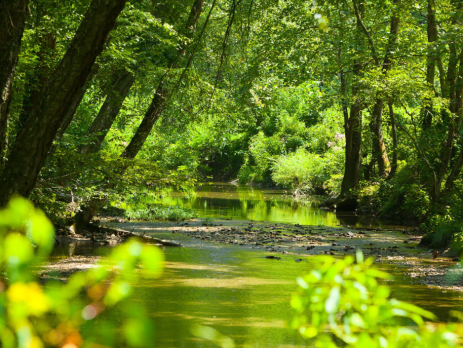
a creek through the woods

Precision monitoring aids decision makers and stakeholders in protecting key watersheds

Nutrient pollution, biodiversity losses and weather variability pose extraordinary challenges for the sustainability of natural ecosystems and the species that inhabit them. Land-grant universities are developing and applying emerging technologies that can help to more efficiently, accurately and safely monitor, measure and precisely manage these systems with minimal environmental impact. Here are a few examples of that work: To better understand [...]

Read more...
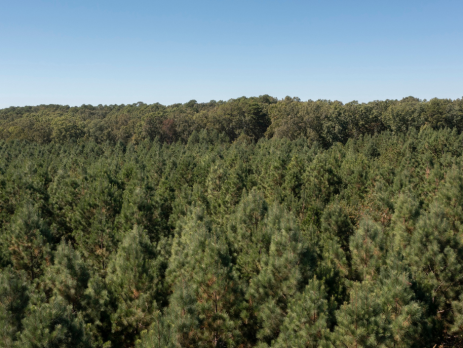
a forest

Preserving and managing our forests

Forests provide a variety of goods, including food, lumber, and paper. They also provide wildlife habitat as well as green space and recreation. As natural carbon sinks, forests absorb carbon dioxide from the atmosphere and store carbon in soils. But rising temperatures, pests and diseases pose threats to forests. Researchers, Extension professionals and educators at land-grant universities across the [...]

Read more...
two people sawing a tree

Volunteers help protect and restore local environments

Land-grant universities across the United States are finding ways to engage the public in science and stewardship that address real-world problems in their communities. With training and tools, volunteers are able to collect important data that help scientists, natural resource organizations, community members and the government protect and restore land, air and water resources — and the ecosystem services [...]

Read more...
a robot picking berries

Digital agriculture enhances production, monitoring capabilities

Data modeling, automated machinery and drones are just a few of the technologies that are powering improved efficiencies in livestock and crop production. Land-grant universities are at the forefront of researching and applying these technologies, paving the way for increased productivity, better disease management and optimized harvest timing. Here are a few examples of that work: In Idaho, many cattle producers [...]

Read more...
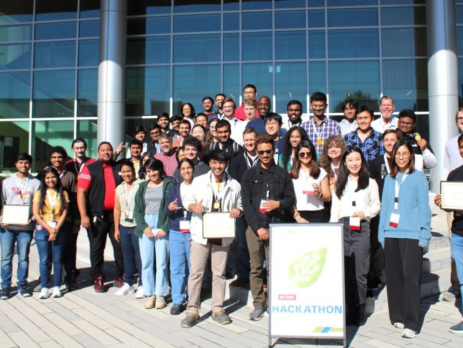
a group of smiling students

Education opportunities elevate agriculture issues and importance

Reaching youths and students early increases awareness of the importance of agriculture and the critical issues impacting producers. Land-grant universities are creating solutions to address educational gaps, improve understanding critical issues like cyber-biosecurity and provide students with practical knowledge, skills and information for the future. Here are a few examples of that work: Researchers in New Mexico recognized an opportunity for [...]

Read more...
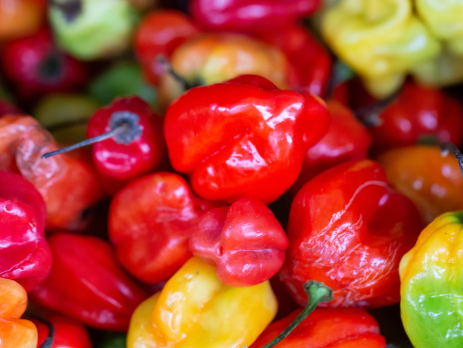
peppers

Land-grant universities foster community, student resilience

The 1890 land-grant universities are committed to strengthening communities, farmers and students through meaningful outreach initiatives. Their engagement ensures that resources are tailored to meet local needs such as food security and economic development. Through these efforts, the universities are fostering more resilient communities for generations to come. Here are a few examples of that work: A food bank needs assessment [...]

Read more...
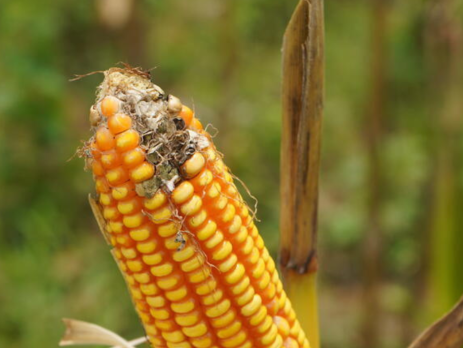
ear of corn with fungal growth

Mitigating fungal contamination of cereal grains with light

Fungal contamination threatens food security and public health and causes significant economic losses, especially in cereal crops. Aspergillus flavus and Fusarium graminearum are particularly impactful, with Fusarium alone causing over $300 million in annual U.S. losses.  Researchers at the University of Illinois Urbana-Champaign found that far-ultraviolet-C light (222-nanometer wavelength) effectively kills these fungi without harming grain quality. This treatment, safe [...]

Read more...
a group of scientists look at samples of petri dishes

Using genomics and machine learning to predict food-borne illness outbreaks

Each year about one in six Americans get sick from contaminated food. The germs that cause food-borne illnesses – like E. coli, salmonella and listeria – pop up throughout the food system. These outbreaks are hard to predict because scientists don’t yet know enough about how the germs survive and proliferate.  At the University of Maryland, researchers received funding from [...]

Read more...
researchers observe drone data collection

Drone images help monitor for invasive beetle in Palau

The invasive coconut rhinoceros beetle has damaged at least 25% of Guam’s coconut trees, the Guam Department of Agriculture’s Biosecurity Division estimates. About 800 miles away, officials in the Micronesian island Palau are looking for efficient ways to monitor this invasive pest. They’re seeking to prevent a resurgence that could devastate the economy and livelihoods that rely on native [...]

Read more...
a downed tree across a road

Evaluating forest hurricane damage with AI and lasers

As hurricanes continue to increase in intensity and frequency in the Gulf of Mexico, the risk of damage to homes and businesses continues to rise. Hurricanes can also destroy forests and timber farms, impacting local and regional economies. Getting an accurate assessment of how much timber is damaged by hurricanes is essential for environmental management decisions, salvaging logging operations, [...]

Read more...
tractor with a mechanical mower mowing grass on the side of the asphalt road

Autonomous machine systems to increase productivity, efficiency of crop production

Purdue University in Indiana is leading an autonomous machinery project to enhance productivity, efficiency and elevate profitability by alleviating labor workload.  Autonomous machines can capture data and help overcome labor-related limitations. This data capture helps farmers with comprehensive insights and data-driven decision making.  Purdue has used an autonomous inner-row sensor platform, harvest logistics tracking and autonomous roadside mowing as part of [...]

Read more...
a feral hog

Trapping training helps reduce feral hog population in Arkansas

Feral hogs cause extensive economic losses in agricultural economies and impact forests, wildlife habitat and the landscape. The U.S. Department of Agriculture estimates feral hogs cause $41.3 million in crop, pasture and livestock losses annually in Arkansas alone. To address feral hog populations, Arkansas Extension agents received training in net capture systems and installed eight systems to capture the hogs. [...]

Read more...
a group of scientists smile around the AI-powered robot in an experimental field

Robots make plant inventory easy as 1, 2, 3

Ornamental plant growers manually count tens of thousands of plants each season to get an accurate inventory before they commit to fulfilling major orders. An Alabama ornamental nursery might have as many as 80,000 plants per acre, with larger nurseries covering more than 1,000 acres. Some growers estimate they spend more than $6.5 million in labor each year simply [...]

Read more...
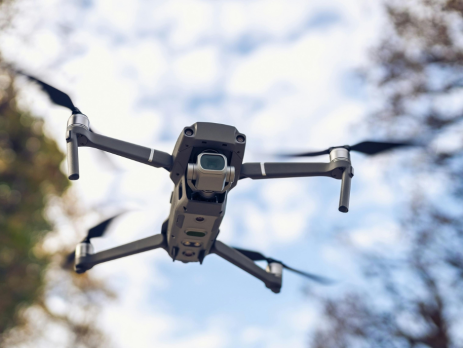
drone flying overhead

Researchers develop learning approach for drone-based surveillance, scouting 

Unmanned Aerial Systems (UAS) aid farmers in crop disease management, field scouting and pesticide applications. UAS has the unique ability to gather aerial imagery and other large amounts of data although interpreting aerial images can be complex and time consuming. Researchers at Purdue University in Indiana have developed AgSemiSeg, a semi-supervised learning approach designed for agricultural semantic segmentation. The objective [...]

Read more...
young woman examines a plant in her garden

Historically Black land-grant universities reach diverse communities

In 1890, the Land-grant University System was expanded to include institutions for Black citizens. Today, these institutions continue to provide access to higher education for underserved communities, and their research and Extension programs impact people worldwide through advancements in agricultural productivity and sustainability, food security, human health, and community and youth development. Here are a few examples of that work: First-time [...]

Read more...
brown chicken

Georgia researchers apply AI to track cage-free hens’ pecking behavior, welfare

Researchers at the University of Georgia Agricultural Experiment Station have used an artificial intelligence learning-based imaging system for automatically monitoring chicken pecking behavior. Severe pecking has been estimated to occur in 40% to 50% of cage-free flocks and is one of the primary reasons for increased mortality. Chicken mortality is doubled in cage-free systems compared to conventional caged systems. Egg [...]

Read more...