Tag - Crop Management

Topic

pigweed

Research and outreach on invasive species keep agriculture productive, profitable

Land-grant university research and outreach is helping manage the impacts invasive weeds and species have on growers and agricultural productivity. Here are a few examples of that work: When invasive pigweed threatened Idaho agriculture, Extension educators educated stakeholders on identification and best management practices. Educational materials have been widely shared, including more than 50 presentations to more than 4,000 direct contacts [...]

Read more...
a robot picking berries

Digital agriculture enhances production, monitoring capabilities

Data modeling, automated machinery and drones are just a few of the technologies that are powering improved efficiencies in livestock and crop production. Land-grant universities are at the forefront of researching and applying these technologies, paving the way for increased productivity, better disease management and optimized harvest timing. Here are a few examples of that work: In Idaho, many cattle producers [...]

Read more...
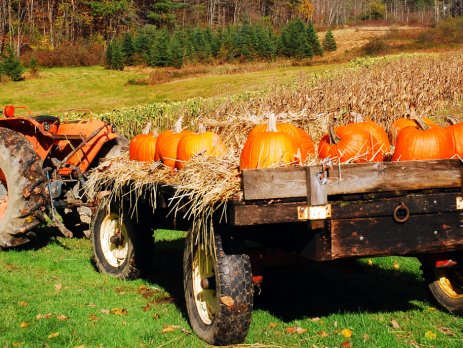
pumpkins in a tractor wagon

Research and Extension strengthens markets through technology, education

Preserving and strengthening markets is essential to the sustainability of the agricultural sector. Through technology and educational programs provided by land-grant universities, small agricultural businesses can identify new trends, develop risk management strategies and adopt new methods to ensure their businesses thrive. Here are a few examples of that work: Broadband plays a vital role in marketing businesses and facilitating commerce. [...]

Read more...
a scientist examining a plant

Land-grant scientists help farmers manage costly plant diseases effectively

Each year, plant diseases cost the global economy around $220 billion. Plant diseases kill crops and make their products unmarketable, wasting food and other resources while driving up costs for farmers and consumers. Land-grant university scientists are helping farmers monitor for diseases and manage them in a safe and cost-effective manner. Here are a few examples of that work: Researchers in [...]

Read more...
dry, cracked soil

Helping farmers affected by natural disasters with their mental health resiliency and safety

Drought, flooding and fire risk increasingly impact the mental health and safety of farmers, who are already less likely to seek mental health support. Ensuring the well-being of food producers ensures sustainability and resilience of our agricultural sector. To address issues of drought and water scarcity affecting farmers’ mental health, Oregon State University Extension and community programs in southern Oregon [...]

Read more...

Land-grant researchers and Extension educators protect essential pollinators

Pollinators play a critical role in the world’s ecosystems, facilitating the reproduction of flowering plants and ensuring the production of many crops. But many pollinator populations are declining or at risk due to habitat loss, pesticide use and changing environmental conditions. Researchers and Extension educators at land-grant universities across the United States are finding ways to protect pollinators. Here are [...]

Read more...
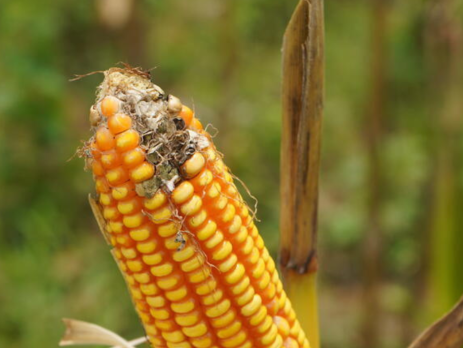
ear of corn with fungal growth

Mitigating fungal contamination of cereal grains with light

Fungal contamination threatens food security and public health and causes significant economic losses, especially in cereal crops. Aspergillus flavus and Fusarium graminearum are particularly impactful, with Fusarium alone causing over $300 million in annual U.S. losses.  Researchers at the University of Illinois Urbana-Champaign found that far-ultraviolet-C light (222-nanometer wavelength) effectively kills these fungi without harming grain quality. This treatment, safe [...]

Read more...
a scientist shows off a potato in a field

Breeding spuds to take the heat

Heat waves are becoming more common, and common crops are struggling to keep up. One problem is a photosynthetic glitch known as photorespiration, which occurs at a greater rate in some plants like potato crops exposed to hot conditions. The reason: An enzyme key to the process of photosynthesis mistakes oxygen for carbon dioxide during photorespiration, wasting energy and [...]

Read more...
a flooded agricultural field

Cover crops help reclaim contaminated vegetable fields

When 84 Vermont vegetable farms were flooded by heavy rains, crops were destroyed on nearly 450 acres, at an estimated loss of $4.6 million. The flooded soil also became contaminated, affecting the safety of produce and soil nutrient levels. The loss represented about 10% of the state’s commercial vegetable production.  The University of Vermont Extension provided free soil testing to [...]

Read more...
researcher Pam Roberts standing in experimental tomato crops

Multistate project studies solutions to bacterial spot in tomatoes, peppers

Tomatoes are big business for Florida farmers, contributing $500 million annually. Bell and chili peppers are also popular crops among consumers with production value of more than $536 million. However, bacterial spot is a threat to yields and harvest revenue.  University of Florida researchers are working to solve this major issue along with scientists at the University of Georgia, North [...]

Read more...
a strawberry plant

Extension helps strawberry farmers in Georgia and South Carolina save their growing season

Strawberries grown in Georgia bring in more than $15 million in sales annually, but the true value of growing strawberries is in agritourism — farms that open their doors to families to come pick fruit and enjoy a taste of farm life. For the past four years, the strawberry business in Georgia has been hindered by a new, highly [...]

Read more...
tractor with a mechanical mower mowing grass on the side of the asphalt road

Autonomous machine systems to increase productivity, efficiency of crop production

Purdue University in Indiana is leading an autonomous machinery project to enhance productivity, efficiency and elevate profitability by alleviating labor workload.  Autonomous machines can capture data and help overcome labor-related limitations. This data capture helps farmers with comprehensive insights and data-driven decision making.  Purdue has used an autonomous inner-row sensor platform, harvest logistics tracking and autonomous roadside mowing as part of [...]

Read more...
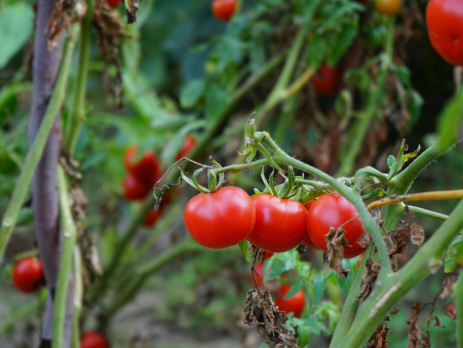
tomatoes on the vine

Optimizing nutrition for tomatoes enhances economic returns to growers

Nutrient deficiencies and excess can reduce tomato crop productivity, harvest quality and economic return. Mississippi State University Extension researchers evaluated nitrogen application rates in field tomato production in north Mississippi during the summer seasons of 2023 and 2024. They collected soil, water, leaf, fruit, stem and harvest samples, then processed and analyzed them. Based on the field studies, they determined [...]

Read more...
hemp

Helping hemp growers improve crop quality

Hemp, a non-psychoactive variety of Cannabis sativa L, has re-emerged as a popular crop after the 2018 Farm Bill granted hemp “crop status,” therefore removing it from the Drug Enforcement Administration list. It is sought after for a wide variety of consumer and industrial products including cosmetics, foods, fiber, building materials, biofuel and soil remediation. Vermont Agricultural Experiment Station scientists [...]

Read more...
a group of scientists smile around the AI-powered robot in an experimental field

Robots make plant inventory easy as 1, 2, 3

Ornamental plant growers manually count tens of thousands of plants each season to get an accurate inventory before they commit to fulfilling major orders. An Alabama ornamental nursery might have as many as 80,000 plants per acre, with larger nurseries covering more than 1,000 acres. Some growers estimate they spend more than $6.5 million in labor each year simply [...]

Read more...
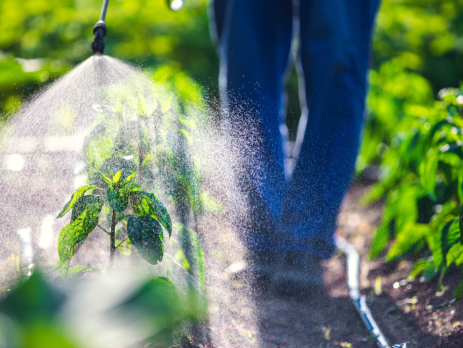
a person spraying pesticide on a plant

Restricted-use pesticide training boosts wages and saves local farmers money on pesticide management costs

Most farmers need to pay a contractor to spray restricted-use pesticides on their farms if they don’t have a license to do so. At $8 per acre, applied three times each growing season, the cost can really add up. On average, a farmer in Jackson County, Florida, can expect to spend more than $2,400 on pest control each season. A [...]

Read more...
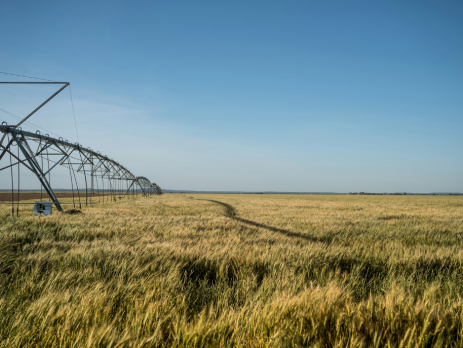
irrigation on a wheat field

Tennessee farmers increase irrigation for higher crop yields

When adopting irrigation, Tennessee row-crop producers must make appropriate choices of when and where to place it because the cost is high, varying from $1,500 to $2,500 per acre in a region where rainfall and good water-holding soils often provide a majority of the crop’s water requirement. University of Tennessee researchers and educators held on-farm research demonstrations, webinars and educational [...]

Read more...
two scientists take a sample

Land-grant universities drive sustainability through innovative agricultural practices

The 1890 land-grant universities are dedicated to improving the well-being of economically challenged communities. By focusing on sustainable practices, these institutions help address key challenges like food security, environmental stewardship and economic resilience. Through research, Extension and education, they equip farmers and communities with innovative techniques that preserve resources for future generations. Here are a few examples of that work: Researchers [...]

Read more...
a farmer pulls a plant from the ground

Reducing barriers to success for new farmers

Beginning farmers face an increased need for educational support and networking to remain profitable. Land-grant universities are working to understand and meet these individual and community needs. Here are a few examples of that work: In Wisconsin, Extension partnered with 12 agricultural associations and community organizations to facilitate focus groups exploring needs of beginning and early career farmers. They introduced Extension [...]

Read more...
grapes in a vineyard

Leaf removal supports healthy wine grapes

Wine grape vineyards are vulnerable to fungal diseases that can ruin the grape crop and make the wine unsellable if not managed properly. As more wine producers move toward organic farming or using biodynamic methods, the fungicides producers can use are limited. One nonchemical way to reduce these diseases is to remove leaves in the cluster zone of the [...]

Read more...
drone flying overhead

Researchers develop learning approach for drone-based surveillance, scouting 

Unmanned Aerial Systems (UAS) aid farmers in crop disease management, field scouting and pesticide applications. UAS has the unique ability to gather aerial imagery and other large amounts of data although interpreting aerial images can be complex and time consuming. Researchers at Purdue University in Indiana have developed AgSemiSeg, a semi-supervised learning approach designed for agricultural semantic segmentation. The objective [...]

Read more...
young woman examines a plant in her garden

Historically Black land-grant universities reach diverse communities

In 1890, the Land-grant University System was expanded to include institutions for Black citizens. Today, these institutions continue to provide access to higher education for underserved communities, and their research and Extension programs impact people worldwide through advancements in agricultural productivity and sustainability, food security, human health, and community and youth development. Here are a few examples of that work: First-time [...]

Read more...
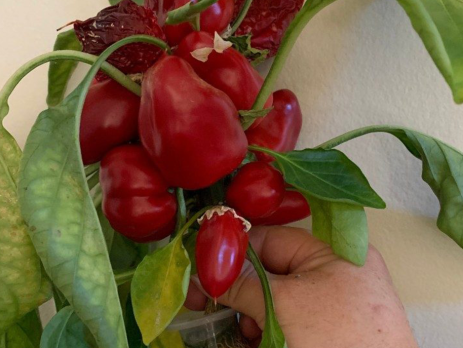
hand holding a potted pepper plant

Researchers develop new snacking pepper cultivars for indoor agriculture

Controlled environment agriculture is growing rapidly in Virginia, using fewer resources and enabling year-round planting in indoor spaces. Crops are grown vertically, with more crops grown on fewer acres. In response, Virginia Tech researchers are partnering in the development of snacking pepper cultivars suitable for growing in controlled agriculture environments. The project explores the potential of indoor agriculture to ensure [...]

Read more...
closeup of corn kernels

Iowa researchers find method to speed up new plant breeding techniques

Some of the newer techniques to speed up plant breeding, have challenges such as leaving some varieties sterile. At Iowa State University, researchers made a breakthrough that overcomes a major hurdle of these new techniques by restoring fertility to certain plant species. The breeding tool known as doubled haploid technology is a faster way to breed plants but often fails. [...]

Read more...
mixture of various dry beans

Webinar helps dry bean producers make critical decisions

In the midst of the growing season, producers must make many decisions that impact the yield and quality of their crop. A webinar hosted by North Dakota State University Extension was the source of vital research-based information on how to optimize profits for dry bean production. Attending classes and lectures before and during a growing season is not practical method [...]

Read more...