Tag - Crop Management

Topic

an agricultural field

Increasing food security with better food products

Ensuring an adequate supply of safe and nutritious food requires improving existing food varieties and innovating to develop new ones. Here are a few examples of how land-grant universities are contributing: Researchers in Washington generated more than 25 unique lines of rainbow trout with many more in the pipeline. Using biotechnology, they are developing commercial trout lines with enhanced production and [...]

Read more...
scientists examines experimental plants

Improving nursery and fruit crops

Specialty crops, including fruits, floriculture and nursery crops, provide a wide range of products and play a crucial role in the American economy. Land-grant university researchers and educators provide new varieties, production practices and other innovations that help ensure a reliable supply of high-quality products for consumers. Here are a few examples of that work: North Carolina Extension educators are helping [...]

Read more...
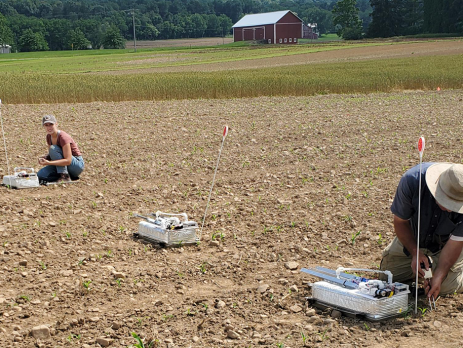
two scientists take samples and measurements in a field

Developing climate-friendly farming practices to reduce nitrous oxide emissions

Nitrous oxide is a greenhouse gas that is about 300 times better at trapping heat than carbon dioxide, so even small emissions of nitrous oxide affect the climate. Organic agricultural practices, such as legume cover crops and applications of animal manure, can curtail nutrient runoff and soil erosion when combined but at the same time release nitrous oxide. Researchers at [...]

Read more...
large barrel sized sample of substrate

Soilless solutions for resource-efficient crop production

Over the past several decades, growing plants and crops in containers instead of in the field has revolutionized global horticultural production practices. These soilless culture practices introduce new opportunities to produce crops in individual containers, offering growers complete control and increased resource-use efficiency. This shift means food can be produced near urban areas, mitigating food deserts and improving production [...]

Read more...
A tractor sprays pesticides in an orchard

Safer, more sustainable pest management

Managing pests is essential to healthy, safe and productive agricultural, urban, residential and natural areas. But pesticides can cause air and water pollution and unintended harm to nontarget organisms. Pesticide exposure has also been linked to human health problems. In addition, many pests eventually develop resistance to commonly used chemicals, rendering those chemicals ineffective. Researchers and Extension educators across [...]

Read more...
a rainbow shines through sprinkler mist on a field

Protecting our water

Water continues to be one of the most critical challenges facing agriculture and communities. Land-grant universities are working to discover new ways to increase water efficiency, reduce water use and protect water quality. Here are a few examples of that work: Researchers in Ohio are working to improve soil health and water quality through best agricultural management practices to prevent non-point-source [...]

Read more...
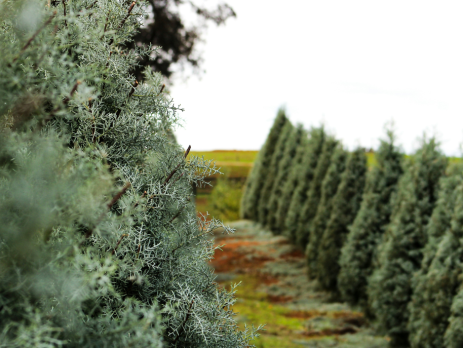
a Christmas tree farm

Research improves Christmas tree production in Connecticut

Two or three Christmas trees are planted for every one that is harvested. This implies that only 33% to 50% of planted trees survive to become salable, and this in turn translates into shortages in the availability of salable trees and higher costs for consumers. Many trees are lost when they are newly planted into growers’ fields, and many [...]

Read more...
soybean crop

New online tool facilitates information sharing for North Carolina farmers

North Carolina State Extension agents have their fingers on the pulse of statewide crop performance and emerging problems, often spotting regional patterns that are valuable to the industry. Getting that knowledge summarized for public consumption in a timely manner can be a challenge. NC State Extension recently released an online visual mapping tool to capture and share in-season crop problems [...]

Read more...
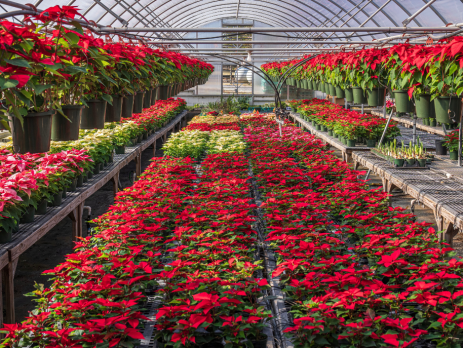
Poinsettias in a greenhouse

Plant diagnostics saves Florida poinsettia producers

The University of Florida Institute of Food and Agricultural Sciences helped save a grower $350,000 crop thanks to a weekly plant diagnostic clinic. In 2019, a new commercial grower came to the free weekly plant clinic for the second time. Just five weeks away from delivering 28,000 poinsettias to retail customers, it was initially thought the crop suffered from a [...]

Read more...
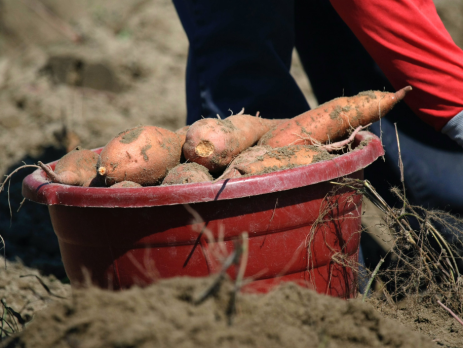
sweet potatoes in a bucket

Sweet potato seed program provides Arkansas farmers with high-quality seed stock

Sweet potatoes are propagated by stem cuttings, which makes the crop more susceptible to virus accumulation over time. More than 30 viruses are known to affect sweet potatoes. The use of virus-infected sweet potato slips for subsequent seasons can have a profoundly negative effect on a farmer’s operation, decreasing yield potential and profitability. The University of Arkansas at Pine Bluff’s [...]

Read more...
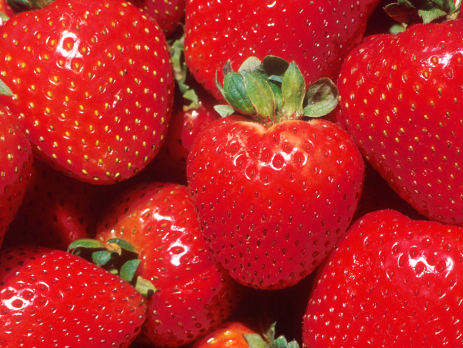
closeup photograph of pile of strawberries

Breeding crops tailored for the future

Food crops are constantly under attack by plant diseases and pests that result in losses in crop quantity and quality. Declines in crop health can lead to food waste and threaten global food security. Land-grant universities are breeding plants that are resistant to pests and disease for greater resilience and sustainability. Here are a few examples of that work: Researchers in [...]

Read more...
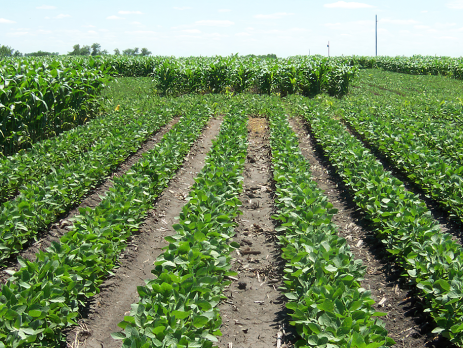
field with rows of crops

Healthy soils sustain food security

Researchers at the nation’s land-grant universities are studying the health of soils to increase agricultural production and decrease the use of agrochemicals used to grow food. Their work will contribute to our ability to meet the world’s growing demand for food. Here are a few examples of that work: Agricultural researchers in Pennsylvania are studying how soil salinity and soil nitrogen [...]

Read more...
a person checking on lettuce crop

Flexible training for new vegetable farmers in Connecticut

In Connecticut, new and beginning vegetable farmers are frequently first-generation farmers who also juggle off-farm jobs. These farmers need flexible training and support to build a thriving business that remains economically viable. To support these farmers, UConn Extension has developed an online, asynchronous vegetable production certificate course for farmers who have less than three years of experience growing vegetables. Participants [...]

Read more...
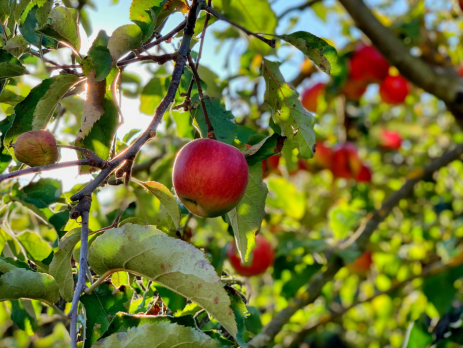
apple tree

Smaller trees produce larger yield

North Carolina ranks seventh in the nation in apple production with nearly 4 million bushels of apples — more than 150 million pounds — produced each year. The majority of these apples are used in the processing industry and turned into food items like applesauce, baby food, juice and other packaged products. Extension specialists at North Carolina State University are [...]

Read more...
a hand holding a hemp plant

Crowdsourced data impact industrial hemp operations

In 2018, domestic hemp production became legal in the United States for the first time in nearly 70 years. Industrial hemp can be grown to produce fiber, grain and cannabinoids. Some cannabinoids (CBD and CBG, for example) determine profitability potential, while one cannabinoid (THC) determines compliance. Growers must grow hemp crops which test below 0.3% THC to be compliant [...]

Read more...
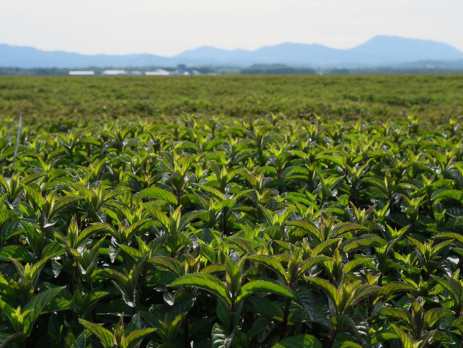
mint field in Oregon with mountain range in the background

Informing mint growers to reduce pesticide harm

The Oregon mint production industry had an estimated $28.7 million value in 2022. Losses from pests like mint root borer and variegated cutworm can eat into farmers’ profits, but the pesticide traditionally used to control these pests was phased out for use in food crops by the U.S. Environmental Protection Agency in 2022. Farmers now must use a newer [...]

Read more...
a farmer standing in a corn field

Indiana farmers improve technical knowledge through revived Purdue on-farm visit program

After two years of COVID-19 procedures and protocol, Purdue Extension’s connections with Indiana farmers were limited as virtual experiences replaced in-person activities. In response, Purdue Extension developed “Purdue On The Farm” to re-connect and increase direct contact between Purdue Extension educators and Indiana farmers to build and enhance relationships, understand perception and practices and generate data to underpin recommendations. Purdue on [...]

Read more...
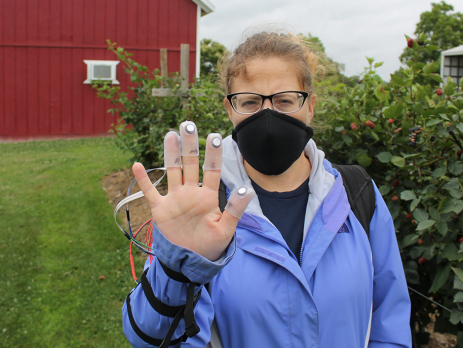
scientist in a blackberry field wearing a device with finger nodules for picking blackberries

Building a better blackberry picker

Labor is among the biggest expenses for U.S. fruit growers — 39% of production costs for fruit and tree nuts — and farm wages are rising, according to the U.S. Department of Agriculture Economic Research Service. Harvesting blackberries by hand is a costly endeavor that takes more than one-third of the hours in berry production. Mechanical harvesting of this [...]

Read more...
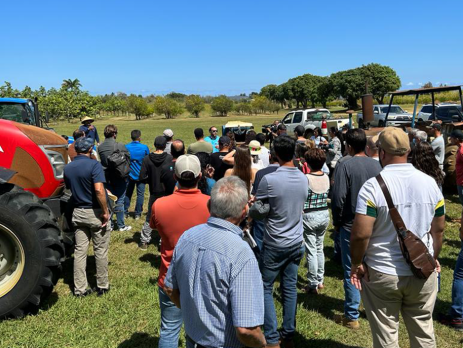
a group of farmers attend an outdoor educational workshop

Seed initiative reflects role of beans in Puerto Rico culinary heritage and agriculture

Beans stand as a cornerstone within the vibrant tapestry of Puerto Rican creole cuisine. According to the U.S. Department of Agriculture, 242 farms dedicated their land to cultivating dry, green and tender beans in 2017, generating an importation value of $15.2 million. Local bean varieties in Puerto Rico offer a host of advantages crucial for both farmers and consumers. [...]

Read more...