Tag - Soil Health

Topic

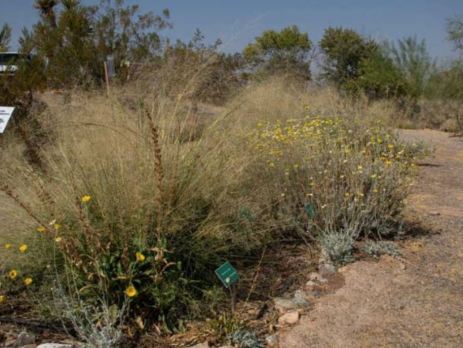
flowering plants growing in the desert

Extension programs help producers, communities manage pests sustainably

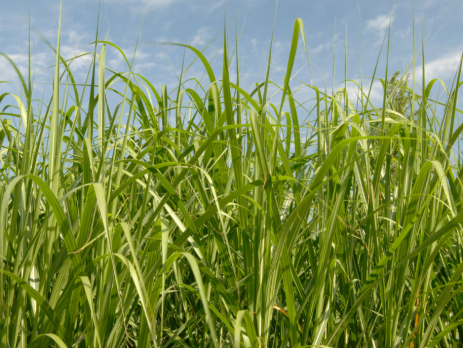
Agricultural land and natural ecosystems face growing threats from invasive and noxious grasses and weeds, feral animals, pests and diseases that impair ecosystem services and agricultural productivity. Chemical pesticides can pose human and environmental health risks. Extension educators at land-grant universities help agricultural producers and communities develop and implement pest management strategies that are cost-effective but also minimize risks. Here [...]

Read more...
a small body of water

Protecting valuable water resources

Water resources that sustain agriculture and communities continue to face critical challenges. Land-grant universities are working to discover new ways to increase water use efficiency, reduce water use and protect water quality. Here are a few examples of that work: Researchers at Cornell University in New York engineered novel enzymes that can break down microplastics into small products that can be [...]

Read more...
two people sawing a tree

Volunteers help protect and restore local environments

Land-grant universities across the United States are finding ways to engage the public in science and stewardship that address real-world problems in their communities. With training and tools, volunteers are able to collect important data that help scientists, natural resource organizations, community members and the government protect and restore land, air and water resources — and the ecosystem services [...]

Read more...
an experimental setup for plant growth

Land-grant university research creates sustainable domestic products from agricultural waste and biomass

Petroleum and other nonrenewable materials are widely used for daily products, but many of these items can be made from biomass, including food and agricultural wastes. Bioproducts enhance energy, food and national security while reducing fossil fuel reliance and emissions. They also create jobs, boost the economy, provide farmers with extra income and reduce harmful disposal methods. Here are a [...]

Read more...
a scientist examining a plant

Land-grant scientists help farmers manage costly plant diseases effectively

Each year, plant diseases cost the global economy around $220 billion. Plant diseases kill crops and make their products unmarketable, wasting food and other resources while driving up costs for farmers and consumers. Land-grant university scientists are helping farmers monitor for diseases and manage them in a safe and cost-effective manner. Here are a few examples of that work: Researchers in [...]

Read more...
sheep

Advancing food security through sustainable livestock and crop innovations

Research at 1890 land-grant universities addresses critical challenges in animal and plant production. Collectively, these projects support sustainable food systems and food security by improving livestock and crop health, reducing reliance on agrochemicals and increasing production efficiency. Here are a few examples of that work: An Arkansas study on sheep health explored natural dietary supplements to reduce antibiotic and dewormer dependency, [...]

Read more...
a flooded agricultural field

Cover crops help reclaim contaminated vegetable fields

When 84 Vermont vegetable farms were flooded by heavy rains, crops were destroyed on nearly 450 acres, at an estimated loss of $4.6 million. The flooded soil also became contaminated, affecting the safety of produce and soil nutrient levels. The loss represented about 10% of the state’s commercial vegetable production.  The University of Vermont Extension provided free soil testing to [...]

Read more...
3 people riding horses on a prairie with the text "Generation Next: Our Turn to Ranch" and the Texas A&M Agrilife Extension logo

Supporting the next generation of ranchers in Texas

The Generation Next course led by Texas A&M AgriLife Extension gives new landowners (or those who expect to inherit land) the knowledge, skills and motivation they need to operate successful ranches and achieve their dreams. The 12-week, online course is taught twice per year covering topics that include understanding agricultural business taxes and insurance, finance tracking, evaluating land resources, land [...]

Read more...
two scientists take a sample

Land-grant universities drive sustainability through innovative agricultural practices

The 1890 land-grant universities are dedicated to improving the well-being of economically challenged communities. By focusing on sustainable practices, these institutions help address key challenges like food security, environmental stewardship and economic resilience. Through research, Extension and education, they equip farmers and communities with innovative techniques that preserve resources for future generations. Here are a few examples of that work: Researchers [...]

Read more...
Dark storm clouds brewing over a field

Monitoring climate change to reduce emissions and waste

Land-grant universities are working to provide critical data, tools and strategies to help predict, monitor and mitigate climate change and its impacts on communities and natural resources. Here are a few examples of that work: Dairy waste is a major source of methane and nitrous oxide emissions, which contribute to global warming. Scientists in Washington showed that vermifiltration (which uses filters [...]

Read more...
crops growing in a field

Creating new, sustainable products from agricultural waste and biomass

Petroleum and other nonrenewable materials are commonly used for plastics, industrial chemicals, pharmaceuticals, cosmetics and other products we use on a daily basis. But many of these products can be made from biomass, including food and agricultural wastes. Bioproducts offer a way to improve energy security, food security and national security while also cutting back on fossil fuel-related pollution [...]

Read more...
large barrel sized sample of substrate

Soilless solutions for resource-efficient crop production

Over the past several decades, growing plants and crops in containers instead of in the field has revolutionized global horticultural production practices. These soilless culture practices introduce new opportunities to produce crops in individual containers, offering growers complete control and increased resource-use efficiency. This shift means food can be produced near urban areas, mitigating food deserts and improving production [...]

Read more...
the Chesapeake Bay

Critical moments to improve Chesapeake water quality

A study by Pennsylvania State University researchers concluded that the vast majority of nutrients and sediment washed into streams flowing into the Chesapeake Bay are picked up by deluges from severe storms that occur on relatively few days of the year. The researchers say this offers clues for cleaning up the impaired estuary. A small percentage of locations and events [...]

Read more...
a rainbow shines through sprinkler mist on a field

Protecting our water

Water continues to be one of the most critical challenges facing agriculture and communities. Land-grant universities are working to discover new ways to increase water efficiency, reduce water use and protect water quality. Here are a few examples of that work: Researchers in Ohio are working to improve soil health and water quality through best agricultural management practices to prevent non-point-source [...]

Read more...
sweet potato root galls

Land-grant universities nationwide work together to sustainably manage nematodes

Nematodes are tiny, usually microscopic, roundworms that are incredibly common and widespread. They account for 80% of all individual animals on Earth. Some nematode species are beneficial to agriculture, while others have major detrimental impacts. Plant-parasitic nematodes can lead to poor soil and low crop yields. In the United States, annual economic losses due to nematode infection of crops [...]

Read more...
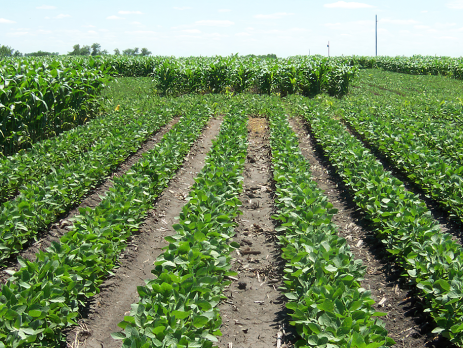
field with rows of crops

Healthy soils sustain food security

Researchers at the nation’s land-grant universities are studying the health of soils to increase agricultural production and decrease the use of agrochemicals used to grow food. Their work will contribute to our ability to meet the world’s growing demand for food. Here are a few examples of that work: Agricultural researchers in Pennsylvania are studying how soil salinity and soil nitrogen [...]

Read more...
a bag of biochar

Researching biochar as a soil additive to increase profits, yields

Researchers at the University of Arkansas Pine Bluff Agricultural Research Station have found ways to solve two major challenges related to soil contamination and sub-optimal growth through the use of biochar – charcoal made from biomass. Biochar products can be used as a sustainable soil additive to capture agricultural chemicals. The product is added through conventional tillage and helps degrade [...]

Read more...
a farmer standing in a corn field

Indiana farmers improve technical knowledge through revived Purdue on-farm visit program

After two years of COVID-19 procedures and protocol, Purdue Extension’s connections with Indiana farmers were limited as virtual experiences replaced in-person activities. In response, Purdue Extension developed “Purdue On The Farm” to re-connect and increase direct contact between Purdue Extension educators and Indiana farmers to build and enhance relationships, understand perception and practices and generate data to underpin recommendations. Purdue on [...]

Read more...