Tag - Food Safety

Topic

nanoplastics

Nanoplastics can make E. coli more toxic, Illinois researchers find

Nanoplastics — ultrafine plastic particles formed when larger pieces of plastic break down — are everywhere, from soils to waterways to the human body. Because they can attach to microbes and be absorbed by plant roots, nanoplastics’ potential impacts on human health are a growing concern. Recent evidence suggests these particles may contribute to antibiotic resistance and increase the [...]

Read more...
two UAPB athletes speaking at a meeting

Land-grant universities educate individuals and communities about health, nutrition and chronic disease prevention

Many American individuals and communities struggle with building or maintaining healthy lifestyles that contribute to better health outcomes. A lack of awareness of health information and resource constraints limit people’s abilities to eat healthy foods or get enough physical activity. Extension leaders from 1890 land-grant universities are bringing information to communities struggling with high rates of obesity and chronic [...]

Read more...
Tahirah Johnson examines testing samples under a magnifying glass in a research lab on the University of Maryland Campus in 2024.

Innovative methods for safer, healthier food production practices

Regional food production is critical to local economies and supporting American food systems. Rising reports of foodborne illnesses, increased antibiotic resistance and newer production systems like soilless agriculture necessitate a better understanding of the risks and options to improve the safety and health value of food products from produce to shellfish and tree nuts. 1890 land-grant universities are examining [...]

Read more...
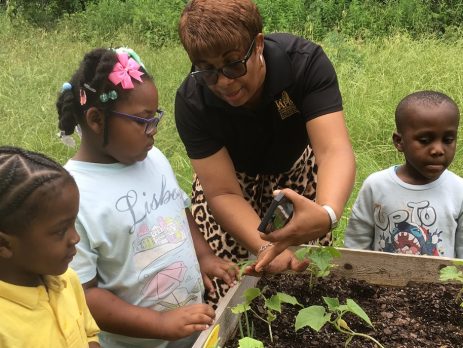
preschoolers look at plants in a raised bed

Strengthening youth development through experiential learning

Experiential learning equips young people with hands-on skills, critical thinking abilities and real-world problem-solving experiences that strengthen academic success, workforce readiness and lifelong learning. Through community-based programs, 1890 land-grant universities play a vital role in ensuing opportunities by connecting research, Extension, and education to support youth and prepare the next generation of leaders. Here are a few examples of that [...]

Read more...
a family preparing a salad

Delivering nutrition and health education and resources at the community level

The SNAP-Ed program provides research-based nutrition education to SNAP recipients and those who are eligible for benefits, helping individuals and families make more nutritious food choices, stretch their food dollars and lead healthier lifestyles. Land-grant universities play a key role by leveraging Extension professionals to deliver nutrition education and resources directly to a wide audience of communities. The program [...]

Read more...
chickens around a feeder

Mitigating costly poultry diseases

Avian diseases pose a major challenge to the nation’s $77 billion poultry industry and drastically increase the cost of poultry products for consumers. Avian diseases can also pose a health threat to other animals and humans. At the same time, there is a demand to produce poultry without antibiotics or other drugs commonly used to fight diseases. Working together, [...]

Read more...
two scientists look at a tablet

Food industry worker training reduces foodborne illness and enhances workforce development

Foodborne illnesses are a common and costly, yet preventable, public health issue. Training workers in the food industry on food safety issues is critical to public health as well as workforce development. Land-grant universities across the country continue to find innovative and effective methods to train workers on foodborne illness, how to prevent it and how to train other [...]

Read more...
a scientist takes notes

Optimizing use of heat to minimize food safety risks, maximize food quality

Using heat is essential for reducing the risk of foodborne illnesses in fresh products like eggs and milk and dry goods like spices, flour and powdered milk. In addition, a number of commodities require use of heat for processing. Finding the right balance of heat to ensure food quality and safety is an ongoing process, and one that researchers [...]

Read more...
a family preparing a meal

Expanded Food and Nutrition Education Program strengthens families with hands-on education

The Expanded Food and Nutrition Education Program (EFNEP) strengthens families by providing hands-on nutrition education to those with limited resources. Through practical lessons in healthy eating, meal planning, food budgeting and physical activity, EFNEP helps families develop lifelong skills that improve their overall well-being. As families adopt healthier lifestyles, they reduce their risk of chronic diseases and food insecurity. [...]

Read more...
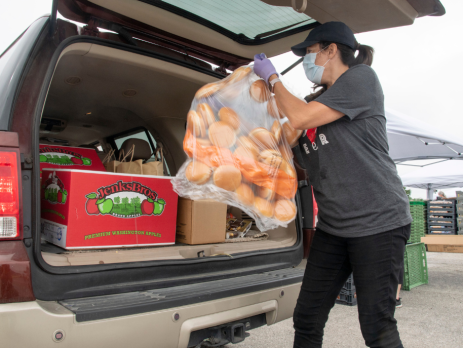
a person loading food into a car trunk

Supporting entrepreneurs, building stronger economies and fortifying food systems

The Land-grant University System empowers entrepreneurs, strengthens local economies and fortifies food systems in communities across the United States. Through their research, education and Extension initiatives, these institutions spark advancements that accelerate economic development and advance food security, ensuring resilient and strong communities. Here are a few examples of that work: Santa Fe County has experienced a decline in the number [...]

Read more...
a scientist examining plants in a controlled environment agriculture setting

Advancing sustainable food production in soilless environments

Land-grant universities across the nation are working to make the food supply more secure by exploring the best ways to produce crops without soil. Hydroponic and aquaponic systems have many benefits, including reducing the inputs and space needed to produce food. Researchers are studying how to make the foods grown in these controlled environments safer and better. Extension personnel [...]

Read more...
sheep

Advancing food security through sustainable livestock and crop innovations

Research at 1890 land-grant universities addresses critical challenges in animal and plant production. Collectively, these projects support sustainable food systems and food security by improving livestock and crop health, reducing reliance on agrochemicals and increasing production efficiency. Here are a few examples of that work: An Arkansas study on sheep health explored natural dietary supplements to reduce antibiotic and dewormer dependency, [...]

Read more...
teapot and cup of green tea

Compounds in green tea have potential to benefit gut health and mitigate inflammation

Metabolic syndrome (MetS) affects over 34% of Americans and is a major risk factor for severe cardiometabolic disorders such as diabetes, obesity and high blood pressure. Researchers at the Ohio Agricultural Research and Development Center are building on previous findings by investigating the potential of green tea extract to support gut health and mitigate inflammation in individuals with metabolic [...]

Read more...
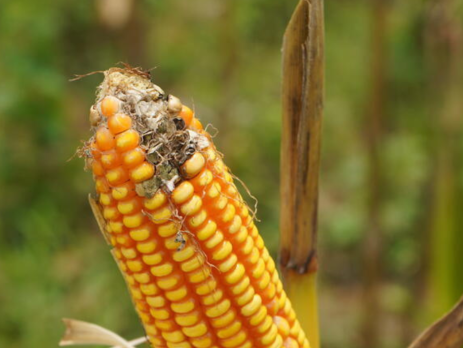
ear of corn with fungal growth

Mitigating fungal contamination of cereal grains with light

Fungal contamination threatens food security and public health and causes significant economic losses, especially in cereal crops. Aspergillus flavus and Fusarium graminearum are particularly impactful, with Fusarium alone causing over $300 million in annual U.S. losses.  Researchers at the University of Illinois Urbana-Champaign found that far-ultraviolet-C light (222-nanometer wavelength) effectively kills these fungi without harming grain quality. This treatment, safe [...]

Read more...
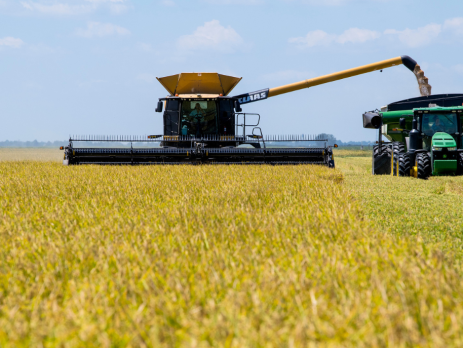
rice harvester

Developing informed guidelines for safer rice storage

Rice is a crop critical to the food security of citizens in the United States and globally, where half the world’s population relies on rice as a staple. However, an estimated 15% of rice production is lost annually due to contamination from fungi and other harmful organisms. When rice is exposed to high temperatures and humidity in storage, the [...]

Read more...
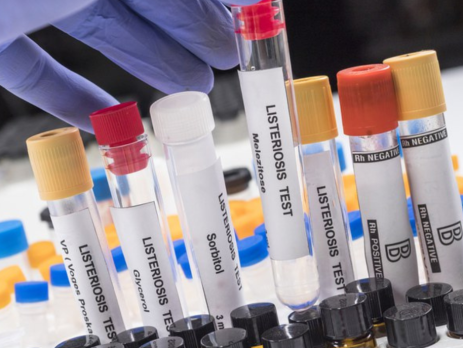
close up of experimental vials

Team finds ways to protect apples postharvest

Pennsylvania is the nation’s fourth largest producer of apples. Once these apples and other tree fruits are picked, they are sent to packing facilities where the fruit can come in contact with germs such as listeria that can survive in these cold and wet environments.  Pennsylvania State University researchers studied the seasonal changes in three different packing facilities and identified [...]

Read more...
a group of scientists look at samples of petri dishes

Using genomics and machine learning to predict food-borne illness outbreaks

Each year about one in six Americans get sick from contaminated food. The germs that cause food-borne illnesses – like E. coli, salmonella and listeria – pop up throughout the food system. These outbreaks are hard to predict because scientists don’t yet know enough about how the germs survive and proliferate.  At the University of Maryland, researchers received funding from [...]

Read more...
a scientist examines samples in a petri dish

Innovative delivery system extends shelf life of bioactives

Bioactives are naturally present in foods and are associated with several health benefits to consumers. However, these compounds often occur in limited amounts, too small to reach an effective concentration. They also tend to oxidize when exposed to oxygen, light or heat.  At North Carolina A&T State University, researchers created an oleogel using rice bran wax and carnauba wax as [...]

Read more...
chickens in an outdoor pen

Interventions developed to reduce bacteria transmission in livestock

Food-borne diseases may be preventable with changes in behavior or the adoption of new practices.   An interdisciplinary study conducted at Purdue University in Indiana identified knowledge gaps that hinder producers from adopting food-safety practices. The researchers also developed technologies to reduce the contamination of food products from pathogens in poultry. The technologies can be used in place of broad-spectrum antibiotics [...]

Read more...
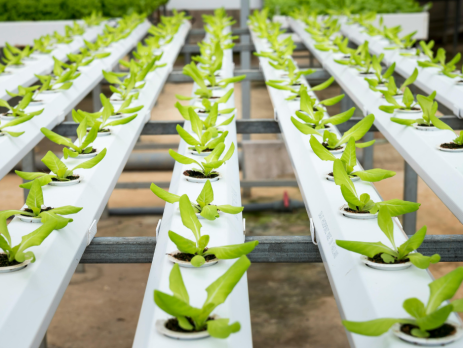
rows of hydroponic crops

Researching strategies to protect produce from contamination

Food contamination can occur at various stages from farm to table. At Louisiana State University AgCenter, researchers are studying foodborne pathogens to better understand how they are transmitted and what might be done to prevent them from contaminating fresh and processed foods.  Among the research projects are efforts to treat foods to make them less vulnerable to contamination. Those include [...]

Read more...
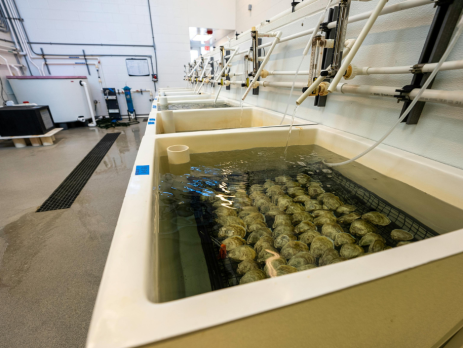
clams in an industrial sink

Creating biosecure standards for a growing aquaculture industry

Shellfish harvests contribute more than $1 billion annually to the New Jersey economy. Although wild caught harvests are sustainable, they are maxed out. A viable alternative is shellfish aquaculture, which can provide many environmental benefits, yet the growth of this type of farming relies on the hatchery production of seed or juvenile shellfish. Interstate transfer of seed stock to support [...]

Read more...
photo of a jar being removed from canning water by a pair of tongs

Holistic programs address community health

Obesity is on the rise in the United States, and this increases the risk of diabetes, hypertension and poor overall quality of life. Moreover, health disparities among low-income populations are well documented because food insecurity issues mean they lack nutritionally adequate and safe food. The Land-grant University System uses holistic programs to address community health. Here are a few examples [...]

Read more...
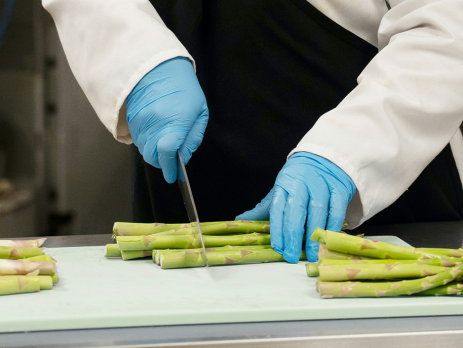
closeup photo of hands chopping asparagus on a cutting board, in an industrial looking kitchen

Training the next generation of culinary professionals

The food industry can be a path to economic stability. But to ensure public health, workers must know about foodborne illness, how to prevent it and how to train other employees. Trained individuals can also explore nontraditional culinary paths, which can have benefits for the home and family. Here are a few examples how land-grant institutions are contributing: Michigan Extension trains [...]

Read more...
brown chicken eggs in a carton

Improving safety of eating eggs through novel pathogen-killing method

Almost one in 10 cases of foodborne illness in the United States is associated with eggs. Americans eat, on average, 287 eggs per person annually. More than 14.1 billion eggs are incubated to produce chicks for the egg and poultry meat industries. Reducing the risk of disease-causing bacteria on eggshells is a priority for the industry, as is the [...]

Read more...
map of gardens with points highlighted with carrot icons. there is also a photograph of a garden.

Edible garden tours encourage new gardeners

Idaho gardeners face unpredictable growing conditions and this can discourage those new to gardening or with limited experience. Gardening offers many benefits, including food security, personal empowerment, economic savings and physical activity. University of Idaho Extension organized a self-guided Edible Garden Tour with 13 experienced home gardeners to encourage and educate new gardeners. Each host garden was unique, from [...]

Read more...