Tag - Purdue University

Institution

a group of children smile around a science experiment

Land-grant universities support youths, build stronger communities

The Land-grant University System plays a crucial role in equipping young people with the skills, knowledge and leadership abilities they need to thrive in their personal and professional lives. Here are a few examples of that work: In North Carolina, the Bertie DigiCon provided residents with tools and resources to overcome digital barriers. The event raised funds for youth development and [...]

Read more...
view of tree canopy from below

Private land stewardship protects environment and communities

Practicing good stewardship of private lands is important for the health of our ecosystems and communities. Researchers, Extension professionals and educators at land-grant universities across the United States provide training, tools and other resources to help private landowners manage their land in ways that are environmentally friendly and economically sustainable. Here are a few examples of that work: Extension professionals in [...]

Read more...
a small body of water

Protecting valuable water resources

Water resources that sustain agriculture and communities continue to face critical challenges. Land-grant universities are working to discover new ways to increase water use efficiency, reduce water use and protect water quality. Here are a few examples of that work: Researchers at Cornell University in New York engineered novel enzymes that can break down microplastics into small products that can be [...]

Read more...
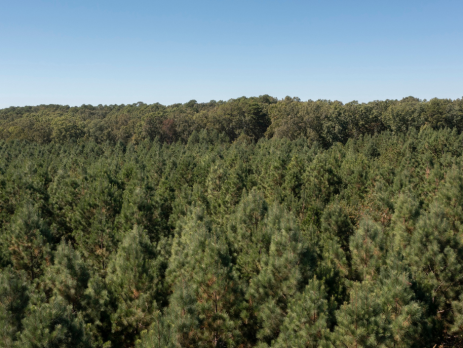
a forest

Preserving and managing our forests

Forests provide a variety of goods, including food, lumber, and paper. They also provide wildlife habitat as well as green space and recreation. As natural carbon sinks, forests absorb carbon dioxide from the atmosphere and store carbon in soils. But rising temperatures, pests and diseases pose threats to forests. Researchers, Extension professionals and educators at land-grant universities across the [...]

Read more...
an experimental setup for plant growth

Land-grant university research creates sustainable domestic products from agricultural waste and biomass

Petroleum and other nonrenewable materials are widely used for daily products, but many of these items can be made from biomass, including food and agricultural wastes. Bioproducts enhance energy, food and national security while reducing fossil fuel reliance and emissions. They also create jobs, boost the economy, provide farmers with extra income and reduce harmful disposal methods. Here are a [...]

Read more...
a person watching the "Field Crops Virtual Breakfast" on a laptop

Virtual education programs reach clientele where they live

Since 2020, virtual education has increasingly helped land-grant university research and Extension programs be more available to clientele where they live. These virtual programs are user-friendly and can be tailored to an audience’s educational level. By creating a virtual series that is informative and interactive, land-grant universities can significantly enhance the reach and impact of research and Extension information. Here [...]

Read more...
a person wearing PPE and looking at a device

Land-grant universities support the viability of livestock production

From teaching producers biosecurity techniques to keeping poultry cool in extreme temperatures to identifying genetic traits that will optimize production, land-grant university researchers and Extension professionals are supporting the viability of livestock production in the United States. Here are a few examples of that work: Researchers at land-grant universities nationwide are developing and using advanced technologies and data to improve poultry [...]

Read more...
chickens in an outdoor pen

Interventions developed to reduce bacteria transmission in livestock

Food-borne diseases may be preventable with changes in behavior or the adoption of new practices.   An interdisciplinary study conducted at Purdue University in Indiana identified knowledge gaps that hinder producers from adopting food-safety practices. The researchers also developed technologies to reduce the contamination of food products from pathogens in poultry. The technologies can be used in place of broad-spectrum antibiotics [...]

Read more...
tractor with a mechanical mower mowing grass on the side of the asphalt road

Autonomous machine systems to increase productivity, efficiency of crop production

Purdue University in Indiana is leading an autonomous machinery project to enhance productivity, efficiency and elevate profitability by alleviating labor workload.  Autonomous machines can capture data and help overcome labor-related limitations. This data capture helps farmers with comprehensive insights and data-driven decision making.  Purdue has used an autonomous inner-row sensor platform, harvest logistics tracking and autonomous roadside mowing as part of [...]

Read more...
a farmer pulls a plant from the ground

Reducing barriers to success for new farmers

Beginning farmers face an increased need for educational support and networking to remain profitable. Land-grant universities are working to understand and meet these individual and community needs. Here are a few examples of that work: In Wisconsin, Extension partnered with 12 agricultural associations and community organizations to facilitate focus groups exploring needs of beginning and early career farmers. They introduced Extension [...]

Read more...
drone flying overhead

Researchers develop learning approach for drone-based surveillance, scouting 

Unmanned Aerial Systems (UAS) aid farmers in crop disease management, field scouting and pesticide applications. UAS has the unique ability to gather aerial imagery and other large amounts of data although interpreting aerial images can be complex and time consuming. Researchers at Purdue University in Indiana have developed AgSemiSeg, a semi-supervised learning approach designed for agricultural semantic segmentation. The objective [...]

Read more...
kids swimming in a natural body of water

Strengthening families through engaging programs

Research and Cooperative Extension professionals in the Land-grant University System are dedicated to developing innovative programs that impact diverse communities nationwide. This work helps improve the lives of youths and families by connecting them with educational resources and engaging opportunities. Here are a few examples of that work: In Oklahoma, the Co-Parenting for Resilience program is helping parents effectively cope with [...]

Read more...
young girl looks into a microscope

Strengthening communities by expanding access to education and resources

The Land-grant University System is helping make communities stronger by ensuring information and programs are accessible and beneficial to all. From making workplaces safer to bringing science education to new audiences to helping better connect residents with community resources, Extension professionals are keeping their mission to reach and serve all people top of mind. Here are a few examples of [...]

Read more...
woman raising her hand in a classroom

Latino families in Indiana get help navigating community life through Extension program

In Daviess County, Indiana, the Hispanic and Latino share of the population has grown by 60% since the 2010 Census was taken. These residents, who make up 6% of the county’s population, come from diverse countries, and many have become deeply involved in local churches. Outside of faith-based settings, however, these newcomers often struggle to find avenues for community [...]

Read more...
a shot of a person from the knees down, wearing jeans and athletic shoes

Fitness programs change lifestyles and health

Physical activity that increases the heart rate helps to decrease health risks and provides additional health benefits such as improved sleep, lower cholesterol and improved mental health. Fitness programs including walking and dancing are accessible to almost anyone, easy to start and can lead to behavior changes and positively impact residents’ health and well-being by decreasing risks for obesity, [...]

Read more...
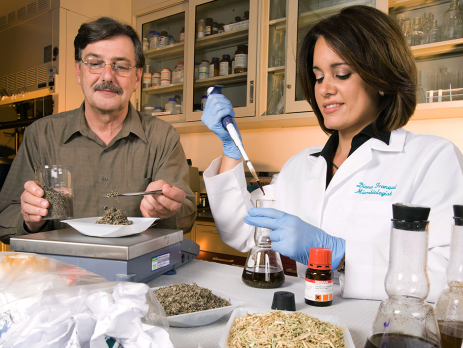
two scientists analyze samples in a food lab

Understanding how natural chemicals in food affect health

The foods and drinks we consume contain natural chemicals like vitamins, minerals, flavonoids, toxicants and hormones that can positively or negatively impact human health. Since 1971, a multistate project has brought together researchers at 22 land-grant universities to research the effects of these dietary bioactive chemicals. Studies shed light on mechanisms involved in bioactivity and determined how agricultural practices [...]

Read more...
a woman looking at a laptop in her home

Virtual programs support healthy lifestyles

Programs that support healthy lifestyles, including nutrition, physical activity and mental health, provide critical education, support and resources for many residents. COVID-19 forced programs online and the Land-grant University System continues offering online options to positively impact residents and support their healthy lifestyles. Virtual programs offer greater flexibility for participants, allowing more to engage in and benefit from the [...]

Read more...
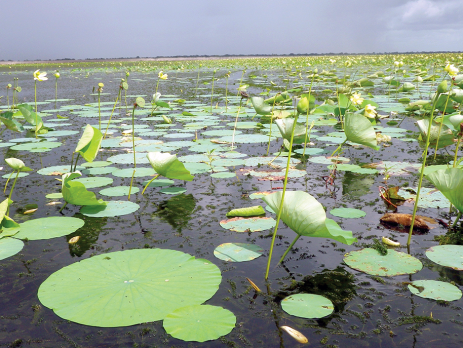
a body of water covered in lotus plants

Managing invasive species

Invasive species are organisms that are non-native to an ecosystem and whose introduction causes economic, social or environmental harm. Nearly every terrestrial, wetland and aquatic ecosystem in the United States has been invaded by non-native species, with economic losses estimated at $137 billion per year. Land-grant universities are leading the battle against invasive species. Here are a few examples of [...]

Read more...
the torso of a person checking something off on a clipboard

Research and education combine to fight food contamination

The U.S. Centers for Disease Control estimate that 48 million people become ill from foodborne illnesses annually, resulting in 3,000 deaths. Through research and education, land-grant institutions are working to reduce the pathogens contained in food and increase food security. Here are a few examples of that work: In Vermont, a certification program known as CAPS+ was developed to assure retailers [...]

Read more...
cut lumber

Addressing workforce needs for Indiana’s hardwood industries

The hardwood industry in Indiana contributes $17 billion in value-added to the Indiana economy. With 3 to 10 job openings in wood products manufacturing for every qualified applicant, the lack of skilled hardwood employees is a significant impediment to growth for companies and the sustainable management of woodlands. To address the need for a workforce able to solve issues related [...]

Read more...
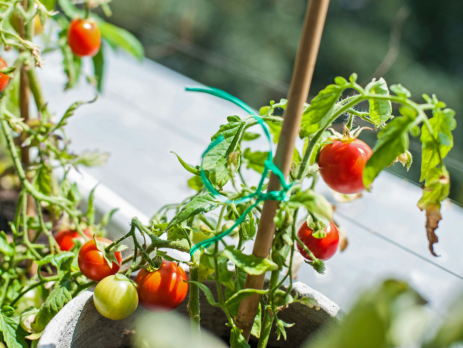
tomato plants growing on a windowsill

Indiana urban farming project teaches city dwellers how to grow food

When large grocery stores move out of urban areas, fresh fruits and vegetables become harder for city dwellers to access. In Gary, Indiana, only four grocery stores sell fresh produce for the city’s 76,424 residents. To increase opportunities for Gary residents to learn how to grow food, Purdue Extension launched a four-year urban farming project. Extension created a 10-week urban [...]

Read more...
a hand holding a hemp plant

Crowdsourced data impact industrial hemp operations

In 2018, domestic hemp production became legal in the United States for the first time in nearly 70 years. Industrial hemp can be grown to produce fiber, grain and cannabinoids. Some cannabinoids (CBD and CBG, for example) determine profitability potential, while one cannabinoid (THC) determines compliance. Growers must grow hemp crops which test below 0.3% THC to be compliant [...]

Read more...
a farmer standing in a corn field

Indiana farmers improve technical knowledge through revived Purdue on-farm visit program

After two years of COVID-19 procedures and protocol, Purdue Extension’s connections with Indiana farmers were limited as virtual experiences replaced in-person activities. In response, Purdue Extension developed “Purdue On The Farm” to re-connect and increase direct contact between Purdue Extension educators and Indiana farmers to build and enhance relationships, understand perception and practices and generate data to underpin recommendations. Purdue on [...]

Read more...
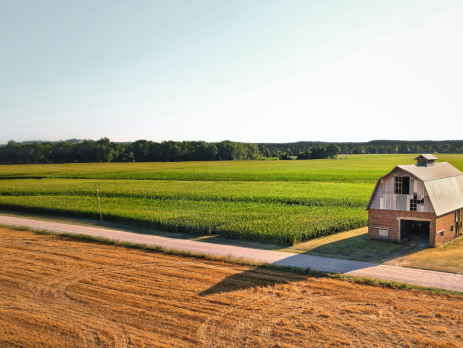
a barn in kansas on sprawling field

Taking the mystery out of land leasing in Kansas

U.S. Census data reflect that half of Kansas farm and range land is operated on a leased basis. Much of the land is owned by widows and non-farming children who are often absentee. The success of leasing agreements is key to supporting healthy agriculture and rural communities in the state. Extension educators from Kansas State University, University of Nebraska-Lincoln and [...]

Read more...