Tag - North Central

Region

an experimental setup for plant growth

Land-grant university research creates sustainable domestic products from agricultural waste and biomass

Petroleum and other nonrenewable materials are widely used for daily products, but many of these items can be made from biomass, including food and agricultural wastes. Bioproducts enhance energy, food and national security while reducing fossil fuel reliance and emissions. They also create jobs, boost the economy, provide farmers with extra income and reduce harmful disposal methods. Here are a [...]

Read more...
a person watching the "Field Crops Virtual Breakfast" on a laptop

Virtual education programs reach clientele where they live

Since 2020, virtual education has increasingly helped land-grant university research and Extension programs be more available to clientele where they live. These virtual programs are user-friendly and can be tailored to an audience’s educational level. By creating a virtual series that is informative and interactive, land-grant universities can significantly enhance the reach and impact of research and Extension information. Here [...]

Read more...
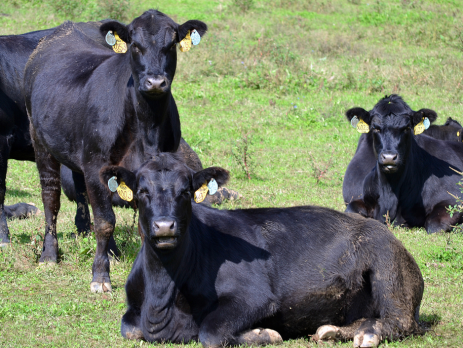
cows

Land-grant university research, outreach support beef production

The United States is the world’s top producer of beef, contributing to about 20% of the world’s production. In 2023, the U.S. beef industry had an estimated value of $102 billion. Land-grant universities are supporting the beef industry through research, Extension and education, ensuring producers remain economically viable and are able to safely meet changing market demands. Here are a [...]
Read more...
a scientist examining a plant

Land-grant scientists help farmers manage costly plant diseases effectively

Each year, plant diseases cost the global economy around $220 billion. Plant diseases kill crops and make their products unmarketable, wasting food and other resources while driving up costs for farmers and consumers. Land-grant university scientists are helping farmers monitor for diseases and manage them in a safe and cost-effective manner. Here are a few examples of that work: Researchers in [...]

Read more...
a person wearing PPE and looking at a device

Land-grant universities support the viability of livestock production

From teaching producers biosecurity techniques to keeping poultry cool in extreme temperatures to identifying genetic traits that will optimize production, land-grant university researchers and Extension professionals are supporting the viability of livestock production in the United States. Here are a few examples of that work: Researchers at land-grant universities nationwide are developing and using advanced technologies and data to improve poultry [...]

Read more...
a person in woodworking shop works at a laptop

Building stronger rural economies: The role of education & entrepreneurship

The Community Economic Development Program at the University of Wisconsin Extension launched research-driven programs to support entrepreneurs, community leaders, and stakeholders. The Wisconsin Rural Entrepreneurial Venture provided three years of coaching to rural communities, helping seven towns strengthen local business ecosystems. The Homegrown program assisted 60 community leaders in underserved areas with economic data analysis, support networks and business [...]

Read more...
two seniors work in a garden

North Dakota program helps older adults in rural communities live independently 

North Dakota is faced with unique challenges in caring for and about its older residents. A documented shift of the state’s population from rural counties to urban areas has resulted in a higher proportion of older adults in small towns and sparsely populated locations.  Assuring North Dakota is a good place to live and age well is a complex problem [...]

Read more...
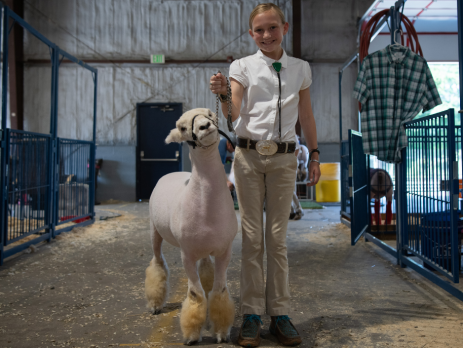
a 4-H participant smiles next to her show sheep

Illinois 4-H program guides youths on the path to success

Beyond the immediate benefits felt by communities through the service projects spearheaded by 4-H youths, the lasting effects extend far into adulthood. Research shows that individuals who engage with 4-H during their formative years are not only more likely to attain economic stability but also exhibit heightened civic engagement compared to their counterparts in the general population.  Commitment to community [...]

Read more...
a group of campers sit in a circle with their hands raised

Expanding access to high-quality summer learning with Missouri 4-H

Experiential learning helps youth develop essential life skills, yet educational gaps widened during the COVID-19 pandemic. Research confirms that quality out-of-school programs improve personal development, academic attitudes and long-term success. To address these challenges, Missouri 4-H expanded programming in 2024, increasing accessibility and forging new partnerships to reach youth. With grant support, Missouri 4-H introduced career exploration programs, simulations and day [...]

Read more...
smiling person in front of a food truck

FEED Initiative: Empowering Food Entrepreneurs in Wisconsin

Food entrepreneurship is a powerful tool for economic growth, but success requires navigating business planning, licensing and financial regulations. The Food Entrepreneurship Ecosystem Development (FEED) Initiative, led by the University of Wisconsin Extension, provides hands-on support to early-stage food businesses.  In 2024, FEED connected with over 400 participants through a webinar series, an in-person summit and specialized workshops. The annual [...]

Read more...
a group of seniors playing a game together in the park

Engaged Neighbors Programs reduce social neighborhood isolation in Missouri 

With increasing social isolation impacting American life, the University of Missouri Extension launched the Engaged Neighbor Programs in 2019, recognizing neighborhoods as key to rebuilding social connections. This effort led to the establishment of Missouri Good Neighbor Week in 2022, a statewide initiative promoting civic engagement and stronger communities.  In 2024, the weeklong celebration inspired over 31,000 acts of neighboring, [...]

Read more...
dry, cracked soil

Helping farmers affected by natural disasters with their mental health resiliency and safety

Drought, flooding and fire risk increasingly impact the mental health and safety of farmers, who are already less likely to seek mental health support. Ensuring the well-being of food producers ensures sustainability and resilience of our agricultural sector. To address issues of drought and water scarcity affecting farmers’ mental health, Oregon State University Extension and community programs in southern Oregon [...]

Read more...
a closeup on two people holding hands

Extension helps Wisconsin residents tackle daunting task of end-of-life planning

It’s a subject no one wants to talk about: end-of-life planning. It can be a confusing and emotional topic but being proactive in making these plans can alleviate future stress and financial burden on loved ones.  Only 37% of Americans have completed Advance Care Directives. When Extension educators with the University of Wisconsin discovered a need for more educational outreach [...]

Read more...

Land-grant researchers and Extension educators protect essential pollinators

Pollinators play a critical role in the world’s ecosystems, facilitating the reproduction of flowering plants and ensuring the production of many crops. But many pollinator populations are declining or at risk due to habitat loss, pesticide use and changing environmental conditions. Researchers and Extension educators at land-grant universities across the United States are finding ways to protect pollinators. Here are [...]

Read more...
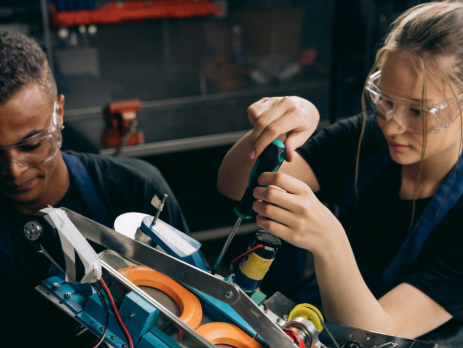
two teens wearing goggles and using tools in a workshop setting

Missouri Manufacturing Academy builds awareness of career opportunities

In Missouri, manufacturers produce everything from state-of-the-art fighter jets to the powder that is found on Frosted Flakes cereal. The manufacturing sector employs more than 300,000 people in the state with an average annual salary of more than $67,000.  Missouri manufacturing facilities, however, have reported challenges in hiring and retaining employees. To help fill this workforce gap — and educate [...]

Read more...
a group of people outdoors, smiling

Cultivating mental health resilience

The Land-grant University System is tackling mental health challenges through innovative programs. Extension professionals are uniquely positioned to educate and support urban, suburban and rural communities, offering programs that teach coping skills, recognize mental health signs, and normalize conversations about mental health. Addressing mental health is crucial because it enhances overall well-being, improves quality of life and fosters healthier, [...]

Read more...
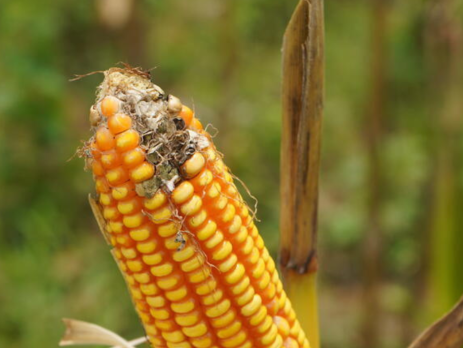
ear of corn with fungal growth

Mitigating fungal contamination of cereal grains with light

Fungal contamination threatens food security and public health and causes significant economic losses, especially in cereal crops. Aspergillus flavus and Fusarium graminearum are particularly impactful, with Fusarium alone causing over $300 million in annual U.S. losses.  Researchers at the University of Illinois Urbana-Champaign found that far-ultraviolet-C light (222-nanometer wavelength) effectively kills these fungi without harming grain quality. This treatment, safe [...]

Read more...
a scientist shows off a potato in a field

Breeding spuds to take the heat

Heat waves are becoming more common, and common crops are struggling to keep up. One problem is a photosynthetic glitch known as photorespiration, which occurs at a greater rate in some plants like potato crops exposed to hot conditions. The reason: An enzyme key to the process of photosynthesis mistakes oxygen for carbon dioxide during photorespiration, wasting energy and [...]

Read more...
chickens in an outdoor pen

Interventions developed to reduce bacteria transmission in livestock

Food-borne diseases may be preventable with changes in behavior or the adoption of new practices.   An interdisciplinary study conducted at Purdue University in Indiana identified knowledge gaps that hinder producers from adopting food-safety practices. The researchers also developed technologies to reduce the contamination of food products from pathogens in poultry. The technologies can be used in place of broad-spectrum antibiotics [...]

Read more...
tractor driving through a field

First local food summit energizes Kansas communities

Many communities across the state of Kansas are working to improve their local food systems. However, these efforts often lack cooperation or coordination with other local food programs across the state. The Kansas Local Food Summit was the first event in the state to bring these many groups together.  Organized by the local food systems team at Kansas State University, [...]

Read more...
two scientists smile next to samples of dairy byproducts

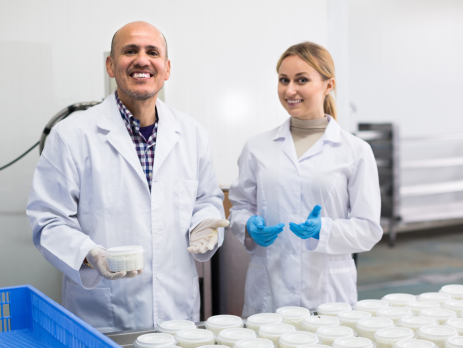
Upcycling a problematic food waste offers a safe food additive and new market for farmers

Acid whey, a byproduct of Greek yogurt, is a major contributor to food waste and can have a negative environmental impact if not properly managed. In recent years, the production of Greek yogurt and acid-coagulated cheeses has grown, but the acid whey waste that results is not easily disposable, causing challenges for water treatment and lowering oxygen levels in [...]

Read more...
aerial view of a Wisconsin lake

Research explores freshwater lake microbiomes

Freshwater lakes are an important drinking water source. People use these lakes for recreation and fishing. But they’re also vital ecosystems to some aquatic communities. Each lake has its own community of microorganisms, called a microbiome. Certain factors, such as precipitation and nutrient runoff, can affect whether there are more “good” bacteria or “bad” toxin-producing bacteria in a lake. Unfortunately, [...]

Read more...

Illinois researchers use designer biochar to tackle nutrient pollution

Farmers apply fertilizer to crops to help them grow, but nitrogen and phosphorus in those fertilizers can seep from fields into adjacent waterways and degrade water quality. Once in waterways, nitrogen and phosphorus pose threats to drinking water supplies and to habitat for aquatic organisms. They can also contribute to harmful algal blooms in the Gulf of Mexico. Researchers at [...]

Read more...
closeup of hay

Reducing the cost of production for biofuels

Renewable products, such as biobutanol that is derived from biomass feedstocks, can provide alternative energy solutions to petroleum-based products like gasoline and diesel. However, producing renewable biofuels and biochemicals faces significant challenges due to the inefficient fermentation processes and high production costs. Researchers at The Ohio State University developed an innovative separation technology that reduced production costs of biobutanol by [...]

Read more...
researcher Pam Roberts standing in experimental tomato crops

Multistate project studies solutions to bacterial spot in tomatoes, peppers

Tomatoes are big business for Florida farmers, contributing $500 million annually. Bell and chili peppers are also popular crops among consumers with production value of more than $536 million. However, bacterial spot is a threat to yields and harvest revenue.  University of Florida researchers are working to solve this major issue along with scientists at the University of Georgia, North [...]

Read more...