Tag - Food Security

Topic

sheep

Advancing food security through sustainable livestock and crop innovations

Research at 1890 land-grant universities addresses critical challenges in animal and plant production. Collectively, these projects support sustainable food systems and food security by improving livestock and crop health, reducing reliance on agrochemicals and increasing production efficiency. Here are a few examples of that work: An Arkansas study on sheep health explored natural dietary supplements to reduce antibiotic and dewormer dependency, [...]

Read more...
a hand touches a growing plant

Extension, Food Bank partner to satisfy food demand, while opening economic opportunities to local farmers

A Maryland Food Bank needs assessment showed a growing desire for more non-native vegetables. An alternative crop specialist with the University of Maryland Eastern Shore Extension noted the economic opportunity for farmers. Alternative crops are high value, creating a niche market that sets small-scale farmers apart from commercial growers and increases their income potential. In 2023, the alternative crop specialist [...]

Read more...
dry, cracked soil

Helping farmers affected by natural disasters with their mental health resiliency and safety

Drought, flooding and fire risk increasingly impact the mental health and safety of farmers, who are already less likely to seek mental health support. Ensuring the well-being of food producers ensures sustainability and resilience of our agricultural sector. To address issues of drought and water scarcity affecting farmers’ mental health, Oregon State University Extension and community programs in southern Oregon [...]

Read more...
a young child in a highchair eats a piece of broccoli

Extension educates families on the link between poor diet, dental cavities in young children

Dental decay is the most common chronic condition in children, and those from families with low-income experience poor diet quality and cavities. Families face challenges in promoting healthy diets and dental care to their children due to barriers such as lack of transportation, targeted advertising and limited access to healthy foods. The University of Connecticut Extension supports the SNAP-Ed nutrition [...]

Read more...
honey sale sign at a farmers market

Developing new farmers, new products and new markets to boost agriculture sector

Many communities across the United States are seeing a decline in the agricultural workforce as experienced farmers retire. This issue has been exacerbated by national declines in new and beginning farmers. Land-grant universities are working to recruit and train new farmers, address their challenges and find ways to help them to thrive, including new crops and new marketing opportunities. [...]

Read more...

Land-grant researchers and Extension educators protect essential pollinators

Pollinators play a critical role in the world’s ecosystems, facilitating the reproduction of flowering plants and ensuring the production of many crops. But many pollinator populations are declining or at risk due to habitat loss, pesticide use and changing environmental conditions. Researchers and Extension educators at land-grant universities across the United States are finding ways to protect pollinators. Here are [...]

Read more...
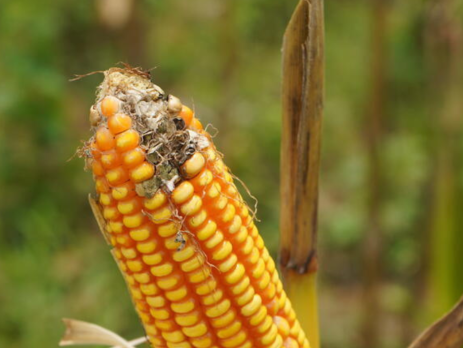
ear of corn with fungal growth

Mitigating fungal contamination of cereal grains with light

Fungal contamination threatens food security and public health and causes significant economic losses, especially in cereal crops. Aspergillus flavus and Fusarium graminearum are particularly impactful, with Fusarium alone causing over $300 million in annual U.S. losses.  Researchers at the University of Illinois Urbana-Champaign found that far-ultraviolet-C light (222-nanometer wavelength) effectively kills these fungi without harming grain quality. This treatment, safe [...]

Read more...
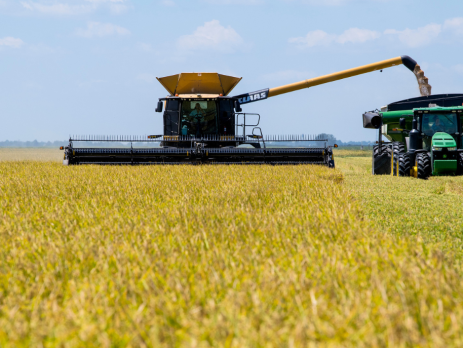
rice harvester

Developing informed guidelines for safer rice storage

Rice is a crop critical to the food security of citizens in the United States and globally, where half the world’s population relies on rice as a staple. However, an estimated 15% of rice production is lost annually due to contamination from fungi and other harmful organisms. When rice is exposed to high temperatures and humidity in storage, the [...]

Read more...
a group of scientists look at samples of petri dishes

Using genomics and machine learning to predict food-borne illness outbreaks

Each year about one in six Americans get sick from contaminated food. The germs that cause food-borne illnesses – like E. coli, salmonella and listeria – pop up throughout the food system. These outbreaks are hard to predict because scientists don’t yet know enough about how the germs survive and proliferate.  At the University of Maryland, researchers received funding from [...]

Read more...
a scientist examines samples in a petri dish

Innovative delivery system extends shelf life of bioactives

Bioactives are naturally present in foods and are associated with several health benefits to consumers. However, these compounds often occur in limited amounts, too small to reach an effective concentration. They also tend to oxidize when exposed to oxygen, light or heat.  At North Carolina A&T State University, researchers created an oleogel using rice bran wax and carnauba wax as [...]

Read more...
a scientist shows off a potato in a field

Breeding spuds to take the heat

Heat waves are becoming more common, and common crops are struggling to keep up. One problem is a photosynthetic glitch known as photorespiration, which occurs at a greater rate in some plants like potato crops exposed to hot conditions. The reason: An enzyme key to the process of photosynthesis mistakes oxygen for carbon dioxide during photorespiration, wasting energy and [...]

Read more...
chickens in an outdoor pen

Interventions developed to reduce bacteria transmission in livestock

Food-borne diseases may be preventable with changes in behavior or the adoption of new practices.   An interdisciplinary study conducted at Purdue University in Indiana identified knowledge gaps that hinder producers from adopting food-safety practices. The researchers also developed technologies to reduce the contamination of food products from pathogens in poultry. The technologies can be used in place of broad-spectrum antibiotics [...]

Read more...
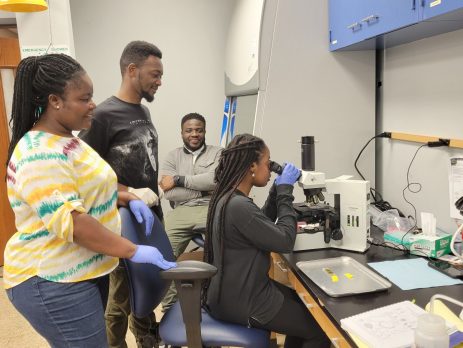
students and faculty examine samples under a microscope

Researchers find natural ways to provide sheep immunity from parasites

Overuse of antibiotics and dewormers in animal production can lead to the development of parasite resistance. As a result, conventional control programs relying solely on chemical interventions are becoming increasingly ineffective.  At the University of Arkansas at Pine Bluff, researchers are looking for natural means of controlling livestock parasites. In a two-year study they tested black walnut-hull powder and a [...]

Read more...
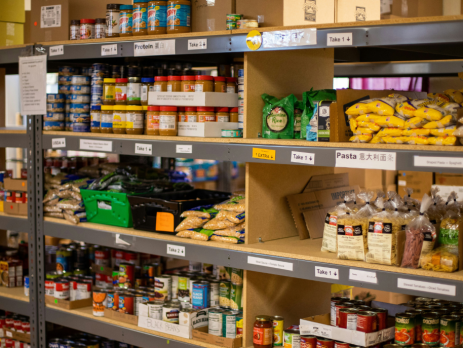
shelves of a food bank

Novel data set combines public and private food assistance measures

Determining whether food insecurity is a temporary event or a long-term condition for families is difficult given a lack of comprehensive food assistance information.  Researchers at the Cornell Agricultural Experiment Station in New York constructed a novel data set that matched Food Bank client use records from a six-county region with similar data of the Supplemental Nutrition Assistance Program (SNAP) [...]

Read more...
tractor driving through a field

First local food summit energizes Kansas communities

Many communities across the state of Kansas are working to improve their local food systems. However, these efforts often lack cooperation or coordination with other local food programs across the state. The Kansas Local Food Summit was the first event in the state to bring these many groups together.  Organized by the local food systems team at Kansas State University, [...]

Read more...
a flooded agricultural field

Cover crops help reclaim contaminated vegetable fields

When 84 Vermont vegetable farms were flooded by heavy rains, crops were destroyed on nearly 450 acres, at an estimated loss of $4.6 million. The flooded soil also became contaminated, affecting the safety of produce and soil nutrient levels. The loss represented about 10% of the state’s commercial vegetable production.  The University of Vermont Extension provided free soil testing to [...]

Read more...
rows of hydroponic crops

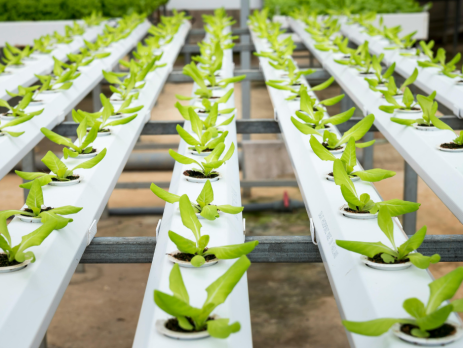
Researching strategies to protect produce from contamination

Food contamination can occur at various stages from farm to table. At Louisiana State University AgCenter, researchers are studying foodborne pathogens to better understand how they are transmitted and what might be done to prevent them from contaminating fresh and processed foods.  Among the research projects are efforts to treat foods to make them less vulnerable to contamination. Those include [...]

Read more...
two scientists smile next to samples of dairy byproducts

Upcycling a problematic food waste offers a safe food additive and new market for farmers

Acid whey, a byproduct of Greek yogurt, is a major contributor to food waste and can have a negative environmental impact if not properly managed. In recent years, the production of Greek yogurt and acid-coagulated cheeses has grown, but the acid whey waste that results is not easily disposable, causing challenges for water treatment and lowering oxygen levels in [...]

Read more...
clams in an industrial sink

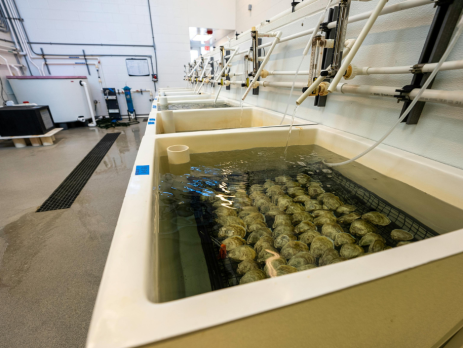
Creating biosecure standards for a growing aquaculture industry

Shellfish harvests contribute more than $1 billion annually to the New Jersey economy. Although wild caught harvests are sustainable, they are maxed out. A viable alternative is shellfish aquaculture, which can provide many environmental benefits, yet the growth of this type of farming relies on the hatchery production of seed or juvenile shellfish. Interstate transfer of seed stock to support [...]

Read more...
a strawberry plant

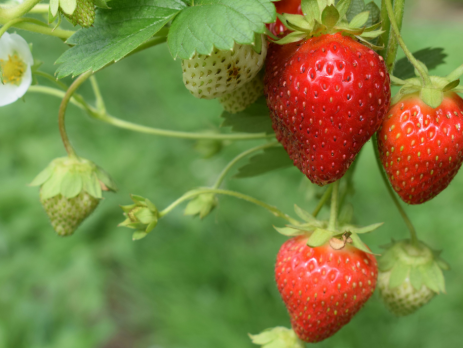
Extension helps strawberry farmers in Georgia and South Carolina save their growing season

Strawberries grown in Georgia bring in more than $15 million in sales annually, but the true value of growing strawberries is in agritourism — farms that open their doors to families to come pick fruit and enjoy a taste of farm life. For the past four years, the strawberry business in Georgia has been hindered by a new, highly [...]

Read more...
four people in beekeeper suits examine honeycombs from a beehive

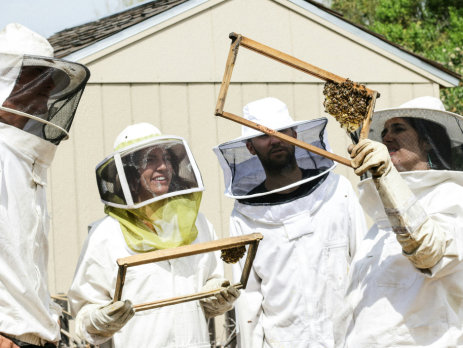
Extension assists Michigan beekeepers to improve honeybee management

The Michigan State University Extension apiculture team partnered with the Michigan Beekeepers Association to conduct a needs assessment of the state’s small-scale beekeepers. Keeping bee colonies alive and disease identification and management were identified as the most important issues. An Extension apiculture educator then collaborated with Michigan beekeeping clubs to deliver in-person education on managing varroa mites and integrated pest management, [...]

Read more...
cattle in a smoky wooded area

Wildfire smoke research provides insights to help ranchers protect their herds and reduce stress

Wildfires that scorched nearly 2 million acres in Eastern Oregon exposed many local cattle to significant levels of wildfire smoke. In the aftermath, cows across the state, on both dairy and beef operations, have been getting sick with symptoms like runny noses, runny eyes and severe discharge. An Oregon State University Extension Service beef specialist hypothesized that inhaling smoke dries [...]

Read more...
two scientists take a sample

Land-grant universities drive sustainability through innovative agricultural practices

The 1890 land-grant universities are dedicated to improving the well-being of economically challenged communities. By focusing on sustainable practices, these institutions help address key challenges like food security, environmental stewardship and economic resilience. Through research, Extension and education, they equip farmers and communities with innovative techniques that preserve resources for future generations. Here are a few examples of that work: Researchers [...]

Read more...
a scientist in a university laboratory

Developing the next generation of agricultural workers

A skilled workforce is critical to sustaining agriculture, advancing food security and fostering economic growth. Land-grant universities are preparing students for the agricultural workforce through hands-on training, research opportunities and industry partnerships. These programs focus on historically underserved communities, ensuring broad participation in food and agriculture careers. Here are a few examples of that work: Georgia Extension professionals are helping students [...]

Read more...
aerial view of Mediterranean food

Mediterranean diet decreases medication needs

Chronic diseases such as heart disease, stroke, cancer and diabetes remain the leading causes of death and disability in New Mexico and across the United States. The Centers for Disease Control and Prevention reports that six in 10 Americans live with at least one chronic disease, contributing to rising healthcare costs. Unhealthy diets, obesity and physical inactivity are key [...]

Read more...