Tag - Fort Valley State University

Institution

a person uses a desktop computer at a library

Connecting rural communities through digital opportunities and education

Limited availability of reliable broadband and digital tools continues to restrict educational attainment, workforce participation and access to essential services in rural Georgia. Communities surrounding Fort Valley State University face persistent digital inequities that disproportionately affect seniors, youth and low-income households. Addressing these gaps is critical to strengthening rural economies and improving service access.  Fort Valley State University Cooperative Extension [...]
Read more...
power lines in a field

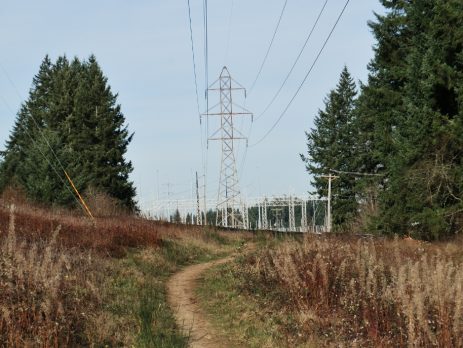
Connecting communities through digital skills, broadband initiatives

Extension programs at land-grant universities address community needs nationwide by expanding digital infrastructure, supporting economic development and building technology skills. These efforts strengthen educational connections and learning opportunities for families, youths and older adults. Here are a few examples of that work: Illinois Extension is partnering statewide to expand broadband planning, funding and adoption. Since 2020, these efforts have leveraged $228 [...]

Read more...
teens engaging in activities at a workshop

4-H programs prepare youth for college and careers

Professional skills like leadership, communication, problem solving and responsibility are important in any job or career. Land-grant university Extension 4-H programs help youth cultivate these skills to better prepare them for higher education and eventual employment. Here are a few examples of that work: After Missouri employers reported needs for workers skilled in communication, problem solving and collaboration, Extension specialists updated [...]

Read more...
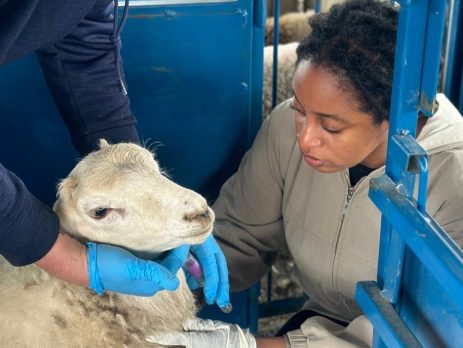
a vet giving a sheep a vaccine

Enhancing food safety with research and training

The United States food supply is among the safest in the world, but every day news stories report food recalls for a variety of safety reasons. Food safety must be maintained through every step of the production process, and land-grant institutions are the key to research and training that helps the food industry provide safe, healthy food. Here are a [...]

Read more...
Tahirah Johnson examines testing samples under a magnifying glass in a research lab on the University of Maryland Campus in 2024.

Innovative methods for safer, healthier food production practices

Regional food production is critical to local economies and supporting American food systems. Rising reports of foodborne illnesses, increased antibiotic resistance and newer production systems like soilless agriculture necessitate a better understanding of the risks and options to improve the safety and health value of food products from produce to shellfish and tree nuts. 1890 land-grant universities are examining [...]

Read more...
Fort Valley State University scientist harvesting a ripe peach on the campus research plot.

Addressing food insecurity to drive community impact

Food security is fundamental to the health, resilience and economic vitality of rural and urban communities. Across the United States,1890 Land‑grant Universities are uniquely positioned to meet this critical need by advancing research, education and Extension programs that connect communities to practical solutions and sustainable food system innovations. Here are a few examples of that work: When food insecurity hits, older [...]

Read more...
a young boy uses a laptop

Empowering communities by advancing digital literacy

Digital literacy is essential to economic mobility, civic engagement and workforce readiness in today’s communities. Extension programs at 1890 land‑grant universities play a vital role in expanding opportunities in rural and urban communities to build technology skills and support workforce development. Here are a few examples of that work: In Georgia, an Extension initiative is strengthening connectivity and technology skills across [...]

Read more...
a group of smiling students

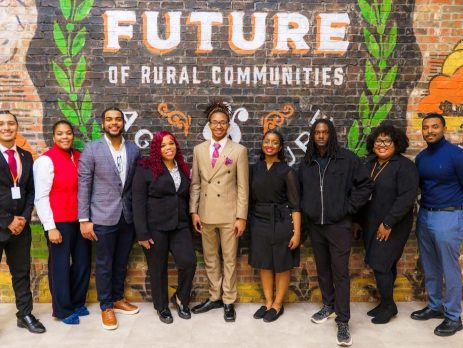
Advancing higher education and career readiness

Sectors across the agricultural landscape need more educated and skilled workers to support our national and local food systems. 1890 land-grant universities offer different pathways to introduce students to career opportunities and prepare them for employment. Here are a few examples of that work: In Tennessee, Extension leaders brought a cohort of undergraduate students to the Farm Credit Mid-America headquarters to [...]

Read more...
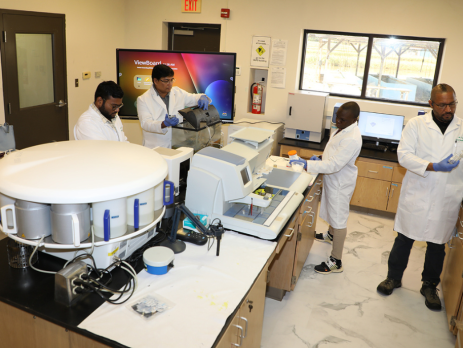
scientists in a lab

Harnessing artificial intelligence for agricultural innovation

Land-grant universities are leveraging artificial intelligence (AI) to improve agricultural efficiency, productivity and sustainability. Here are a few examples of that work: In Georgia, researchers are developing an AI-powered app to help farmers accurately identify Sericea lespedeza, a valuable forage crop with natural anthelmintic properties, reducing time ad labor costs.Fort Valley State University; USDA Capacity-Research. See full statement.   In Arkansas, researchers are [...]

Read more...
peppers

Land-grant universities foster community, student resilience

The 1890 land-grant universities are committed to strengthening communities, farmers and students through meaningful outreach initiatives. Their engagement ensures that resources are tailored to meet local needs such as food security and economic development. Through these efforts, the universities are fostering more resilient communities for generations to come. Here are a few examples of that work: A food bank needs assessment [...]

Read more...
two scientists take a sample

Land-grant universities drive sustainability through innovative agricultural practices

The 1890 land-grant universities are dedicated to improving the well-being of economically challenged communities. By focusing on sustainable practices, these institutions help address key challenges like food security, environmental stewardship and economic resilience. Through research, Extension and education, they equip farmers and communities with innovative techniques that preserve resources for future generations. Here are a few examples of that work: Researchers [...]

Read more...
a scientist in a university laboratory

Developing the next generation of agricultural workers

A skilled workforce is critical to sustaining agriculture, advancing food security and fostering economic growth. Land-grant universities are preparing students for the agricultural workforce through hands-on training, research opportunities and industry partnerships. These programs focus on historically underserved communities, ensuring broad participation in food and agriculture careers. Here are a few examples of that work: Georgia Extension professionals are helping students [...]

Read more...
a woman and child smile with a boxed laptop

Georgia 1890 land-grant pilots ecosystem for digital equity

Rural communities often lack adequate technology resources, including broadband access and personal computers for home use. Many students often do their work at public access locations, facing barriers such as limited hours, lack of transportation and limited digital skills. In response, Fort Valley State University in Georgia is reducing these barriers and increasing access for underserved students by using loaner [...]

Read more...
young woman examines a plant in her garden

Historically Black land-grant universities reach diverse communities

In 1890, the Land-grant University System was expanded to include institutions for Black citizens. Today, these institutions continue to provide access to higher education for underserved communities, and their research and Extension programs impact people worldwide through advancements in agricultural productivity and sustainability, food security, human health, and community and youth development. Here are a few examples of that work: First-time [...]

Read more...
A tractor sprays pesticides in an orchard

Safer, more sustainable pest management

Managing pests is essential to healthy, safe and productive agricultural, urban, residential and natural areas. But pesticides can cause air and water pollution and unintended harm to nontarget organisms. Pesticide exposure has also been linked to human health problems. In addition, many pests eventually develop resistance to commonly used chemicals, rendering those chemicals ineffective. Researchers and Extension educators across [...]

Read more...