Tag - University of Arkansas

Institution

fruit growing on a tree

Specialty crop growers benefit from land-grant university research

Scientists at land-grant universities are responding to local grower needs to strengthen specialty crop quality and economics. Here are a few examples of that work: Researchers in New York are studying a new threat to vineyards. Research on how the disease is spread through hoppers led to recommendations on management practices to manage the virus spread.Cornell AgriTech. See full statement.   Two-thirds of [...]

Read more...
a person wearing PPE and looking at a device

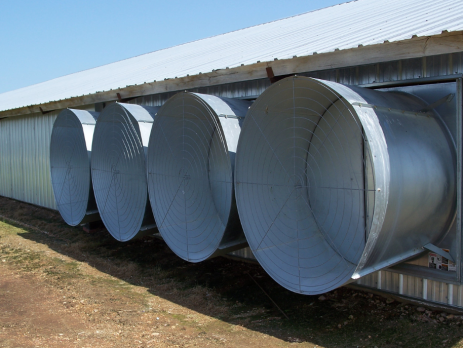
Land-grant universities support the viability of livestock production

From teaching producers biosecurity techniques to keeping poultry cool in extreme temperatures to identifying genetic traits that will optimize production, land-grant university researchers and Extension professionals are supporting the viability of livestock production in the United States. Here are a few examples of that work: Researchers at land-grant universities nationwide are developing and using advanced technologies and data to improve poultry [...]

Read more...
youth learn about financial education in a fair setting

Empowering Arkansas families to make informed financial decisions

The Financial Capability Survey revealed that nearly 20% of Arkansans report spending more than their income, and 50% do not have an emergency savings fund. Additionally, 67% could not correctly answer more than three of five questions about financial management.  Extension programs can enhance financial stability, reduce economic stress and contribute to stronger, more resilient communities. The University of Arkansas [...]

Read more...

Land-grant university research helps stakeholders lower costs with renewable energy solutions

Non-renewable energy sources are limited, and growing demand exacerbates pollution and health issues. Enhancing energy efficiency and developing renewable sources are crucial to meet demand, reduce costs, create jobs and boost rural prosperity. Reducing fossil fuel reliance improves national security and public health. Researchers and educators in the Land-grant University System are finding innovative ways to improve energy efficiency [...]

Read more...
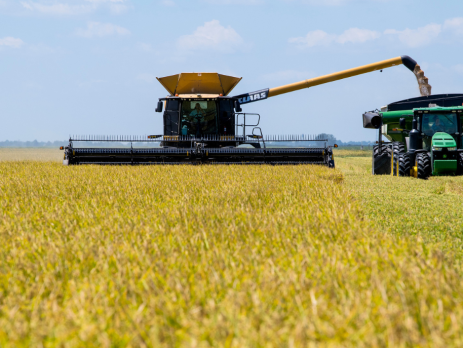
rice harvester

Developing informed guidelines for safer rice storage

Rice is a crop critical to the food security of citizens in the United States and globally, where half the world’s population relies on rice as a staple. However, an estimated 15% of rice production is lost annually due to contamination from fungi and other harmful organisms. When rice is exposed to high temperatures and humidity in storage, the [...]

Read more...
a feral hog

Trapping training helps reduce feral hog population in Arkansas

Feral hogs cause extensive economic losses in agricultural economies and impact forests, wildlife habitat and the landscape. The U.S. Department of Agriculture estimates feral hogs cause $41.3 million in crop, pasture and livestock losses annually in Arkansas alone. To address feral hog populations, Arkansas Extension agents received training in net capture systems and installed eight systems to capture the hogs. [...]

Read more...
a shot of a person from the knees down, wearing jeans and athletic shoes

Fitness programs change lifestyles and health

Physical activity that increases the heart rate helps to decrease health risks and provides additional health benefits such as improved sleep, lower cholesterol and improved mental health. Fitness programs including walking and dancing are accessible to almost anyone, easy to start and can lead to behavior changes and positively impact residents’ health and well-being by decreasing risks for obesity, [...]

Read more...
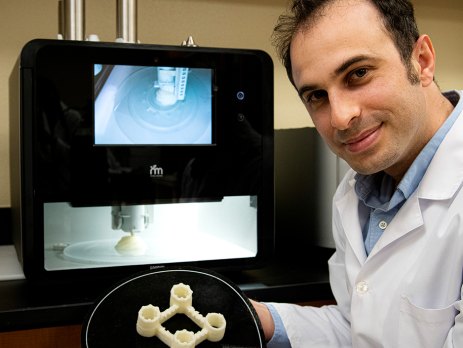
researcher displaying a 3D printed product

Making nutritious compounds more readily available to the body

Although bioactive compounds extracted from fruits and vegetables have many health benefits and are common ingredients in nutrition supplements, they are not easily absorbed during digestion and their full nutritive value is mostly wasted. A researcher with the University of Arkansas Agricultural Experiment Station working at the intersection of food engineering and human health is putting together two state-of-the-art technologies [...]

Read more...
Aerial view of a field mapped out with drone technology

Emerging technologies aid conservation and management

Climate change and biodiversity losses pose extraordinary challenges for the sustainability of natural ecosystems and the species that inhabit them. Land-grant universities are developing and applying emerging technologies that can help to more efficiently, accurately and safely monitor, measure, and precisely manage these systems with minimal environmental impact. Here are a few examples of that work: In New Hampshire, researchers found [...]

Read more...
a honeybee sits in the middle of a flower

Pollinators support agriculture profitability

Bees, flies, moths and other pollinators are essential to the environment. Pollinators improve the quality and quantity of farmers’ crop yields, which adds an estimated $18 billion in crop production revenue annually. Pollinators also support healthy ecosystems needed for clean air, stable soils and diverse wildlife. However, both wild and domesticated pollinators are at risk, most notably many wild [...]

Read more...
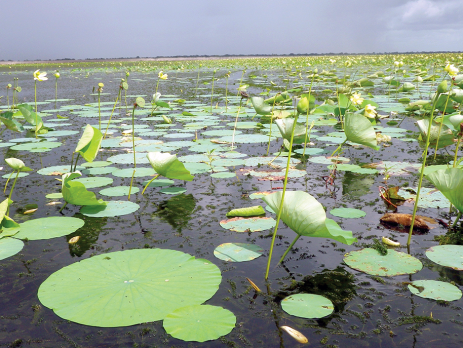
a body of water covered in lotus plants

Managing invasive species

Invasive species are organisms that are non-native to an ecosystem and whose introduction causes economic, social or environmental harm. Nearly every terrestrial, wetland and aquatic ecosystem in the United States has been invaded by non-native species, with economic losses estimated at $137 billion per year. Land-grant universities are leading the battle against invasive species. Here are a few examples of [...]

Read more...
an agricultural field

Increasing food security with better food products

Ensuring an adequate supply of safe and nutritious food requires improving existing food varieties and innovating to develop new ones. Here are a few examples of how land-grant universities are contributing: Researchers in Washington generated more than 25 unique lines of rainbow trout with many more in the pipeline. Using biotechnology, they are developing commercial trout lines with enhanced production and [...]

Read more...
scientists examines experimental plants

Improving nursery and fruit crops

Specialty crops, including fruits, floriculture and nursery crops, provide a wide range of products and play a crucial role in the American economy. Land-grant university researchers and educators provide new varieties, production practices and other innovations that help ensure a reliable supply of high-quality products for consumers. Here are a few examples of that work: North Carolina Extension educators are helping [...]

Read more...
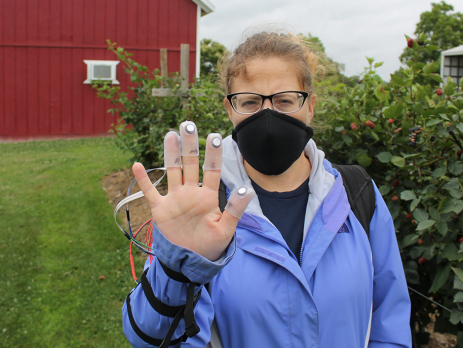
scientist in a blackberry field wearing a device with finger nodules for picking blackberries

Building a better blackberry picker

Labor is among the biggest expenses for U.S. fruit growers — 39% of production costs for fruit and tree nuts — and farm wages are rising, according to the U.S. Department of Agriculture Economic Research Service. Harvesting blackberries by hand is a costly endeavor that takes more than one-third of the hours in berry production. Mechanical harvesting of this [...]

Read more...