Tag - The Pennsylvania State University

Institution

Land-grant university research helps stakeholders lower costs with renewable energy solutions

Non-renewable energy sources are limited, and growing demand exacerbates pollution and health issues. Enhancing energy efficiency and developing renewable sources are crucial to meet demand, reduce costs, create jobs and boost rural prosperity. Reducing fossil fuel reliance improves national security and public health. Researchers and educators in the Land-grant University System are finding innovative ways to improve energy efficiency [...]

Read more...
a group of people outdoors, smiling

Cultivating mental health resilience

The Land-grant University System is tackling mental health challenges through innovative programs. Extension professionals are uniquely positioned to educate and support urban, suburban and rural communities, offering programs that teach coping skills, recognize mental health signs, and normalize conversations about mental health. Addressing mental health is crucial because it enhances overall well-being, improves quality of life and fosters healthier, [...]

Read more...
close up of experimental vials

Team finds ways to protect apples postharvest

Pennsylvania is the nation’s fourth largest producer of apples. Once these apples and other tree fruits are picked, they are sent to packing facilities where the fruit can come in contact with germs such as listeria that can survive in these cold and wet environments.  Pennsylvania State University researchers studied the seasonal changes in three different packing facilities and identified [...]

Read more...
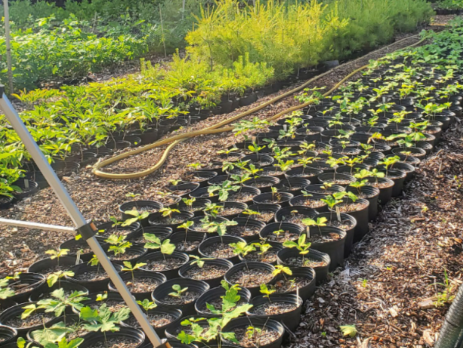
a row of potted sprouts in an experimental plot

Sourcing seeds to bolster Pennsylvania forest resiliency

Humans depend on forests for wood and other ecosystem services. In Pennsylvania, many forests suffer from insect infestations, diseases, invasive plants and climate impacts that have degraded their quality over time.   Many trees regenerate naturally, but planting trees will help to restore our forests. It’s seen as a valuable management strategy to bring the kind of species we want into [...]

Read more...
sheep in a field

Livestock education programs result in $1.5 million in savings

People need protein in their diet to maintain health. The Pennsylvania State University Livestock Extension team offered an array of educational programs to help beef cattle, goat, sheep and swine producers increase efficiency, profitability and produce a high-quality product. The team’s curriculum focused on basic production practices, reproduction, feeding, nutrition, health care, marketing practices and financial analysis. Online courses for [...]

Read more...
Dark storm clouds brewing over a field

Monitoring climate change to reduce emissions and waste

Land-grant universities are working to provide critical data, tools and strategies to help predict, monitor and mitigate climate change and its impacts on communities and natural resources. Here are a few examples of that work: Dairy waste is a major source of methane and nitrous oxide emissions, which contribute to global warming. Scientists in Washington showed that vermifiltration (which uses filters [...]

Read more...
brown chicken eggs in a carton

Improving safety of eating eggs through novel pathogen-killing method

Almost one in 10 cases of foodborne illness in the United States is associated with eggs. Americans eat, on average, 287 eggs per person annually. More than 14.1 billion eggs are incubated to produce chicks for the egg and poultry meat industries. Reducing the risk of disease-causing bacteria on eggshells is a priority for the industry, as is the [...]

Read more...
black and white cow in a field

Research identifies antibiotic resistance markers that make meat and milk safer

The World Health Organization (WHO) named resistance to antimicrobials one of the top 10 global public health threats because it decreases the effectiveness of medicines and makes infections more difficult to treat. The degree of threat this poses to the food supply is still unclear. Researchers at Pennsylvania State University led an international team that found that dairy cows [...]

Read more...
spices on a spoon

Using unique flavors to boost health

Developing dietary interventions that help to reduce increasingly common chronic diseases is an important goal for researchers and Extension professionals across the Land-Grant University System. Sometimes it is as simple as using a familiar flavor in a new way to add health benefits. Here are a few examples of that work: Louisiana ranks among the highest states in adults diagnosed with [...]

Read more...
Aerial view of a field mapped out with drone technology

Emerging technologies aid conservation and management

Climate change and biodiversity losses pose extraordinary challenges for the sustainability of natural ecosystems and the species that inhabit them. Land-grant universities are developing and applying emerging technologies that can help to more efficiently, accurately and safely monitor, measure, and precisely manage these systems with minimal environmental impact. Here are a few examples of that work: In New Hampshire, researchers found [...]

Read more...
a honeybee sits in the middle of a flower

Pollinators support agriculture profitability

Bees, flies, moths and other pollinators are essential to the environment. Pollinators improve the quality and quantity of farmers’ crop yields, which adds an estimated $18 billion in crop production revenue annually. Pollinators also support healthy ecosystems needed for clean air, stable soils and diverse wildlife. However, both wild and domesticated pollinators are at risk, most notably many wild [...]

Read more...
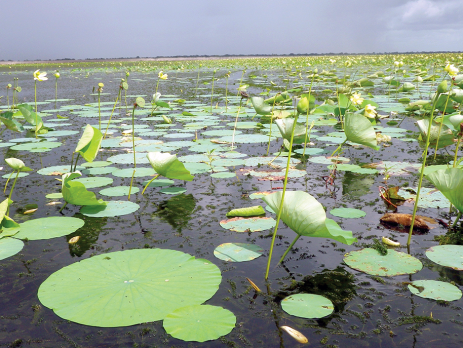
a body of water covered in lotus plants

Managing invasive species

Invasive species are organisms that are non-native to an ecosystem and whose introduction causes economic, social or environmental harm. Nearly every terrestrial, wetland and aquatic ecosystem in the United States has been invaded by non-native species, with economic losses estimated at $137 billion per year. Land-grant universities are leading the battle against invasive species. Here are a few examples of [...]

Read more...
a person's torso and hands, holding a cellphone

Gaining real-time insight on food insecurity

Social media is a great tool for immediate feedback on emergency situations. To gain an understanding of issues surrounding access to adequate food and assess how people felt about their food situation, Pennsylvania State University rural sociology researchers and international colleagues analyzed Twitter posts during the pandemic. Posts expressing anger, disgust or fear were strongly associated with actual food insufficiency [...]

Read more...
the Chesapeake Bay

Critical moments to improve Chesapeake water quality

A study by Pennsylvania State University researchers concluded that the vast majority of nutrients and sediment washed into streams flowing into the Chesapeake Bay are picked up by deluges from severe storms that occur on relatively few days of the year. The researchers say this offers clues for cleaning up the impaired estuary. A small percentage of locations and events [...]

Read more...
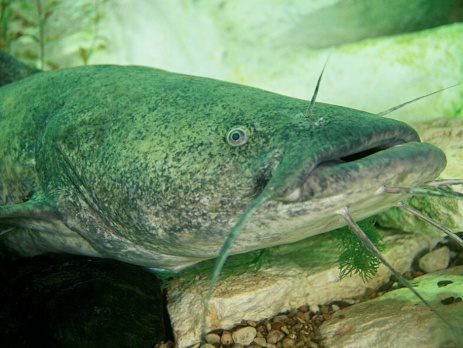
a closeup photo of the flathead catfish

Research tracks genetic diversity to help manage invasive catfish

It’s difficult to know exactly how the invasive flathead catfish is expanding into nonnative waterways in the U.S. even if we know the many possible introduction pathways. This species, which has become a popular sport fish in its introduced ranges, has been shown to have negative effects on native fish, including consumption and competition with native fish. Once introduced, the [...]

Read more...
A tractor sprays pesticides in an orchard

Safer, more sustainable pest management

Managing pests is essential to healthy, safe and productive agricultural, urban, residential and natural areas. But pesticides can cause air and water pollution and unintended harm to nontarget organisms. Pesticide exposure has also been linked to human health problems. In addition, many pests eventually develop resistance to commonly used chemicals, rendering those chemicals ineffective. Researchers and Extension educators across [...]

Read more...
a rainbow shines through sprinkler mist on a field

Protecting our water

Water continues to be one of the most critical challenges facing agriculture and communities. Land-grant universities are working to discover new ways to increase water efficiency, reduce water use and protect water quality. Here are a few examples of that work: Researchers in Ohio are working to improve soil health and water quality through best agricultural management practices to prevent non-point-source [...]

Read more...
drone flying over crop

Drones, virtual fencing, gene technology moving agriculture forward

Land-grant universities and state research agencies are using multiple technologies to solve production challenges and provide educational outreach. From using drones to assess damage following natural disasters to GPS tracking to monitor livestock within the boundaries of virtual fencing, advances in technology are helping propel food and fiber production. Successful examples include: Following Hurricane Idalia, a Category 3 hurricane, Extension educators [...]

Read more...
a group of scientists planting experimental crops

Reaching diverse farms and farmers

Extension educators and researchers across the Land-grant University System reach diverse farmers and farms through programming, information and accessible tools. Their work ensures farming resources are available to all individuals. Here are a few examples of that work: Minnesota Extension launched a pilot project to bring Minnesota-grown goat meat to halal customers. The collaboration has resulted in the first halal certified [...]

Read more...
crops growing in a field

Creating new, sustainable products from agricultural waste and biomass

Petroleum and other nonrenewable materials are commonly used for plastics, industrial chemicals, pharmaceuticals, cosmetics and other products we use on a daily basis. But many of these products can be made from biomass, including food and agricultural wastes. Bioproducts offer a way to improve energy security, food security and national security while also cutting back on fossil fuel-related pollution [...]

Read more...
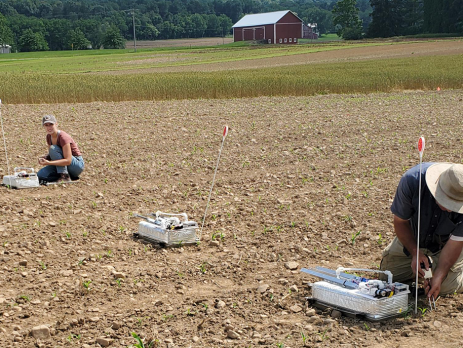
two scientists take samples and measurements in a field

Developing climate-friendly farming practices to reduce nitrous oxide emissions

Nitrous oxide is a greenhouse gas that is about 300 times better at trapping heat than carbon dioxide, so even small emissions of nitrous oxide affect the climate. Organic agricultural practices, such as legume cover crops and applications of animal manure, can curtail nutrient runoff and soil erosion when combined but at the same time release nitrous oxide. Researchers at [...]

Read more...
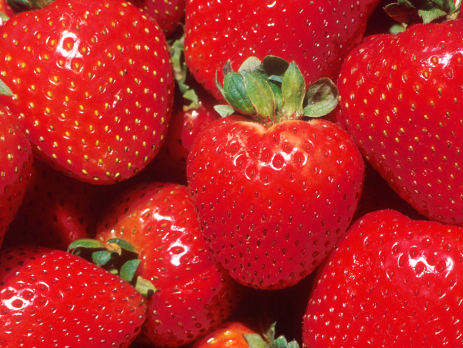
closeup photograph of pile of strawberries

Breeding crops tailored for the future

Food crops are constantly under attack by plant diseases and pests that result in losses in crop quantity and quality. Declines in crop health can lead to food waste and threaten global food security. Land-grant universities are breeding plants that are resistant to pests and disease for greater resilience and sustainability. Here are a few examples of that work: Researchers in [...]

Read more...
field with rows of crops

Healthy soils sustain food security

Researchers at the nation’s land-grant universities are studying the health of soils to increase agricultural production and decrease the use of agrochemicals used to grow food. Their work will contribute to our ability to meet the world’s growing demand for food. Here are a few examples of that work: Agricultural researchers in Pennsylvania are studying how soil salinity and soil nitrogen [...]

Read more...
free range pigs

Prompt detection of infectious animal diseases can prevent economic losses and ensure food security

A swine bacterial pathogen, Streptococcus equi subspecies zooepidemicus or “Strep zoo,” is difficult to detect with conventional methods because virulent strains show only minor genetic differences from benign bacteria commonly found in healthy pigs and other animals. High mortality Strep zoo outbreaks occurred in swine herds in Canada, Tennessee, Ohio and Pennsylvania in 2019. Different versions of the pathogen also [...]

Read more...