Tag - Southern

Region

a honeybee sits in the middle of a flower

Pollinators support agriculture profitability

Bees, flies, moths and other pollinators are essential to the environment. Pollinators improve the quality and quantity of farmers’ crop yields, which adds an estimated $18 billion in crop production revenue annually. Pollinators also support healthy ecosystems needed for clean air, stable soils and diverse wildlife. However, both wild and domesticated pollinators are at risk, most notably many wild [...]
Read more...
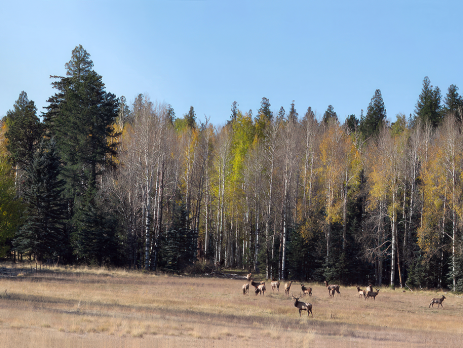
forest with wildlife

Forestlands are fundamental for healthy ecosystems

Forests are vulnerable to climate change, but when managed sustainably they can play an important role in mitigating climate change. Healthy trees provide oxygen by removing carbon dioxide from the air through photosynthesis. The carbon is stored in wood, plants and soil, helping to reduce carbon emissions. Land-grant universities are supplying research and outreach to improve our forestlands. Here are [...]

Read more...
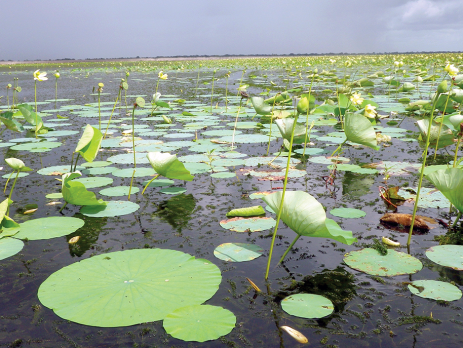
a body of water covered in lotus plants

Managing invasive species

Invasive species are organisms that are non-native to an ecosystem and whose introduction causes economic, social or environmental harm. Nearly every terrestrial, wetland and aquatic ecosystem in the United States has been invaded by non-native species, with economic losses estimated at $137 billion per year. Land-grant universities are leading the battle against invasive species. Here are a few examples of [...]

Read more...
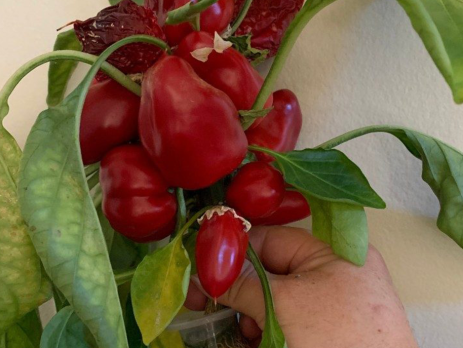
hand holding a potted pepper plant

Researchers develop new snacking pepper cultivars for indoor agriculture

Controlled environment agriculture is growing rapidly in Virginia, using fewer resources and enabling year-round planting in indoor spaces. Crops are grown vertically, with more crops grown on fewer acres. In response, Virginia Tech researchers are partnering in the development of snacking pepper cultivars suitable for growing in controlled agriculture environments. The project explores the potential of indoor agriculture to ensure [...]

Read more...
a variety of seed packets spread out on a table

Seed-sharing libraries extend plant access

A seed library is a resource where seeds are shared with community members free of charge. The North Carolina State University Extension Master Gardeners support seed-sharing libraries across the state to encourage local gardening. Typically found at libraries or community centers, gardeners, students and teachers are encouraged to check out the seeds and plant them in a garden. At the [...]

Read more...
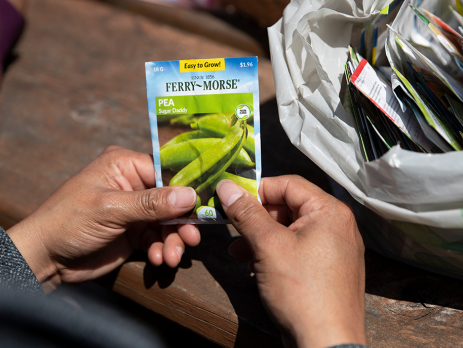
closeup of hands holding a pea seed packet. there is a bag of seed packets in the background.

Community gardens increase food security and community well-being

Based on the 2023 National Gardening Survey, 80% of American households participated in a gardening project in 2022. Through Extension trainings, seed libraries and gardening kits and the efforts of Extension Master Gardener volunteers, land-grant universities are increasing access to gardens, improving community well-being, and helping individuals learn to grow their own food. Here are a few examples of that [...]

Read more...
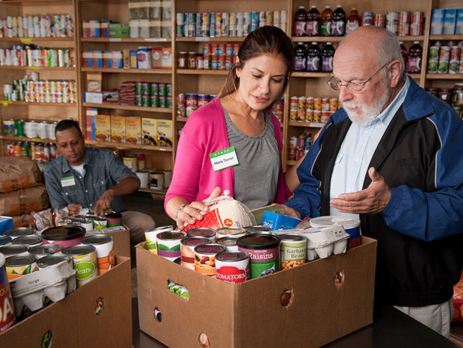
two people look in a box of food at a food pantry

Food security resources for local communities

Limited access to healthy food options can lead to problems such as poor health, chronic illness, child development and family instability. Food pantries can help people who lack adequate food resources access a range of products locally. By connecting food pantries with resources, land-grant universities are helping communities better serve those in need. Here are a few examples of that [...]

Read more...
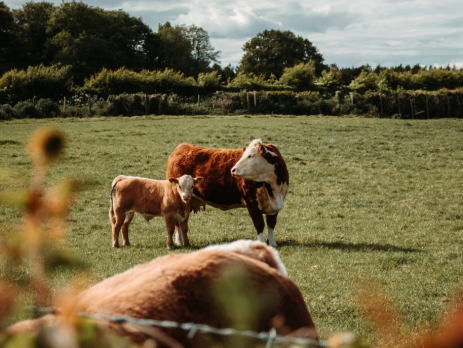
a group of cows stands in a grassy area near some trees

Research, education improve livestock health

Livestock producers are continually searching for the best management strategies to protect animal health, which is essential to productivity and profitability as well as the animal’s well-being. Maintaining healthy animals also protects human health. Here are a few examples of how land-grant universities are contributing: When the highly pathogenic avian influenza (HPAI) threatened domestic poultry in Oregon, Extension responded rapidly with [...]

Read more...
scientists examines experimental plants

Improving nursery and fruit crops

Specialty crops, including fruits, floriculture and nursery crops, provide a wide range of products and play a crucial role in the American economy. Land-grant university researchers and educators provide new varieties, production practices and other innovations that help ensure a reliable supply of high-quality products for consumers. Here are a few examples of that work: North Carolina Extension educators are helping [...]

Read more...
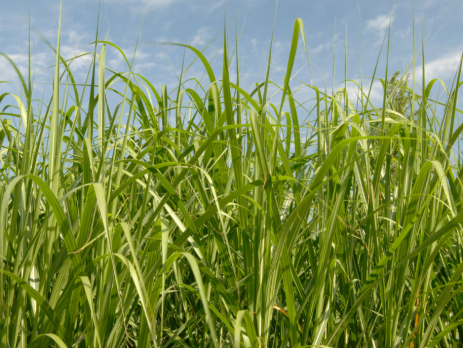
crops growing in a field

Creating new, sustainable products from agricultural waste and biomass

Petroleum and other nonrenewable materials are commonly used for plastics, industrial chemicals, pharmaceuticals, cosmetics and other products we use on a daily basis. But many of these products can be made from biomass, including food and agricultural wastes. Bioproducts offer a way to improve energy security, food security and national security while also cutting back on fossil fuel-related pollution [...]

Read more...
biodiesel fuel pump

Sustainable energy to meet growing demands

Non-renewable energy sources are limited, and demand is growing. Fossil-fuel based energy production and use contribute significantly to pollution and changes in our climate. Improving energy efficiency and developing renewable energy sources is essential to meeting growing demand and can lower energy bills, create new jobs and promote rural prosperity. Reducing reliance on fossil fuels can improve national security [...]

Read more...
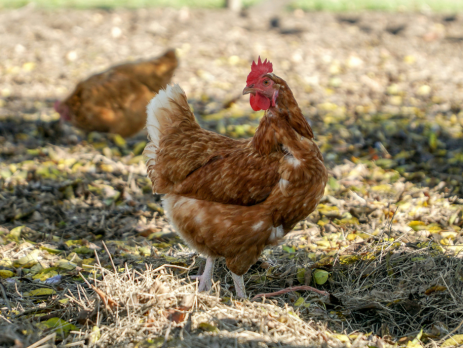
chicken in a field

Small acreage and new landowner education

Texas is experiencing rapid population growth in urban areas and, increasingly, in rural and urban-adjacent lands. This has created a rapid increase in first-time landowners and small-acreage landowners across the state. These landowners often lack knowledge on basic land management and conservation, leading to poor and varied management outcomes. Texas A&M AgriLife Extension developed a network of programs across Texas, [...]

Read more...
large barrel sized sample of substrate

Soilless solutions for resource-efficient crop production

Over the past several decades, growing plants and crops in containers instead of in the field has revolutionized global horticultural production practices. These soilless culture practices introduce new opportunities to produce crops in individual containers, offering growers complete control and increased resource-use efficiency. This shift means food can be produced near urban areas, mitigating food deserts and improving production [...]

Read more...
Texas Master Naturalist logo featuring a drawing of a dragonfly

Texas Master Naturalist volunteers contribute 6.8 million hours of service

Texas Master Naturalists combine their love for nature with a passion for service. These individuals are trained naturalists with specialized knowledge of different ecosystems, species, habitats and environmental demands. The Texas Master Naturalist (TMN) organization is sponsored by Texas Parks and Wildlife Department and Texas A&M AgriLife Extension Service. Skilled TMN volunteers work with communities and organizations across the state [...]

Read more...
A tractor sprays pesticides in an orchard

Safer, more sustainable pest management

Managing pests is essential to healthy, safe and productive agricultural, urban, residential and natural areas. But pesticides can cause air and water pollution and unintended harm to nontarget organisms. Pesticide exposure has also been linked to human health problems. In addition, many pests eventually develop resistance to commonly used chemicals, rendering those chemicals ineffective. Researchers and Extension educators across [...]

Read more...
drone flying over crop

Drones, virtual fencing, gene technology moving agriculture forward

Land-grant universities and state research agencies are using multiple technologies to solve production challenges and provide educational outreach. From using drones to assess damage following natural disasters to GPS tracking to monitor livestock within the boundaries of virtual fencing, advances in technology are helping propel food and fiber production. Successful examples include: Following Hurricane Idalia, a Category 3 hurricane, Extension educators [...]

Read more...
a group of scientists planting experimental crops

Reaching diverse farms and farmers

Extension educators and researchers across the Land-grant University System reach diverse farmers and farms through programming, information and accessible tools. Their work ensures farming resources are available to all individuals. Here are a few examples of that work: Minnesota Extension launched a pilot project to bring Minnesota-grown goat meat to halal customers. The collaboration has resulted in the first halal certified [...]

Read more...
soybean crop

New online tool facilitates information sharing for North Carolina farmers

North Carolina State Extension agents have their fingers on the pulse of statewide crop performance and emerging problems, often spotting regional patterns that are valuable to the industry. Getting that knowledge summarized for public consumption in a timely manner can be a challenge. NC State Extension recently released an online visual mapping tool to capture and share in-season crop problems [...]

Read more...
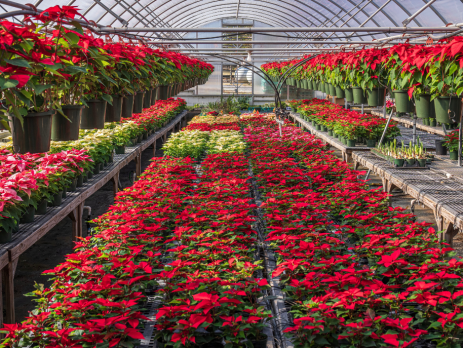
Poinsettias in a greenhouse

Plant diagnostics saves Florida poinsettia producers

The University of Florida Institute of Food and Agricultural Sciences helped save a grower $350,000 crop thanks to a weekly plant diagnostic clinic. In 2019, a new commercial grower came to the free weekly plant clinic for the second time. Just five weeks away from delivering 28,000 poinsettias to retail customers, it was initially thought the crop suffered from a [...]

Read more...
a drone flying on a blurred green and blue background

Drones assess ag damage in Georgia, support insurance-claim process

Hurricane Idalia made landfall as a Category 3 hurricane on Florida’s Gulf Coast on August 30, 2023. The storm entered Georgia at Brooks, Lowndes, and Echols counties with wind speeds around 90 miles per hour. Thousands of people were without power for up to a week. Agricultural structures and crops took a major hit. Barns and equipment sheds were [...]

Read more...
sweet potato root galls

Land-grant universities nationwide work together to sustainably manage nematodes

Nematodes are tiny, usually microscopic, roundworms that are incredibly common and widespread. They account for 80% of all individual animals on Earth. Some nematode species are beneficial to agriculture, while others have major detrimental impacts. Plant-parasitic nematodes can lead to poor soil and low crop yields. In the United States, annual economic losses due to nematode infection of crops [...]

Read more...
beef cattle in a field

Texas’ beef cattle short course, considered largest in the nation, provides education to thousands

Beef cattle production in Texas is a $9 billion industry, representing 50% of the value of all agricultural commodities. Beef cattle producers in Texas operate in widely diverse production environments across a large geographic region. Texas producers desire timely information that is relative to their specific production settings and in a forum where subject matter experts can answer questions. The [...]

Read more...
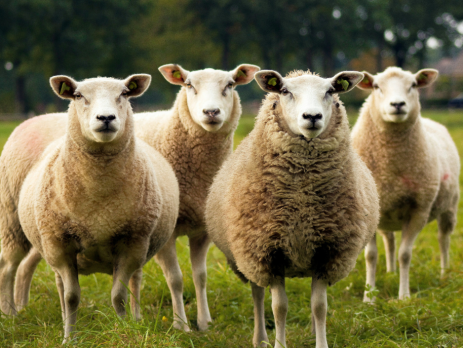
sheep in a field

Sheep producers in Texas and beyond empowered by knowledge gained at shearing school

Wool sheep require annual or biannual shearing to maintain proper health and productivity. Prior to 2016, Texas did not have any formal schools or trainings to develop sheep shearing professionals, forcing sheep farmers and ranchers to quit the sheep industry or switch to sheep that don’t require shearing. The first Texas A&M AgriLife Sheep Shearing School was held in January [...]

Read more...
pear growing on a tree

Research develops effective treatments to fight blight in apple, pear crops

Over the past several years, frequent periods of warm and wet weather during the spring in Virginia have triggered epidemics of fire blight causing $22 million per year in losses to apple and pear crops. Researchers led by Virginia Tech are developing new effective treatments utilizing fire blight bacterium Erwinia amylovora in fire blight cankers. Cankers are infected dead zones [...]

Read more...
brown chicken

Georgia researchers apply AI to track cage-free hens’ pecking behavior, welfare

Researchers at the University of Georgia Agricultural Experiment Station have used an artificial intelligence learning-based imaging system for automatically monitoring chicken pecking behavior. Severe pecking has been estimated to occur in 40% to 50% of cage-free flocks and is one of the primary reasons for increased mortality. Chicken mortality is doubled in cage-free systems compared to conventional caged systems. Egg [...]

Read more...