Tag - 2024

Year

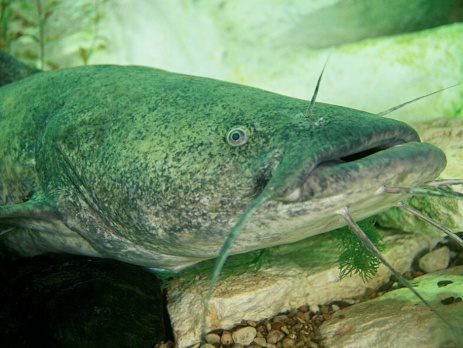
a closeup photo of the flathead catfish

Research tracks genetic diversity to help manage invasive catfish

It’s difficult to know exactly how the invasive flathead catfish is expanding into nonnative waterways in the U.S. even if we know the many possible introduction pathways. This species, which has become a popular sport fish in its introduced ranges, has been shown to have negative effects on native fish, including consumption and competition with native fish. Once introduced, the [...]

Read more...
a Michigan lake with plants growing on the water and around the shore

Online course increases lake literacy and protects Michigan’s waterways

Michigan’s 11,000 inland lakes are complex ecosystems, and communities often struggle to protect and manage them in a way that incorporates the best available knowledge and resources. To increase lake literacy and create peer and resource connections to help property owners, community leaders and concerned citizens address management concerns, Michigan State University Extension educators created an Introduction to Lakes Online [...]

Read more...
nature trail surrounded by native Nevada plants

Trainings aim to reduce pesticide contamination in urban waterways

Nevada’s population is growing significantly, particularly in urban regions. Pesticide residue in waterways – especially from products used for nonagricultural purposes – underscores the need for education among landscape professionals, pesticide applicators and residents controlling pests in urban areas. Over the last decade, University of Nevada Cooperative Extension has developed integrated pest management (IPM) education that has led to a [...]

Read more...
drone flying over crop

Drones, virtual fencing, gene technology moving agriculture forward

Land-grant universities and state research agencies are using multiple technologies to solve production challenges and provide educational outreach. From using drones to assess damage following natural disasters to GPS tracking to monitor livestock within the boundaries of virtual fencing, advances in technology are helping propel food and fiber production. Successful examples include: Following Hurricane Idalia, a Category 3 hurricane, Extension educators [...]

Read more...
A tractor sprays pesticides in an orchard

Safer, more sustainable pest management

Managing pests is essential to healthy, safe and productive agricultural, urban, residential and natural areas. But pesticides can cause air and water pollution and unintended harm to nontarget organisms. Pesticide exposure has also been linked to human health problems. In addition, many pests eventually develop resistance to commonly used chemicals, rendering those chemicals ineffective. Researchers and Extension educators across [...]

Read more...
a group of scientists planting experimental crops

Reaching diverse farms and farmers

Extension educators and researchers across the Land-grant University System reach diverse farmers and farms through programming, information and accessible tools. Their work ensures farming resources are available to all individuals. Here are a few examples of that work: Minnesota Extension launched a pilot project to bring Minnesota-grown goat meat to halal customers. The collaboration has resulted in the first halal certified [...]

Read more...
a rainbow shines through sprinkler mist on a field

Protecting our water

Water continues to be one of the most critical challenges facing agriculture and communities. Land-grant universities are working to discover new ways to increase water efficiency, reduce water use and protect water quality. Here are a few examples of that work: Researchers in Ohio are working to improve soil health and water quality through best agricultural management practices to prevent non-point-source [...]

Read more...
a group of cows stands in a grassy area near some trees

Research, education improve livestock health

Livestock producers are continually searching for the best management strategies to protect animal health, which is essential to productivity and profitability as well as the animal’s well-being. Maintaining healthy animals also protects human health. Here are a few examples of how land-grant universities are contributing: When the highly pathogenic avian influenza (HPAI) threatened domestic poultry in Oregon, Extension responded rapidly with [...]

Read more...
scientists examines experimental plants

Improving nursery and fruit crops

Specialty crops, including fruits, floriculture and nursery crops, provide a wide range of products and play a crucial role in the American economy. Land-grant university researchers and educators provide new varieties, production practices and other innovations that help ensure a reliable supply of high-quality products for consumers. Here are a few examples of that work: North Carolina Extension educators are helping [...]

Read more...
crops growing in a field

Creating new, sustainable products from agricultural waste and biomass

Petroleum and other nonrenewable materials are commonly used for plastics, industrial chemicals, pharmaceuticals, cosmetics and other products we use on a daily basis. But many of these products can be made from biomass, including food and agricultural wastes. Bioproducts offer a way to improve energy security, food security and national security while also cutting back on fossil fuel-related pollution [...]

Read more...
biodiesel fuel pump

Sustainable energy to meet growing demands

Non-renewable energy sources are limited, and demand is growing. Fossil-fuel based energy production and use contribute significantly to pollution and changes in our climate. Improving energy efficiency and developing renewable energy sources is essential to meeting growing demand and can lower energy bills, create new jobs and promote rural prosperity. Reducing reliance on fossil fuels can improve national security [...]

Read more...
closeup photo of pills falling out of a prescription bottle

Protecting the environment from pharmaceuticals

Up to 29% of pharmaceuticals — both prescription and over-the-counter medications — and personal care products enter the environment each year untreated through human waste and improper disposal. Many water treatment plants are incapable of removing all the harmful chemicals from water systems. Although this is a fairly new area of study, these products are known to have adverse [...]

Read more...
chicken in a field

Small acreage and new landowner education

Texas is experiencing rapid population growth in urban areas and, increasingly, in rural and urban-adjacent lands. This has created a rapid increase in first-time landowners and small-acreage landowners across the state. These landowners often lack knowledge on basic land management and conservation, leading to poor and varied management outcomes. Texas A&M AgriLife Extension developed a network of programs across Texas, [...]

Read more...
cut lumber

Addressing workforce needs for Indiana’s hardwood industries

The hardwood industry in Indiana contributes $17 billion in value-added to the Indiana economy. With 3 to 10 job openings in wood products manufacturing for every qualified applicant, the lack of skilled hardwood employees is a significant impediment to growth for companies and the sustainable management of woodlands. To address the need for a workforce able to solve issues related [...]

Read more...
lake in Wisconsin

Wisconsin farmers learn strategies to implement practices that protect local waterways

Agriculture is the dominant land use in Wisconsin. Current farming practices have a significant impact on soil and nutrient loss to surface and groundwater. The majority of water bodies included on Wisconsin’s Impaired Waters List are a result of excess phosphorus, creating eutrophic conditions – and many are located in predominately agricultural watersheds. Groundwater pollution from agriculture also presents [...]

Read more...
pear growing on a tree

Research develops effective treatments to fight blight in apple, pear crops

Over the past several years, frequent periods of warm and wet weather during the spring in Virginia have triggered epidemics of fire blight causing $22 million per year in losses to apple and pear crops. Researchers led by Virginia Tech are developing new effective treatments utilizing fire blight bacterium Erwinia amylovora in fire blight cankers. Cankers are infected dead zones [...]

Read more...
plants growing in a raised garden

Urban farm learning lab providing access to fresh, healthy food options

The Cornell Cooperative Extension Oneida Urban Farm Learning Lab in New York provides educational programming and resources to aspiring farmers and growers who face small business startup barriers within urban communities. The program addresses increasing interest in urban farming in the cities of Utica and Rome. It helps community members overcome challenges such as space, knowledge, experience and money [...]

Read more...
brown chicken

Georgia researchers apply AI to track cage-free hens’ pecking behavior, welfare

Researchers at the University of Georgia Agricultural Experiment Station have used an artificial intelligence learning-based imaging system for automatically monitoring chicken pecking behavior. Severe pecking has been estimated to occur in 40% to 50% of cage-free flocks and is one of the primary reasons for increased mortality. Chicken mortality is doubled in cage-free systems compared to conventional caged systems. Egg [...]

Read more...
two people look at a financial document

Wisconsin farmer focus group program aims to improve profitability

Following record-high farm income in 2022, Wisconsin farmers in 2023 saw rising interest expenses, increasing debt and reduced working capital due to lower-than-expected commodity prices. To make sound, strategic financial decisions, the University of Wisconsin Extension partnered with 12 agricultural associations and community organizations, including the Wisconsin Farm Bureau, to implement focus group discussions with more than 120 participants. The [...]

Read more...
closeup photograph of pile of strawberries

Breeding crops tailored for the future

Food crops are constantly under attack by plant diseases and pests that result in losses in crop quantity and quality. Declines in crop health can lead to food waste and threaten global food security. Land-grant universities are breeding plants that are resistant to pests and disease for greater resilience and sustainability. Here are a few examples of that work: Researchers in [...]

Read more...
pesticides for spotted lanternflies

Bilingual Spray Safe, Spray Well recordings provide permanent resource for pesticide safety

Beginning organic growers, urban farmers and Spanish-speaking vegetable producers have been historically underserved by traditional cooperative Extension efforts to support agricultural risk management, especially related to safe and effective pesticide use. Production systems commonly used by beginning organic growers and urban farmers are often smaller, more intensive and less dependent on chemical control strategies for pest management than larger [...]

Read more...
field with rows of crops

Healthy soils sustain food security

Researchers at the nation’s land-grant universities are studying the health of soils to increase agricultural production and decrease the use of agrochemicals used to grow food. Their work will contribute to our ability to meet the world’s growing demand for food. Here are a few examples of that work: Agricultural researchers in Pennsylvania are studying how soil salinity and soil nitrogen [...]

Read more...
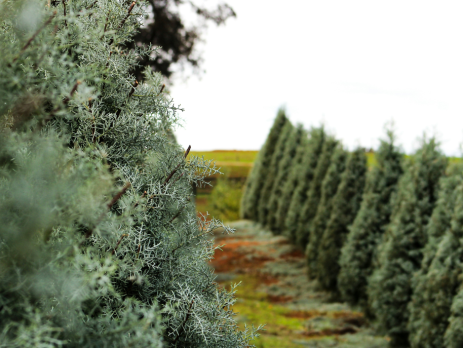
a Christmas tree farm

Research improves Christmas tree production in Connecticut

Two or three Christmas trees are planted for every one that is harvested. This implies that only 33% to 50% of planted trees survive to become salable, and this in turn translates into shortages in the availability of salable trees and higher costs for consumers. Many trees are lost when they are newly planted into growers’ fields, and many [...]

Read more...
soybean crop

New online tool facilitates information sharing for North Carolina farmers

North Carolina State Extension agents have their fingers on the pulse of statewide crop performance and emerging problems, often spotting regional patterns that are valuable to the industry. Getting that knowledge summarized for public consumption in a timely manner can be a challenge. NC State Extension recently released an online visual mapping tool to capture and share in-season crop problems [...]

Read more...
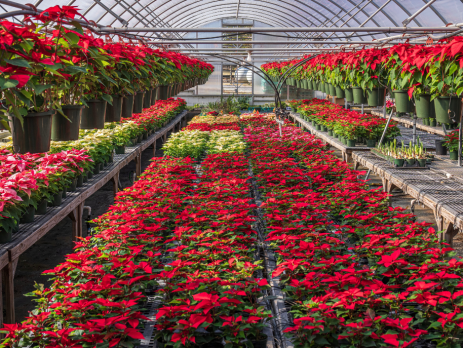
Poinsettias in a greenhouse

Plant diagnostics saves Florida poinsettia producers

The University of Florida Institute of Food and Agricultural Sciences helped save a grower $350,000 crop thanks to a weekly plant diagnostic clinic. In 2019, a new commercial grower came to the free weekly plant clinic for the second time. Just five weeks away from delivering 28,000 poinsettias to retail customers, it was initially thought the crop suffered from a [...]

Read more...