Tag - The University of Georgia

Institution

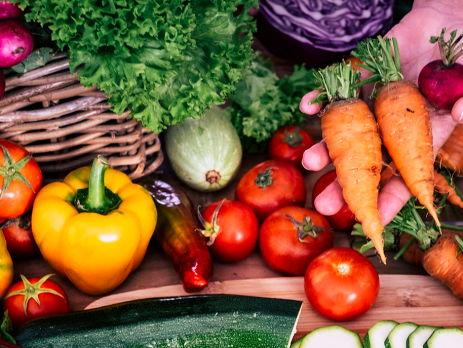
A hand holds carrots and a beet among a spread of other vegetables.

Getting more local, fresh produce into communities

Although fresh fruits and vegetables are key to health, difficulties abound in obtaining local produce. Land-grant institutions across the country work in a number of ways to promote growing produce as well as marketing and buying it locally. Here are a few examples of that work: In Georgia, the Fresh on DeK Mobile Farmers Market targets communities without access to a [...]
Read more...
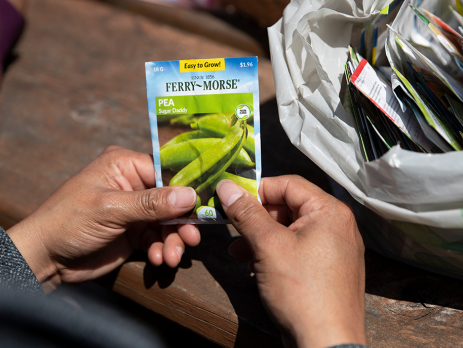
closeup of hands holding a pea seed packet. there is a bag of seed packets in the background.

Community gardens increase food security and community well-being

Based on the 2023 National Gardening Survey, 80% of American households participated in a gardening project in 2022. Through Extension trainings, seed libraries and gardening kits and the efforts of Extension Master Gardener volunteers, land-grant universities are increasing access to gardens, improving community well-being, and helping individuals learn to grow their own food. Here are a few examples of that [...]

Read more...
an agricultural field

Increasing food security with better food products

Ensuring an adequate supply of safe and nutritious food requires improving existing food varieties and innovating to develop new ones. Here are a few examples of how land-grant universities are contributing: Researchers in Washington generated more than 25 unique lines of rainbow trout with many more in the pipeline. Using biotechnology, they are developing commercial trout lines with enhanced production and [...]

Read more...
drone flying over crop

Drones, virtual fencing, gene technology moving agriculture forward

Land-grant universities and state research agencies are using multiple technologies to solve production challenges and provide educational outreach. From using drones to assess damage following natural disasters to GPS tracking to monitor livestock within the boundaries of virtual fencing, advances in technology are helping propel food and fiber production. Successful examples include: Following Hurricane Idalia, a Category 3 hurricane, Extension educators [...]

Read more...
a group of scientists planting experimental crops

Reaching diverse farms and farmers

Extension educators and researchers across the Land-grant University System reach diverse farmers and farms through programming, information and accessible tools. Their work ensures farming resources are available to all individuals. Here are a few examples of that work: Minnesota Extension launched a pilot project to bring Minnesota-grown goat meat to halal customers. The collaboration has resulted in the first halal certified [...]

Read more...
A tractor sprays pesticides in an orchard

Safer, more sustainable pest management

Managing pests is essential to healthy, safe and productive agricultural, urban, residential and natural areas. But pesticides can cause air and water pollution and unintended harm to nontarget organisms. Pesticide exposure has also been linked to human health problems. In addition, many pests eventually develop resistance to commonly used chemicals, rendering those chemicals ineffective. Researchers and Extension educators across [...]

Read more...
a drone flying on a blurred green and blue background

Drones assess ag damage in Georgia, support insurance-claim process

Hurricane Idalia made landfall as a Category 3 hurricane on Florida’s Gulf Coast on August 30, 2023. The storm entered Georgia at Brooks, Lowndes, and Echols counties with wind speeds around 90 miles per hour. Thousands of people were without power for up to a week. Agricultural structures and crops took a major hit. Barns and equipment sheds were [...]

Read more...
brown chicken

Georgia researchers apply AI to track cage-free hens’ pecking behavior, welfare

Researchers at the University of Georgia Agricultural Experiment Station have used an artificial intelligence learning-based imaging system for automatically monitoring chicken pecking behavior. Severe pecking has been estimated to occur in 40% to 50% of cage-free flocks and is one of the primary reasons for increased mortality. Chicken mortality is doubled in cage-free systems compared to conventional caged systems. Egg [...]

Read more...
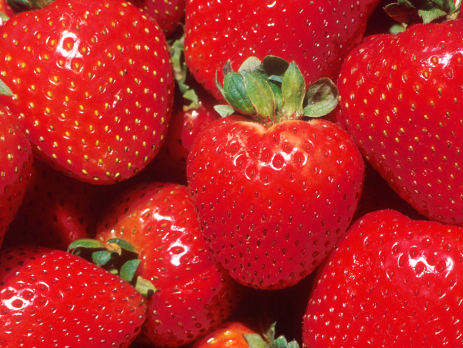
closeup photograph of pile of strawberries

Breeding crops tailored for the future

Food crops are constantly under attack by plant diseases and pests that result in losses in crop quantity and quality. Declines in crop health can lead to food waste and threaten global food security. Land-grant universities are breeding plants that are resistant to pests and disease for greater resilience and sustainability. Here are a few examples of that work: Researchers in [...]

Read more...
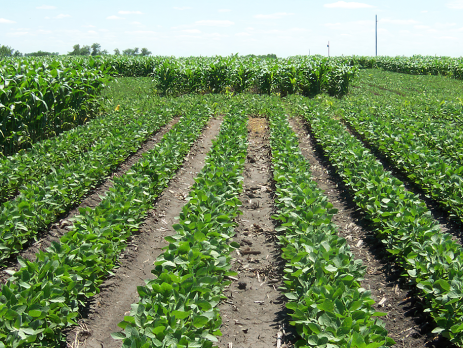
field with rows of crops

Healthy soils sustain food security

Researchers at the nation’s land-grant universities are studying the health of soils to increase agricultural production and decrease the use of agrochemicals used to grow food. Their work will contribute to our ability to meet the world’s growing demand for food. Here are a few examples of that work: Agricultural researchers in Pennsylvania are studying how soil salinity and soil nitrogen [...]

Read more...
closeup shot of turfgrass on a soccer field

Strengthening, beautifying turfgrass on the pitch

Natural grass is used in 70% of all soccer stadiums and practice fields in Mexico. However, turfgrass managers lacked professional, research-based support for managing these fields. University of Georgia Cooperative Extension was invited to help develop a certification system that trained more than 200 turfgrass professionals in Mexico’s premier soccer leagues — Liga MX, the top professional men’s soccer division, [...]

Read more...
a tractor spraying pesticides

Farm pesticide training program decreases drift complaints in Georgia

For many family farms, pesticides provide the foundation for effective pest management. The U.S. Environmental Protection Agency’s pursuit of protecting endangered species in accordance with the Endangered Species Act is challenging the practical use of these tools. In response, University of Farm pesticide training program decreases drift complaints in Georgia Extension participates in a joint effort that protects both family [...]

Read more...
two woman farmers holding chickens

Southern Women in Agriculture Workshops build confidence among female livestock producers

Animal agriculture, specifically cattle production, is a male-dominated industry. According to statistics from a 2014 U.S. Bureau of Labor Statistics report, 76% of those who identified as farmers or ranchers were male. In response to this disparity, female agricultural agents from University of Georgia Extension collaborated to develop Southern Women in Agriculture Workshops in 2016. The workshops were discontinued in [...]

Read more...