Land-grant university research and Extension support resilience for youths, families and communities nationwide
Here are a few examples of that work:
- The effectiveness of the Department of Defense’s Military Family Readiness System depends on well-trained Extension professionals with research-based tools and resources. Extension specialists in Kentucky contributed by providing personal finance training to military service providers so they can pass on knowledge, tools and resources that help military families prevent and navigate financial crises, reduce debt and build long-term economic security. Between July 2024 and June 2025, more than 2,317 military service providers across the nation participated in the program.
University of Kentucky. Supported by Smith-Lever (3b&c) capacity funds.
- An Extension program in Colorado gives rural caregivers the tools and education they need to be able to support quality of life among aging Americans and help them manage emotional and financial challenges. Caregivers reported increased understanding of succession planning, wills and trusts, advance directives and dementia care. Proactive emergency planning has empowered families to face incidents with greater clarity and reduced stress.
Colorado State University Extension.
- Coordinated by Extension professionals in multiple states, Mental Health First Aid programs equip community members with knowledge, skills and resources to recognize and respond effectively to mental health challenges. In South Dakota, these trainings contributed to earlier intervention and have likely played a role in suicide deaths dropping in the state for the first time in 2023. In Missouri, professionals reached more than two million Missourians with free mental health education, suicide prevention programs and teletherapy services across all 114 counties, generating an estimated $387,921 in public value between September 2024 and September 2025. Extension professionals in Indiana offer a version of the program tailored for adults who work with teens. Evaluation data showed substantial gains in knowledge and readiness to act among trainees.
SDSU Extension; University of Missouri Extension; Purdue Extension. Supported by Smith-Lever (3b&c) capacity funds; USDA competitive funds.
- To address disproportionately high levels of stress and suicide risk among farmers, Extension programs across the country provide mental health resources, including free counseling, peer groups and locally and culturally relevant events. Extension professionals in Washington maintain a clearinghouse of farmer assistance resources, which have helped reduce suicide deaths. In Illinois, a regional farm and stress assistance center provided support to more than 11,000 agricultural supporters and 18,000 producers through behavioral health services, support groups and more than 20,000 hotline calls across 12 states in the last three years. In North Carolina, land-grant universities coordinated and expanded mental health services for farmers affected by Hurricane Helene, helping them recover mentally, emotionally and financially.
Washington State University Extension. Supported by USDA competitive funds; state appropriations. Illinois Agricultural Experiment Station. Supported by USDA competitive funds. North Carolina A&T Cooperative Extension Program. Supported by AFRI.
- Extension educators served 233 families in Maine with home visits that included child health screenings. Many families received referrals to early intervention services, which can reduce the long-term impacts of developmental delays, learning disorders and behavioral and social-emotional challenges.
University of Maine Cooperative Extension. Supported by state appropriations.
- In Ohio, a program is improving maternal preparedness, emotional stability, birth outcomes, and postpartum well-being. Stronger maternal health translates to healthier infants, reduced emergency and long-term health care costs and more stable families
Central State University – Extension. Supported by 1890 Extension capacity funds.
- Extension professionals in Arkansas provided training and resources to thousands of early childcare providers, fostering safe, supportive, high-quality early childhood environments that strengthen families and enhance community well-being.
University of Arkansas Cooperative Extension Service. Supported by state appropriations.
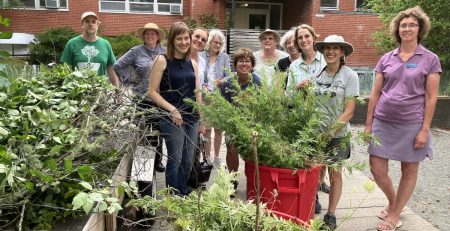
- Community garden programs support food security and community well-being by increasing local access to fresh food, green space and physical activity opportunities. A program in New York helped nearly 1,000 urban commercial and home gardeners identify affordable vacant lots to transform into gardens and provided planting, maintenance and harvest education. In 2025, Virginia Grow Wise households harvested 18,420 pounds of produce and shared 1,582 pounds within the community. In Missouri, nearly 300 community and school gardens supported by Extension programs helped communities recover from pandemic-related supply chain disruptions and supported food pantries. Through a network of community farms, Extension professionals in Utah are teaching refugee and Native American communities how to grow their own produce for food and to sell. Over $697,000 in revenue was generated by participants who chose to sell their produce.
Cornell Cooperative Extension; Virginia Cooperative Extension; University of Missouri Extension; Utah Agricultural Experiment Station. Supported by Smith-Lever (3b&c) capacity funds.
- Extension specialists in Michigan provide homeownership education, improving financial decision-making and pathways to housing stability.
Michigan State University Extension. Supported by Smith-Lever (3b&c) capacity funds; state appropriations.
- Extension professionals conducted the first-ever statewide risk assessment of private well water in Montana, analyzing 84,000 water quality data points from 6,500 wells across 51 watersheds. Testing and well-owner education has influenced actions that improve drinking water safety and community health.
Montana Agricultural Experiment Station. Supported by state appropriations; Smith-Lever 3d capacity funds.
- Extension personnel in Texas collaborated closely with emergency management teams to provide critical assistance with disaster recovery efforts after major wildfires and floods. Personnel set up disaster recovery centers, which served as centralized locations where individuals accessed federal, state and local resources. Extension specialists offered resources on mold remediation guidance, cleaning protocols for flooded homes, information about state relief funds and mental health support, among other services. In addition, over $155,000 worth of fencing, hay and feed was provided to landowners to replace what was destroyed by the floods and wildfires. This kind of rapid, comprehensive disaster response helps meet communities’ short- and long-term needs.
Texas A&M AgriLife Extension. Supported by state appropriations.
- To address volunteer firefighter recruitment and retention challenges in West Virginia, Extension professionals led a well-attended junior firefighter camp for teens, providing hands-on training on fire safety, emergency response skills, teamwork, leadership and service culture. Program results demonstrate strong workforce readiness, with 98%of participants planning to pursue the next level of firefighter certification. Based on national estimates of volunteer firefighter value, participating youth represent a projected $2.5 million in potential annual service value to West Virginia’s emergency response system, improving long-term public safety and community resilience.
West Virgina University. Supported by Smith-Lever (3b&c) capacity funds.
- An Extension program in Hawai’i strengthened disaster preparedness and community resilience by equipping 530 teens with skills in emergency response, first aid and fire suppression. Participants extended emergency planning support to more than 1,600 families, building a new generation of confident, community-based disaster responders.
University of Hawai’i Manoa College of Tropical Agriculture & Human Resilience, Cooperative Extension Service. Supported by USDA Capacity – Extension; non-profit grants and contracts.
- In multiple states, the 4-H SeaPerch program prepared youths for STEM careers through hands-on experience designing, building and testing underwater robotic vehicles. In Louisiana, rapid program growth and strong university and industry partnerships are building a STEM workforce pipeline, equipping youths with competitive technical skills employers are seeking.
LSU Ag Center. Supported by state appropriations; non-profit grants and contracts.
- Extension professionals in Arkansas lead an aquaponics program for middle school students that encourages STEM learning and supports the development of future leaders in agriculture and sustainability while also providing fresh, nutritious food to the community.
University of Arkansas Cooperative Extension Service – University of Arkansas at Pine Bluff. Supported by USDA Capacity – Extension.
- In Georgia, 4-H launched an innovative Ag Tech program to prepare youth and farmers for the increasing demand for STEM skills in agricultural careers.
University of Georgia Cooperative Extension; Other Appropriations.
- To help aspiring entrepreneurs build a firm foundation, Extension professionals in Alabama offer business startup training. They equip individuals with essential resources, professional networks and business-planning skills to support long-term success. Sixty-eight participants received grants to help launch their businesses.
Alabama Cooperative Extension System – Alabama A&M University. Supported by 1890 Extension capacity funds.