Tag - International/Global

Topic

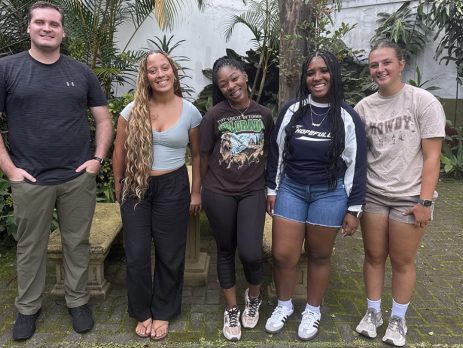
a group of smiling college students

Immersive study abroad builds language skills and global readiness in Arkansas

University students must develop foreign language fluency and cross-cultural competence to remain competitive in today’s global workforce. Traditional classroom instruction often limits opportunities for real-world language practice and cultural immersion, creating gaps in applied communication skills. University of Arkansas at Pine Bluff, through its Office of International Programs and Studies and the Department of English, Humanities and Foreign Languages, launched [...]

Read more...

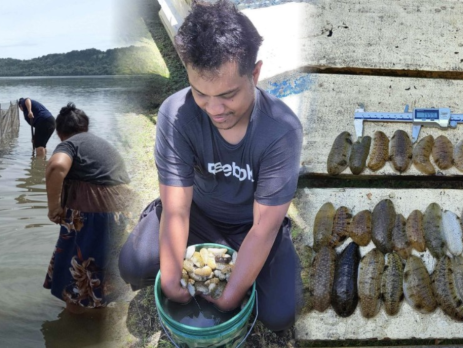
Making aquaculture more productive, safe and economical

The seafood industry is economically vital and provides an important source of protein for the world. Challenges to aquaculture include inefficient production methods, expensive feed inputs and food safety. Land-grant efforts are protecting and promoting this booming industry. Here are a few examples of that work: As feed is the most expensive cost of aquaculture, researchers in Alabama are developing feeds [...]

Read more...
A researcher injects a tick embryo under the microscope.

International collaboration to attack the cattle fever tick

Building on previous success developing genetic tools to combat deer ticks, researchers in Nevada are partnering with those in Uruguay to genetically modify cattle tick genes.  Cattle fever ticks were largely eradicated in the United States but sporadically show up in outbreaks tied to cross-border movement. Current control methods rely heavily on chemical pesticides, which can harm humans, pass into [...]

Read more...
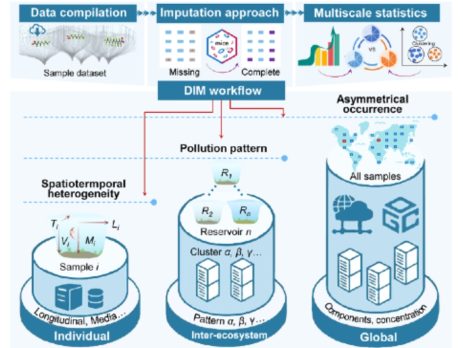
figure of reservoir containers

Researchers investigate contamination in global reservoirs

Reservoirs are an important drinking water source. As populations grow, large amounts of plastic, pharmaceuticals and other chemicals are released into the environment, polluting drinking water.   Researchers from the New Mexico Agricultural Experiment Station are part of an international collaboration that applied a data-driven framework to investigate contaminants in reservoirs around the world. They looked at microplastics, antibiotics, PFAS (Per- [...]

Read more...
a scientist in a university laboratory

Developing the next generation of agricultural workers

A skilled workforce is critical to sustaining agriculture, advancing food security and fostering economic growth. Land-grant universities are preparing students for the agricultural workforce through hands-on training, research opportunities and industry partnerships. These programs focus on historically underserved communities, ensuring broad participation in food and agriculture careers. Here are a few examples of that work: Georgia Extension professionals are helping students [...]

Read more...
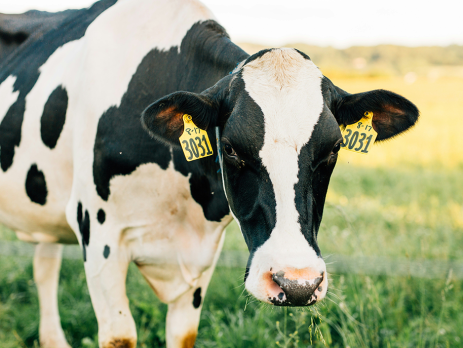
black and white cow in a field

Research identifies antibiotic resistance markers that make meat and milk safer

The World Health Organization (WHO) named resistance to antimicrobials one of the top 10 global public health threats because it decreases the effectiveness of medicines and makes infections more difficult to treat. The degree of threat this poses to the food supply is still unclear. Researchers at Pennsylvania State University led an international team that found that dairy cows [...]

Read more...
aerial view of a combine harvester

Assessing effects of international conflict on U.S. ag markets

International conflicts, like the war in Ukraine, can greatly affect agricultural markets in the United States. To help producers better plan for these impacts, economists at Kansas State University began a monthly series of webinars to provide real-time analysis and education. Market impacts included grain and livestock fluctuations, interest rate hikes, fuel and fertilizer cost increases and availability as well [...]

Read more...