Tag - North Central

Region

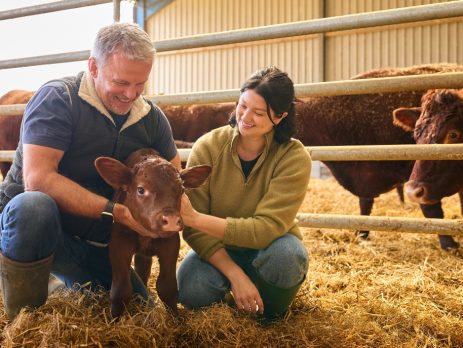
a farmer couple smile at a calf

Supporting producer safety, health and well-being

The U.S. Centers for Disease Control suggests that agriculture is one of the most dangerous businesses in the United States. An estimated 160 agricultural workers are injured every day, resulting in more than 58,000 injuries a year. According to a 2019 USDA report, approximately 19% of farmers have a disability. Land-grant universities are providing training to reduce injuries, support behavioral health and enable [...]

Read more...
A smiling woman in a green shirt and maroon cap crouches in a sunny field, harvesting a head of deep red leaf lettuce. She is working in a well-tended garden plot with irrigation lines, representing local agricultural impact and food production

Strengthening the agricultural workforce for the future

The workforce is changing. Across industries and states, trained workers are in demand to support local food systems, meet community needs, ensure safety and increase productivity. Land-grant universities are rising to the challenge of meeting these needs through partnerships, trainings, certifications and hands-on learning opportunities that strengthen the agricultural workforce. Here are a few examples of that work: Health and safety [...]

Read more...
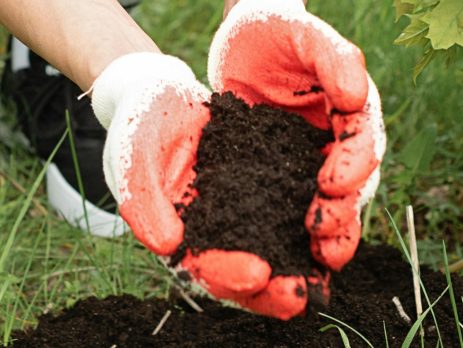
hands holding soil

Soil fertility research and education drive cost-effective crop production

South Dakota agriculture depends on efficient soil fertility management to remain profitable and environmentally sustainable. With more than 42 million acres in crop production, fertilizer represents one of the largest input costs for producers—accounting for roughly 27% of direct production expenses. Applying fertilizer at the correct rate, time and placement is critical to maximizing yields while avoiding unnecessary costs [...]

Read more...
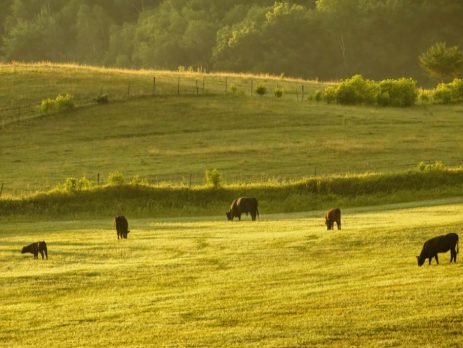
cows grazing

Soil carbon under managed grazing in Southern Wisconsin

Building organic carbon soil (SOC) on agricultural land is an important strategy for stabilizing the climate by storing carbon that would otherwise contribute to greenhouse gas emissions. Perennial grasslands managed for dairy and beef production are often promoted for their ability to increase SOC while also improving water quality, reducing flooding, enhancing biodiversity and supporting profitable farms. However, the [...]

Read more...
three generations of farmers

Securing agriculture’s future through successful farm transitions

Kansas State Extension, University of Nebraska-Lincoln and Purdue University Extension in Indiana helped families ease the transition of farms to the next generation through a four-session educational series.  Keynote presentations were offered online addressing a wide spectrum of succession planning. From gaining a better understanding of family motivations and communications, to the complex financial and legal frameworks that govern farm [...]

Read more...
A pair of hands in yellow gloves gently hold a strawberry plant, showing a flower and immature green strawberry, in a strawberry field.

Research helps increase specialty crop profitability

Specialty crop growers provide popular products to consumers. There are many challenges to growing the products commercially. Land-grant universities support growers with research and resources that help increase profitability and informed decision-making. Here are a few examples of that work: Apples are a popular product among consumers, but there are many challenges to growing them commercially in the Midwest and making [...]

Read more...
two scientists hold a corn plant and a soybean plant in a mock competition

Research answers question of planting priority: corn or soybean?

Planting date has a major influence on both corn and soybean yields. With only about half of May suitable for fieldwork in Ohio many years, producers often face a dilemma about which crop to plant first.   To address this question, Ohio State University researchers planted corn and soybeans on five dates ranging from early April to mid-June at three Ohio [...]

Read more...
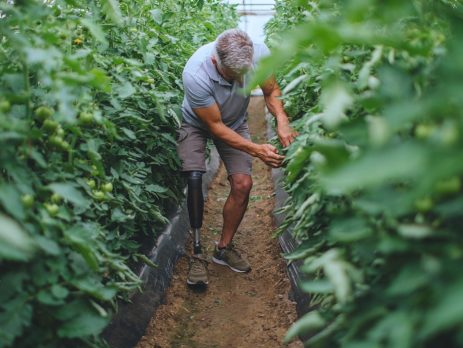
a man with a prosthetic leg examines a tomato plant

Readying veterans for agricultural enterprises

Military veterans across the Midwest are increasingly pursuing careers in agriculture, yet many lack access to training in production economics, enterprise budgeting and sustainable farm management, essential skills for making informed decisions.   In 2025, Michigan State University Extension partnered with organizations from Michigan, Indiana, Ohio and Illinois to support the Military Veteran Farming Conference, designed to provide veterans with practical [...]

Read more...
berries on the vine

New fruit, vegetable cultivars offer new opportunities for growers

Developing or restoring different fruit and vegetable cultivars allow farmers to plant crops based on disease resistance, fertilizer requirements, adaptations to site-specific soil and weather conditions or greater yields. Some cultivars can be a pathway to new market opportunities and new bio-based products. Here are a few examples of that work: Hemp is re-emerging as the basis of a viable industry [...]

Read more...
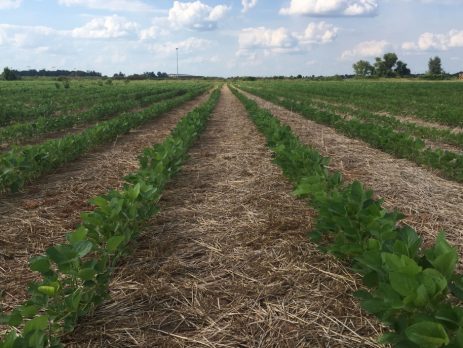
a no-till soybean field

Improving soil fertility through conservation practice adoption

Soil health challenges such as erosion, compaction, nutrient depletion and declining organic matter threaten crop productivity and long-term farm profitability in Indiana. Purdue Extension in Indiana, in collaboration with USDA NRCS, Farm Service Agency, Indiana State Department of Agriculture, and local soil and water conservation districts, has played a leading role in addressing these challenges through targeted soil health [...]

Read more...
a diseased plant

Improving crop profitability through disease management

Land-grant university research and Extension programs help producers manage costly plant diseases through early detection, risk assessment and science-based tools. By integrating applied research, diagnostics and education, growers protect yields, reduce unnecessary pesticide use, improve return on investment and strengthen long-term agricultural resilience across variable production systems. Here are a few examples of that work: South Dakota State Extension plant pathology [...]

Read more...
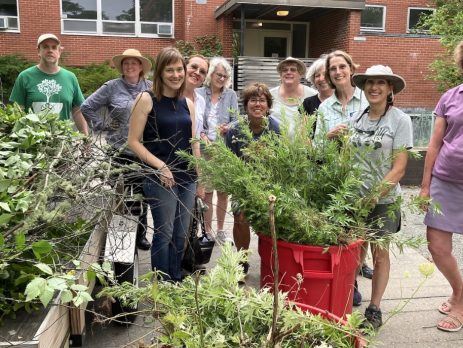
a smiling group of master gardeners

Horticulture programs sprout more resilient communities

Local horticulture is an important tool to combat food insecurity in underserved communities, while boosting environmental sustainability and community health. Volunteers with horticulture training through Extension Master Gardener programs partner with local organizations, schools and vulnerable communities to grow and distribute locally grown produce as well as create jobs.  Here are a few examples of that work: The Master Gardener program [...]

Read more...
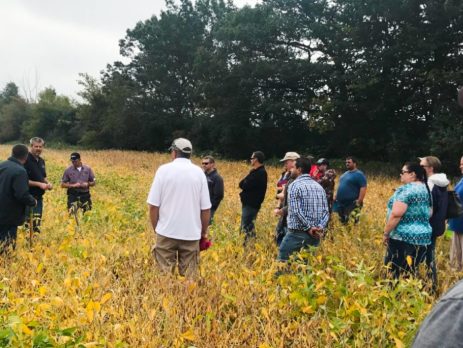
farmers watch a demonstration at a field day

Hands-on learning through trials and demonstrations

Lack of awareness and understanding of the latest research and technologies can impact profitability on small farms. Land-grant universities provide hands-on learning opportunities where producers can learn from one another, see real-time demonstrations and learn about the latest research trials to support decision-making. Here are a few examples of that work: Turmeric, a tropical plant that thrives in Guam, has been [...]

Read more...
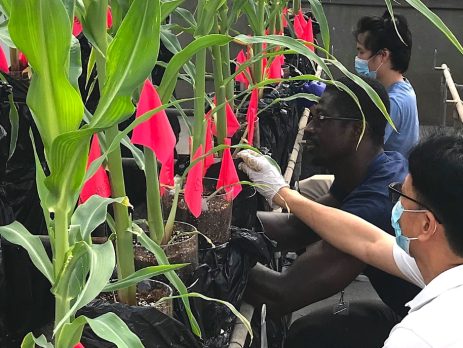
two smiling Extension agents in a community garden

Growing food security in urban spaces

Urban communities continue to face persistent constraints related to food access, limited growing space and water availability. Urban, small-scale food production, including controlled environment agriculture such as greenhouses and vertical farming, is a rapidly growing part of local food systems. These systems support food security, environmental sustainability and community resilience. Here are a few examples of that work: A program to [...]

Read more...
scientists examine plants grown with biochar

From field to fork: biochar strengthens the entire food system

Corn production is central to U.S. agriculture and food systems, yet its reliance on nitrogen fertilizer creates both economic and environmental challenges. While nitrogen is essential for high yields, corn typically uses less than half of the applied fertilizer. Unused nitrogen increases production costs and contributes to nutrient runoff, groundwater contamination, harmful algal blooms and ecosystem degradation. Producers and communities are [...]

Read more...
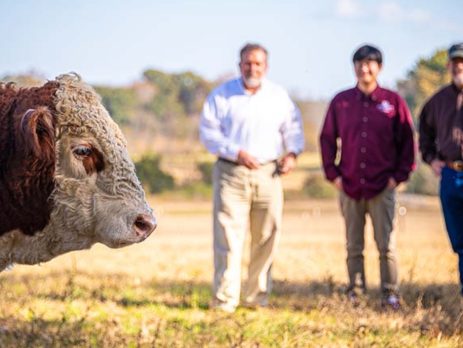
Scientists stand in a pasture with a bull in the foreground

Fine-tuning livestock production systems to overcome challenges

Livestock researchers are exploring new ways to achieve higher profitability through reproductive research, technology and traditional education outreach to help offset rising production costs. Here are a few examples of that work: In Louisiana, the Geaux Beef Heifer Development Program was created to support producers with expert-guided, forage-based heifer development. The program utilized artificial insemination or natural breeding combined with expert [...]

Read more...
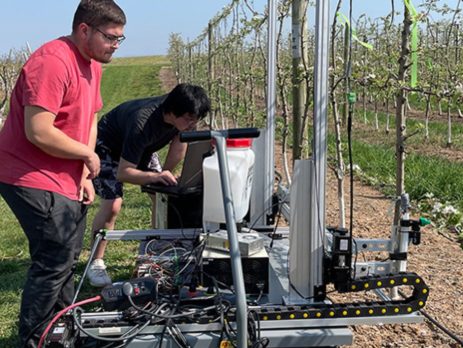
two scientists operate a robotic apple blossom sprayer

Emerging technology offers new tools for growers

Emerging technology is giving farmers tools to reduce the impacts of labor shortages, rising costs, changing weather patterns and regulatory demands, while improving production and profitability. These tools, using drones, robots, artificial intelligence and machine learning, offer a path to sustain productivity, worker safety and environmental performance in the agricultural economy. Projects demonstrate how these technical tools and artificial [...]

Read more...
Mario Soto and Aurelie Poncet with a plant and a light-emitting device.

Building resilient agriculture through pest management

Land-grant university pest management programs strengthen agricultural resilience by delivering research-based education that helps farmers manage pests more effectively and safely. These programs improve pest control decisions, reduce unnecessary pesticide use and minimize health and environmental risks—supporting healthier ecosystems and long-term productivity. Here are a few examples of that work: Louisiana State University’s AgCenter’s Field Crop Integrated Pest Management (IPM) Program [...]

Read more...
attendees listening at a workshop

Agricultural tax education helps farmers understand tax law updates

With tax laws changing annually, farmers, businesses and tax professionals must navigate a challenging landscape to comply with the latest regulations. The University of Minnesota Extension’s Income Tax Short Course, as well as the Ag Tax School, provide focused opportunities for tax professionals to learn about the latest updates affecting current and future tax returns.   The programs are beneficial for [...]

Read more...
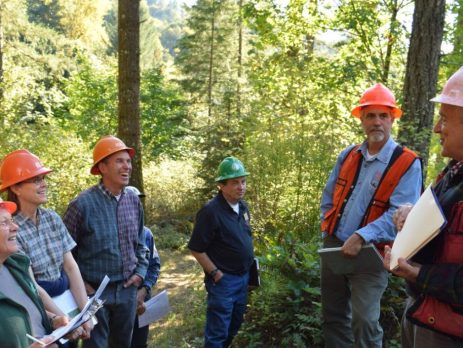
OSU Extension Master Woodland Managers attend a workshop.

Protecting private forests by growing good stewardship

More than half of forest land in the United States is privately owned. This land produces nearly all of the harvested timber that is used for building houses or made into forest products. Practicing good stewardship of private lands is important for ecosystem and community health. Because the more than 10 million private owners of these lands are often [...]

Read more...
nanoplastics

Nanoplastics can make E. coli more toxic, Illinois researchers find

Nanoplastics — ultrafine plastic particles formed when larger pieces of plastic break down — are everywhere, from soils to waterways to the human body. Because they can attach to microbes and be absorbed by plant roots, nanoplastics’ potential impacts on human health are a growing concern. Recent evidence suggests these particles may contribute to antibiotic resistance and increase the [...]

Read more...
Prairie strip in soybean field

Iowa researchers study how prairie strips can boost soil health

Prairie strips are narrow bands of perennial, herbaceous vegetation strategically planted within crop fields. Studies have demonstrated their benefits for erosion control, water quality and wildlife habitat.   However, their impacts on soil health were not well documented until Iowa State University scientists conducted a comprehensive study. They examined 15 sites encompassing a range of Iowa landforms, each consisting of a [...]

Read more...
a group of participants in a field examine cover crops

Illinois study finds cover crop adoption doubles

Cover crops improve soil health and water quality. They also reduce greenhouse gas emissions. But only about 5% of U.S. agricultural lands use them, despite billions of dollars in annual federal investments through efforts like cost-share and incentive payments to farmers.  University of Illinois Urbana-Champaign researchers in a new, first-of-its-kind study, say investing in farm demonstration networks can bolster cover [...]

Read more...
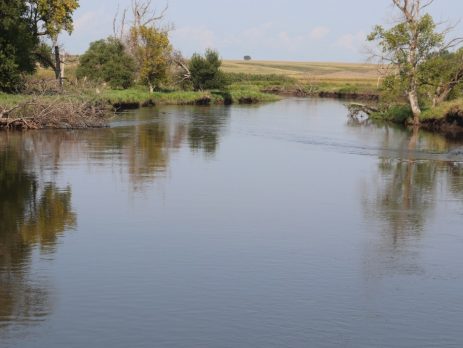
a lake

Strengthening water quality across landscapes

Access to clean, reliable water for communities, ecosystems and agriculture is increasingly threatened by issues such as nutrient pollution and emerging contaminants. Land‑grant universities are addressing these challenges through innovative research and hands‑on Extension programming that empowers volunteers, land managers and future water‑quality stewards. Here are a few examples of that work: Researchers in Montana found evidence that wetland conservation can [...]

Read more...
agroforestry

Decision support tool visualizes benefits of agroforestry

Agroforestry — the intentional integration of trees and shrubs in agricultural systems — can provide a multitude of environmental benefits. However, few farmers in the Midwest have adopted practices such as planting trees as windbreaks, integrating trees on pastures or growing tree crops intercropped with annual crops.  Researchers at the University of Illinois Urbana-Champaign developed a decision support tool to [...]

Read more...