Extension trainings keep Americans safe from foodborne illness
Foodborne illness is a widespread, costly public health concern in the United States. Each year, one in six Americans becomes sick from contaminated food, leading to hospitalizations, long-term health complications and even death. Pregnant women, the elderly, young children and people with weakened immune systems or chronic diseases are most at risk. Because food safety risks can occur at any point along the food system — from farms and gardens to processing facilities, transportation, foodservice and home kitchens — preventing illness and outbreaks requires coordinated efforts.
Extension programs across the country provide robust trainings and educational resources to keep Americans safe from foodborne illness, from farm to table.
Here are a few examples of that work:
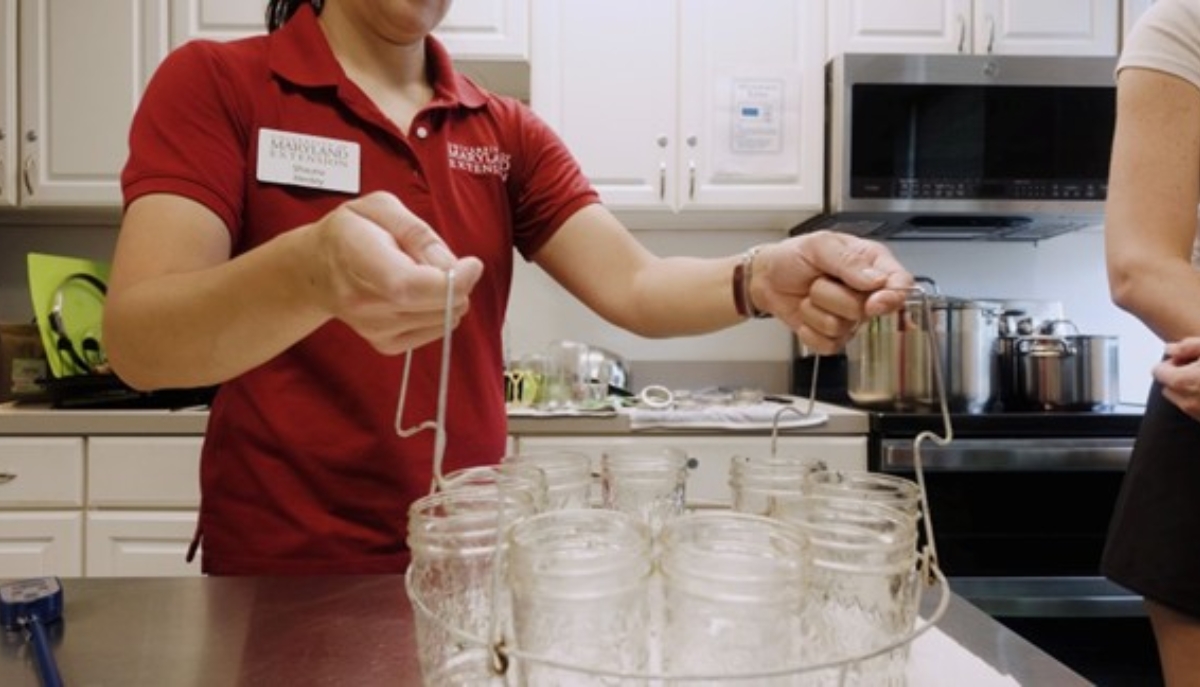
- A needs assessment in Maryland suggested educational workshops on food preservation. Although home canning allows residents to improve household nutrition and reduce food waste and food insecurity, improperly canned foods can be dangerous — even deadly — due to the rare foodborne illness botulism. Recently, Extension specialists co-led efforts to develop a validated tool for canning workshops to demonstrate regional to agent-level impact. During 2025, specialists implemented a total of 25 hands-on workshops across the state, teaching boiling water bath and/or pressure canning. Surveys showed attendees gained confidence to safely preserve food at home, follow appropriate steps for home food preservation and use their local Extension office for questions regarding canning.
University of Maryland Extension. See full statement.
- In Michigan, food safety programs in 2025 helped educate farmers market vendors on the state’s cottage food law, giving individuals the opportunity to start food-based businesses from their homes, as well as allowing them to transition to licensed food businesses. The cottage food training included two online workshops before the market season, covering safe and legal food preparation, labeling, storage, transport and sanitation practices. In addition, specialists hosted a market booth twice during the season to provide food safety and preservation resources to the public. The Moving Beyond workshop focused on food safety practices, food licensing and how to engage with the Michigan Department of Agriculture and Rural Development. Participants also learned about certifications and additional university resources for their small businesses. Knowledge increased dramatically; overall, 94% of participants reported the session met their needs. By increasing knowledge of the Michigan Cottage Food Law and food safety practices — and equipping aspiring entrepreneurs with the tools to move beyond cottage food laws — Extension supports local economic development and adds value to Michigan agricultural products, all while reducing public health risks.
Michigan State University Extension. Supported by Smith-Lever (3b&c) capacity funds; state appropriations. See full statement and additional statement.
- In Rhode Island, Extension educators work to improve food safety knowledge and practices across the food system. Through targeted, audience-specific training for growers, food entrepreneurs, processors, foodservice workers, regulators and consumers, programs strengthen compliance with state and federal regulations and promote effective foodborne-illness prevention strategies. In 2024, nearly 500 participants were trained, including consumers and food industry professionals and regulators. Among industry participants, workshops led to substantial gains in self-reported knowledge and confidence. Notably, the impact occurred across multiple sectors of the food system, including produce farming, seafood, meat and poultry processing, food manufacturing, food entrepreneurship, food service and home food production. Consumers gained practical skills in safe food handling and home food preservation through Master Gardener, home horticulture and preservation programs. Together, these results demonstrate the programs strengthened food safety capacity at both the industry and household levels, reducing risk and supporting public health across the region.
Rhode Island Cooperative Extension. Supported by Smith-Lever (3b&c) capacity funds. See full statement.
- Improper handling of food serves as a significant contributor to foodborne illnesses; given that nearly half of consumers’ food expenditures go toward meals prepared away from home, there is a clear and heightened concern around food safety. In Texas, Extension programs seek to empower through food safety education, including certifying food managers and food handlers. Trainings also focus on food preservation, farmers markets and wild game, all aimed at increasing food safety practices to protect consumers. Topics include food preparation and storage, personal hygiene, maintaining a sanitary facility and pest management. More than 15,000 Texans go through these programs annually (either in-person or virtually), and tests post-training demonstrate measurable improvement in safer food practices.
Texas A&M AgriLife Extension. Supported by state appropriations; Smith-Lever 3d capacity funds. See full statement.
- Learning to preserve food at home is increasingly in demand. Home canning and preservation allows individuals to meet dietary needs pertaining to salts, preservatives and sugar intake, while also cutting costs and food waste. A Wyoming Extension program empowers people to safely store their harvests for future use through trusted, science-based guidance on preserving produce, minimizing waste and maximizing the value of community agriculture. By providing step-by-step guides and live demonstrations, the program makes food preservation knowledge accessible to all, regardless of prior experience. In 2025 five trainings were held in three different Wyoming communities, with 38 total people in attendance. In addition to gaining confidence in ability to safely preserve food, the program fosters community building— participants often share knowledge, experience, fears and what they are excited about, making connections with each other to build a more resilient local food community. Participants reported meaningful gains in knowledge across content areas and left with the ability to tailor processes to meet specific nutritional needs.
University of Wyoming Extension. Supported by Smith-Lever (3b&c) capacity funds; state appropriations. See full statement.
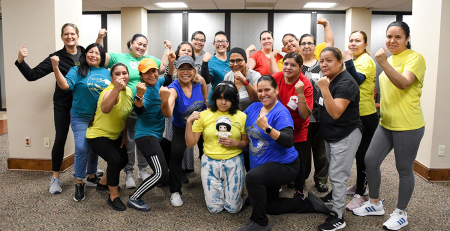
Photo courtesy of Tamara Scott/University of Maryland Extension.