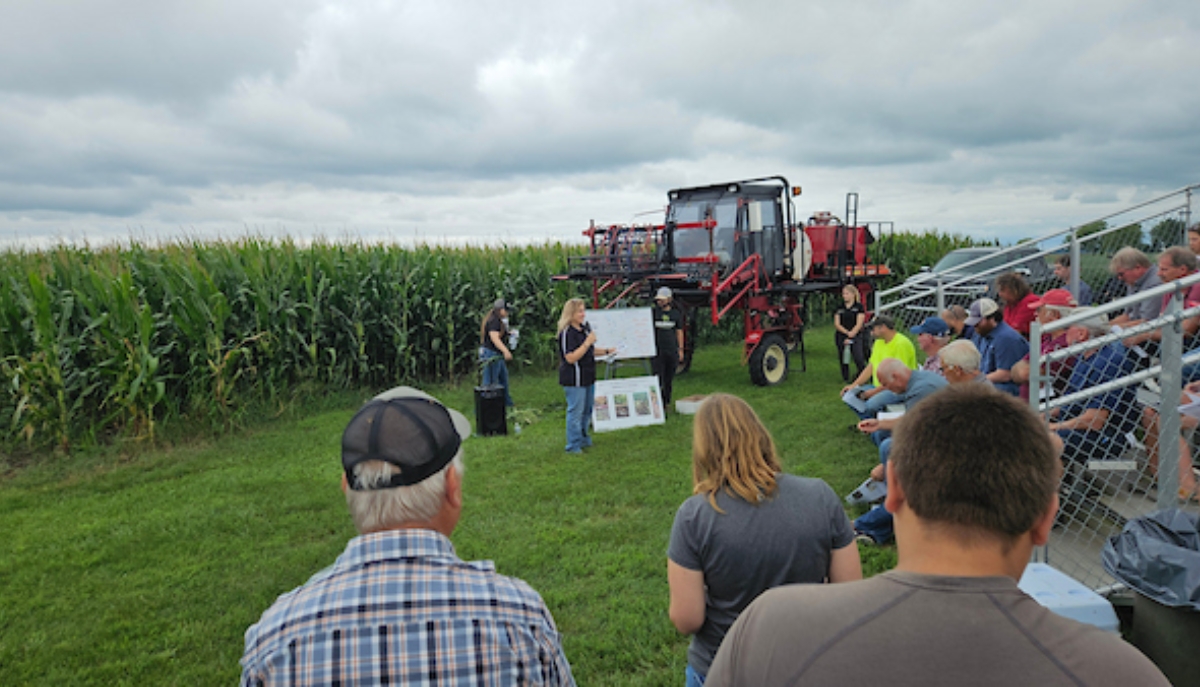
Hands-on learning through trials and demonstrations
Lack of awareness and understanding of the latest research and technologies can impact profitability on small farms. Land-grant universities provide hands-on learning opportunities where producers can learn from one another, see real-time demonstrations and learn about the latest research trials to support decision-making.
Here are a few examples of that work:
- Turmeric, a tropical plant that thrives in Guam, has been used for more than 4,000 years in Asian cuisine and traditional medicine. Turmeric is often grown in backyards, yet its use is limited primarily to the kitchen, and many remain unaware of its health benefits. Extension organized two hands-on workshops to teach about the health benefits, cultivation methods and how to process turmeric into different value-added products.
University of Guam Land Grant Extension Service. Supported by Smith-Lever (3b&c) capacity funds. See full statement.
- To share the potential benefits of alley cropping, University of Maryland Extension hosted training workshops and field days, highlighting companion crops that work well and ways farmers can use land efficiently and reduce water consumption. Eleven on-farm and four community demonstration sites were created, with one acre farm tests demonstrating outperformance of companion crops.
University of Maryland Eastern Shore. Supported by 1890 Extension capacity funds; U.S. Department of Agriculture awards. See full statement.
- There are 56,800 farming operations in Indiana, with 97% family owned. Successful production is dependent on access to new technologies and research. Purdue University Extension and the Purdue Agricultural Centers joined in hosting seven field days across the state. Nearly 900 participants attended with a third of survey respondents reporting intent to adopt recommended field crop practices.
Purdue Extension. Supported by Smith-Lever (3b&c) capacity funds. See full statement.
- Grazing perennial pastures is the most economical production system for Iowa’s beef cow operations, yet Iowa forage and pastureland acres have been in steady decline since the 1930s. Maximizing pasture productivity while optimizing forage utilization are key to improving cattlemen’s profitability. Beginning with an overview of the grazing operation, Extension led a pasture walk at a producer’s farm to demonstrate their practices to improve forage utilization. More than forty producers participated.
Iowa State University Extension and Outreach. Supported by Smith-Lever (3b&c) capacity funds; state appropriations. See full statement.
- Increasingly hot temperatures present a substantial challenge in growing fresh tomatoes – particularly for small farmers who play an important role in local food systems. In Tennessee, researchers partnered in on-site studies at three local farms to integrate smart-farming technologies, deploying new technologies and tools in real time. The project demonstrated the value of using digital tools to make timely and effective management decisions.
TSU College of Agricultural Cooperative Extension Program. Supported by USDA competitive funds; Evans-Allen capacity funds. See full statement.
- For growers, farm market operators and greenhouse professionals, success depends on the ability to adapt and thrive despite challenges. Through the Great Lakes Fruit, Vegetable, and Farm Market Expo, Michigan State University Extension connected stakeholders with the latest research-based insights. The Farm Market Bus Tour featured five farm markets and agritourism operations, offering the opportunity to explore innovative approaches to marketing.
Michigan State University Extension; MSU AgBioResearch. Supported by Smith-Lever (3b&c) capacity funds. See full statement.
- Many high school students have limited exposure to agriculture. To address this gap, South Dakota State University Extension hosted a precision livestock technology field day. About 70 high school students attended and learned about beef cattle production, grasslands research and the role of agriculture in the state’s economy. The program strengthened understanding of food systems and inspired youth to consider careers in agriculture.
South Dakota State University Extension. Supported by Smith-Lever (3b&c) capacity funds. See full statement.
Photo courtesy of Purdue Extension.