
Tag - Invasive Species

Topic

aerial view of a Wisconsin lake

Research explores freshwater lake microbiomes

Freshwater lakes are an important drinking water source. People use these lakes for recreation and fishing. But they’re also vital ecosystems to some aquatic communities. Each lake has its own community of microorganisms, called a microbiome. Certain factors, such as precipitation and nutrient runoff, can affect whether there are more “good” bacteria or “bad” toxin-producing bacteria in a lake. Unfortunately, [...]

Read more...
two scientists take samples from a tree

Research guides management decisions to protect Guam’s native forests

Guam’s limestone forests are being overtaken by an invasive overstory tree called Vitex parviflora, known commonly as the molave tree. Native to the Philippines, Vitex is now the most common invasive tree species in Guam. Because this tree tends to form a monoculture, it competes with the native species that are needed to balance and sustain Guam’s ecosystems. Clearing the [...]

Read more...
3 scientists taking samples in a field

Extended-season cattle grazing reduces invasive grasses and wildfire risk in eastern Oregon

Wildfires have burned 2.5 million acres in eastern Oregon since 2010, devastating the natural landscape and negatively impacting rangelands essential to Oregon’s cattle and dairy industries. In this region, invasive grasses out-compete native plants and create a buildup of “fine fuels” that increase wildfire risks. To address this issue, an Oregon State University Extension Service specialist and associate professor in [...]

Read more...
a feral hog

Trapping training helps reduce feral hog population in Arkansas

Feral hogs cause extensive economic losses in agricultural economies and impact forests, wildlife habitat and the landscape. The U.S. Department of Agriculture estimates feral hogs cause $41.3 million in crop, pasture and livestock losses annually in Arkansas alone. To address feral hog populations, Arkansas Extension agents received training in net capture systems and installed eight systems to capture the hogs. [...]

Read more...
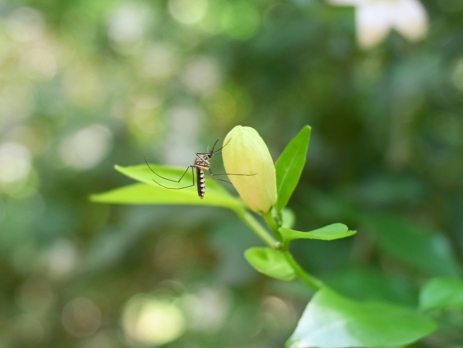
a mosquito on a flower

Reducing mosquito populations through nectar control

Mosquitoes pose a significant public health challenge as vectors of diseases such as Zika, malaria and West Nile virus. At the same time, they contribute to ecosystems as pollinators and as a food source for various species. In urban and suburban environments, managing mosquito populations is crucial for reducing disease transmission while minimizing ecological disruption. A research project at [...]

Read more...