Preserving and managing our forests
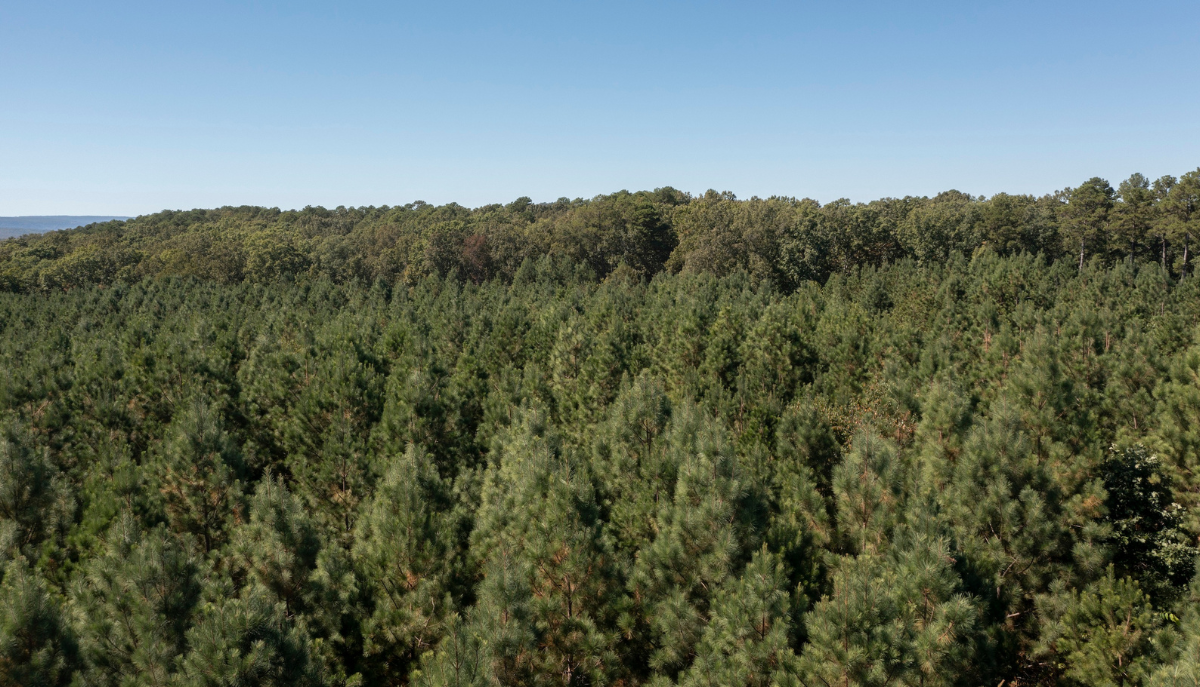
Forests provide a variety of goods, including food, lumber, and paper. They also provide wildlife habitat as well as green space and recreation. As natural carbon sinks, forests absorb carbon dioxide from the atmosphere and store carbon in soils. But rising temperatures, pests and diseases pose threats to forests. Researchers, Extension professionals and educators at land-grant universities across the United States are working to educate the public to preserve trees and promote healthy forests.
Here are a few examples of that work:
- Extension specialists in California lead community-based projects to engage the public in managing sudden oak death, a disease that has led to the death of tens of thousands of trees in central California. More than 400 residents volunteer each year to help detect the disease and produce detailed local maps of its distribution, identifying areas for proactive management. In 2023, volunteers surveyed more than 10,000 trees across 28 communities and sampled approximately 2,000 trees for further testing. Sixty-four land managers received treatment options and technical assistance from the volunteers. Their efforts protected 6,678 trees. The combined value of oaks protected in 2022 and 2023 is estimated at over $12 million.
University of California Cooperative Extension; State Appropriations, Smith-Lever (3b&c). See full statement. - As part of an Extension program in Vermont, 24 participants signed up to become Vermont Forest Pest First Detectors to monitor pests, distribute literature and provide educational outreach to others in their communities. Training community volunteers to be on the front line of defense will help control the spread of the emerald ash borer, hemlock woolly adelgid and other invasive forest pests that can cause economic and ecological damage to Vermont’s vast forests.
University of Vermont Extension; State Appropriations, Smith-Lever (3b&c). See full statement. - In Indiana, Extension professionals are teaching workers how to build furniture for schools. This creates a new market, assists workforce development and removes low-value timber from forests.
Purdue Extension; Smith-Lever (3b&c). See full statement. - A New Mexico researcher is helping guide forest restoration and recovery after a wildfire. Strengthening knowledge on key topics, including reforestation pipeline, outplanting and soil erosion, will improve the efficiency of forest restoration and recovery, which is especially important as communities battle high economic costs from wildfires.
New Mexico Agricultural Experiment Station; Other. See full statement. - An Extension program in New York has recruited and trained over 2,480 volunteers to provide localized data on deer damage to vegetation and forest regeneration. Hundreds of landowners participate each year, representing thousands of forested acres. Landowners are trained to recognize signs of deer over-browsing and how to take appropriate management actions (e.g., hunting, fencing, or slash walls) on their properties.
Cornell Cooperative Extension; Smith-Lever (3b&c). See full statement. - An Arkansas researcher developed a technique using artificial intelligence to generate high-quality maps that detail the overall forest health in the state. Knowing the state’s overall forest health helps show how efforts like wildlife management, water regulation and urban planning are working or not working. Forests are especially important to Arkansas, with the U.S. Forest Service reporting that the industry contributes more than $6 billion to the state economy.
Arkansas Agricultural Experiment Station; State Appropriations, Hatch. See full statement.
Photo courtesy of Arkansas Agricultural Experiment Station.